

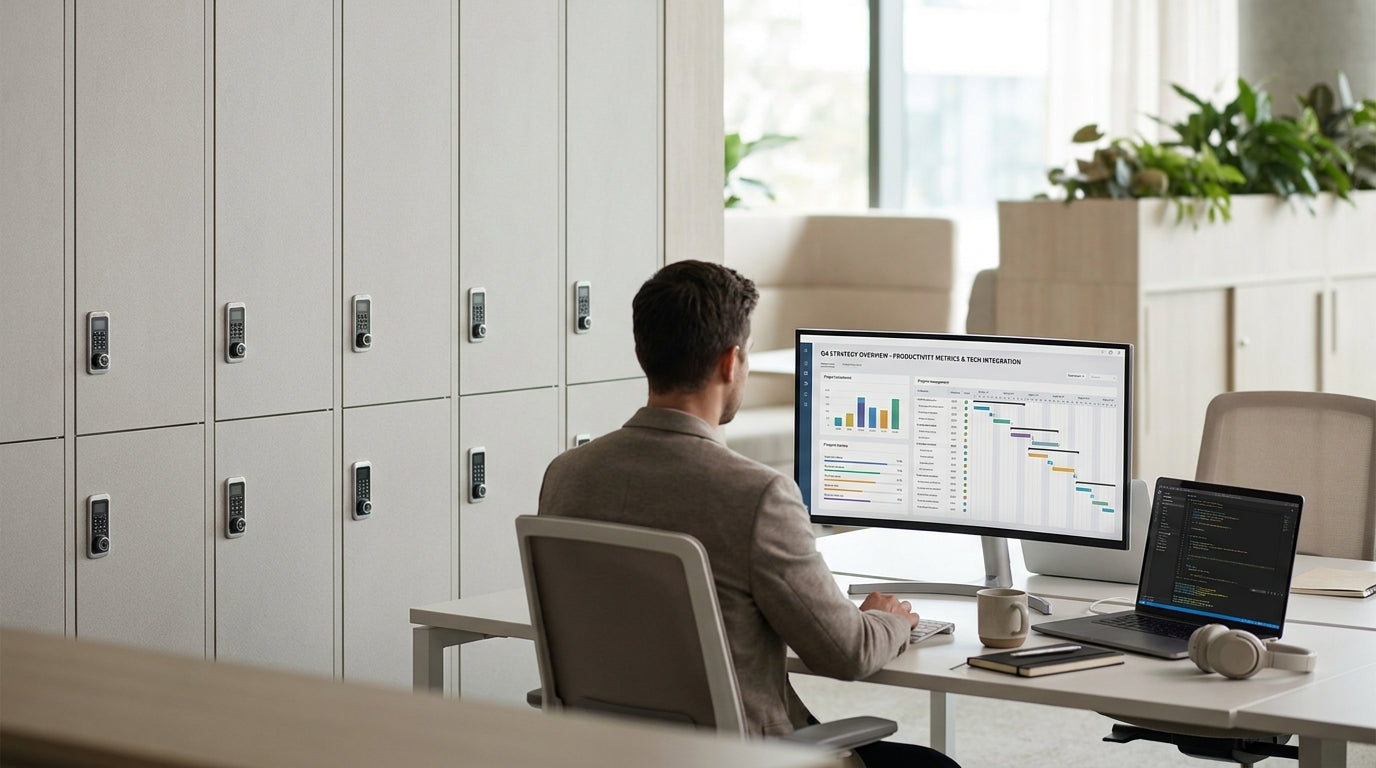
Why Melamine Lockers with Built-In Locks Are in Demand
Secure personal storage is non‑negotiable in modern Australian workplaces, schools, and gyms. Melamine cabinetry with integrated locking is increasingly the go‑to option for clean, organised spaces.
Unlike traditional metal units, quality melamine cabinets offer a warmer, furniture‑like look that blends into offices, staff rooms, and education spaces. The durable laminate surface resists scratching and stains, making it ideal for high‑traffic areas where bags, laptops, and uniforms are in constant rotation. For spaces that need a cohesive fit-out, they can be paired easily with matching office cupboards and other storage.
Australian facilities managers also appreciate that melamine carcasses are simple to wipe clean and don’t show fingerprints or dents as readily as some metal surfaces. When combined with integrated locking hardware, you get a tidy, low‑maintenance storage wall that still delivers serious security for staff and students. This is particularly useful in shared environments where lockers may be reallocated frequently across different users.
Because they come in a wide range of sizes and finishes, these units suit everything from compact phone bays through to full‑height change‑room configurations. Where a tougher or more industrial aesthetic is required, they can sit alongside steel lockers or specialised heavy duty lockers without looking out of place, giving designers flexibility across the whole fit‑out.
Key Features That Improve Security and Everyday Use
The lock is the heart of any secure locker system, and the best units combine robust hardware with user‑friendly design. It’s not just about keeping doors shut; it’s about making access simple and reliable for the right people.
Integrated lock options typically include keyed cam locks, mechanical combination locks, and in some cases electronic code locks. Keyed systems are straightforward and cost‑effective, while combination and digital locks remove the headache of managing lost keys. For schools and offices with frequent user turnover, a master‑keyed or override system allows administrators to open any compartment quickly when required, without damaging doors or hinges.
Beyond the locking mechanism, internal layout matters. Adjustable shelves, hanging rails, and compartments sized for laptops or bags help keep user belongings organised instead of piled into a single cavity. Many organisations also add small dedicated units such as phone lockers near reception or meeting rooms to keep mobile devices safe and reduce distractions, while larger sections cater for bags, PPE, and workwear.
Good ventilation is another practical feature. Discreet vents minimise odours and moisture build‑up, which is critical in gyms, aquatic centres, and school change areas. To support this, you can integrate suitable locker accessories such as name plates, number discs, or additional shelves that make allocation and day‑to‑day management simpler for facilities staff.
Comparing Melamine Units to Other Locker Materials
Choosing the right material for your locker bank has a big impact on durability, look, and total cost of ownership. Melamine cabinetry is one of several strong contenders.
Melamine and laminate constructions are popular in offices and education because they deliver a modern, furniture‑grade finish with a huge choice of colours and woodgrains. Where a more traditional or industrial style is needed, many organisations still opt for steel lockers, which are extremely tough and well suited to warehouses and factories. For the harshest environments or heavy abuse, upgraded heavy duty lockers provide extra reinforcement and impact resistance.
Melamine cabinets sit in a sweet spot between appearance and performance. Their scratch‑resistant laminate surfaces stand up well to daily use, and they’re quieter to open and close than metal doors, reducing clatter in busy corridors. This makes them a strong choice for school lockers in learning areas, libraries, and staff rooms, where noise control is important and a softer aesthetic is preferred.
For offices, it’s common to combine melamine banks with complementary storage like stationery cupboards and tambour cupboards. This creates a unified look across personal and shared storage while still using the most appropriate material in each zone. By mixing surfaces thoughtfully, you can meet different security and durability requirements without sacrificing design cohesion.
Choosing the Right Configuration for Your Space
Before ordering, it’s worth mapping out exactly how your lockers will be used. The right configuration can improve traffic flow and reduce congestion around busy entry points.
Start by listing who needs secure storage: staff, visitors, students, gym members, or contractors. For large cohorts, full‑height runs with narrow doors maximise the number of compartments per metre, while double‑tier or triple‑tier arrangements work well when users only need space for bags and small personal items. Education settings often blend tall bays for sports and musical gear with smaller school lockers near classrooms for day‑to‑day belongings.
In offices, agile working and hot‑desking have changed what people store. Many businesses are moving towards shared banks of melamine and laminate units, supported by individual office cupboards for team documents and larger items. Where mobile devices need to be secured separately, compact phone lockers can be installed near meeting rooms, training spaces, or reception to encourage screen‑free collaboration.
Don’t forget vertical space. Wall‑mounted rows above low melamine & laminate lockers can add capacity without eating into circulation areas, particularly in narrow corridors. Carefully chosen locker accessories such as extra shelves, hanging rails, or mail slots help tailor each compartment to its task, whether that’s storing PPE in a workshop or keeping laptop bags organised in an IT hub.
Installation, Maintenance, and Long-Term Value
Well‑planned installation and basic upkeep will extend the life of your locker investment. A little forethought at the start saves money and disruption later.
When installing, ensure carcasses are fixed plumb and securely anchored to walls or floors to prevent tipping, especially in schools and gyms where doors may be pulled forcefully. Coordinate locker placement with power points, fire equipment, and access ways so doors can open fully without blocking exits or cupboards. In some layouts, pairing banks with nearby melamine & laminate lockers, office cupboards, or tambour cupboards creates tidy storage zones that are easy to supervise and clean.
Day‑to‑day care is straightforward: wipe melamine doors with a soft cloth and mild detergent, avoiding harsh abrasives that could dull the finish. Locks should be checked periodically to ensure they operate smoothly; a small amount of suitable lubricant in the mechanism can prolong their life. Keeping a stock of spare keys, number tags, and other locker accessories on site helps maintenance teams respond quickly to issues without taking units out of service.
Over time, the combination of low cleaning requirements, strong wear resistance, and integrated locking delivers excellent value, particularly in comparison to frequent replacement of cheaper, less durable options. Whether used alongside steel lockers, dedicated heavy duty lockers, or purpose‑built school lockers, a carefully chosen melamine solution can provide secure, attractive storage that keeps working reliably for years in Australian conditions.


