

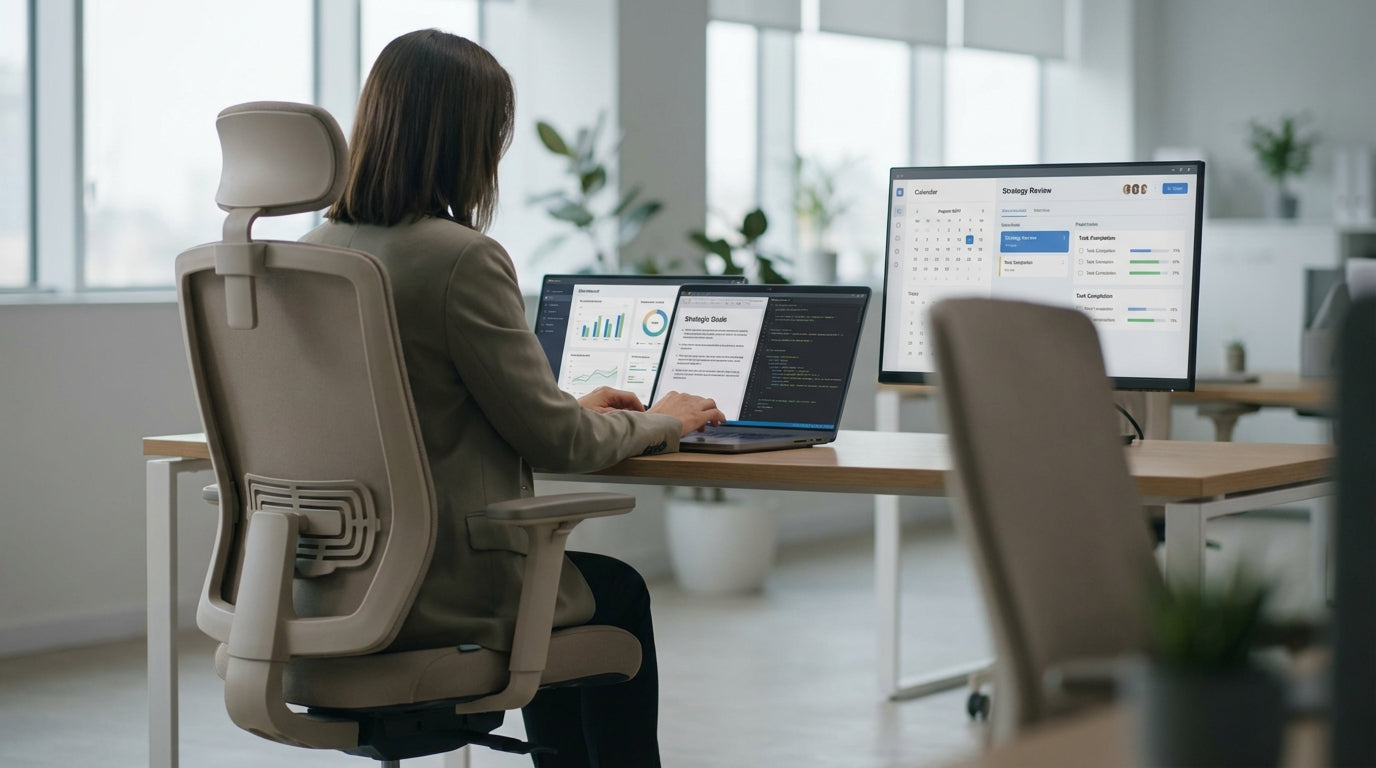
Understanding Pregnancy Posture and Back Pain at Work
Pregnancy changes the way you sit, stand, and move, which can make long hours at a desk uncomfortable. Choosing the right chair can ease pressure on your spine, hips, and pelvis.
As your centre of gravity shifts and ligaments loosen, your lower back works harder to support the extra weight. This can aggravate existing back issues or create new aches, especially if you’re in a standard office chair that doesn’t adjust properly. A supportive seat with good lumbar (lower back) support helps keep your spine in a neutral position, reducing strain on muscles and joints.
Many pregnant workers also experience swelling in their legs and feet. A chair that allows your knees to sit slightly below hip level and lets you plant your feet flat on the floor promotes better circulation. If you’re shorter or work at a higher desk, pairing an adjustable chair with a small footrest can further ease pressure behind the knees and prevent pins and needles.
Breathability matters too, particularly in the second and third trimesters when your body temperature may run higher. Options like quality mesh office chairs can help keep you cooler during long stretches at the computer, which in turn makes it easier to maintain a healthy, upright posture.
Key Features to Look For in a Supportive Chair
Not all office seating is designed with pregnancy in mind. Focus on adjustability, cushioning, and support that can adapt as your body changes.
Height adjustment is essential so you can sit with your feet flat, knees at a comfortable angle, and hips slightly higher than your knees. Look for models where you can fine‑tune seat depth; this is the distance from the backrest to the front edge of the seat. Having a couple of fingers’ space behind your knees avoids pressure on blood vessels and nerves, which is particularly important if you’re prone to swelling.
Proper lumbar support is non‑negotiable. A shaped backrest that follows the natural curve of your spine, ideally with an adjustable lumbar pad, helps reduce lower back and pelvic discomfort. Some specialised task chairs offer multi‑way adjustment for the backrest angle and tension, letting you recline slightly while keeping support where you need it most.
Armrests also play a major role in comfort. Height‑adjustable and width‑adjustable arms allow your shoulders to relax and your elbows to rest at roughly a 90‑degree angle. This takes load off your neck and upper back, which can become tight during pregnancy. Softer, padded arms are often more comfortable if you’re using them to help push yourself up from the chair as your bump grows.
Types of Office Chairs That Work Well During Pregnancy
Different chair styles suit different bodies and work setups. Matching the chair type to your needs can make day‑to‑day work much easier while you’re expecting.
Ergonomic task chairs are a flexible option for most office roles. They’re designed for long hours of focused work, usually with adjustable seat height, back tilt, and armrests. Many also include breathable materials and contoured cushions to reduce hotspots and pressure on your hips. If you work at a standard desk and computer, this style is often a practical starting point.
For those carrying extra weight, or experiencing significant back pain, sturdier options like heavy duty chairs provide reinforced frames, higher weight ratings, and dense foam that won’t collapse over time. This can offer a greater sense of stability when sitting down and standing up, which becomes more important in the later stages of pregnancy. Some models include a higher backrest and deeper seat pan, suited to taller users or anyone wanting extra upper‑back support.
If you split your time between work and rest, you might also consider more relaxed seating for breaks. Comfortable armchairs or supportive single lounges can be useful for short rest periods to take pressure off your spine. While these aren’t ideal as your main work chair, having a secondary seat in a quiet corner of the office or home workspace can make it easier to manage fatigue and lower‑back tension throughout the day.
Extra Comfort Options for Home and Hybrid Work
Working from home while pregnant can be more comfortable if you combine an ergonomic desk chair with supportive lounge seating. This lets you switch positions without sacrificing back support.
In a home office, a well‑designed mesh or upholstered chair at your desk can be paired with a nearby recliner or lounge for scheduled breaks. For example, using a breathable mesh office chair at your workstation and moving to a soft but supportive seat for email or reading tasks can reduce the strain of sitting in one position. Adding a small cushion or rolled towel behind your lower back in either seat can fine‑tune support as your posture shifts over the months.
For those dealing with pronounced pelvic pain, sciatic nerve pain, or mobility challenges, motorised seating can help you change positions with less effort. Power lift chairs gently raise you from sitting to standing, which can be especially useful in the third trimester or post‑birth when bending and pushing off with your arms is harder. While they’re not designed for typing or desk work, they’re excellent for rest, feeding, or recovery in a home environment.
Comfort at home also extends to shared spaces. If you often work near your living area, choosing quality leather chairs or sturdy reception seating as part of your setup can provide firm, reliable support when you need a change of scene. The key is to avoid overly soft, sinking sofas that leave your hips lower than your knees, as these can aggravate back and hip pain when you stand up again.
Choosing Quality Seating That Lasts Beyond Pregnancy
A well‑chosen chair should support you during pregnancy and continue to serve you for years afterwards. Investing in quality now can reduce long‑term back issues.
Look for chairs built with durable frames, high‑density foam, and robust mechanisms so they won’t sag or fail with daily use. Australian workplaces often need seating that can handle heavy use, so considering locally made options can be wise. Many Australian made chairs are designed to meet local standards and can be easier to service or repair if anything goes wrong, extending the life of your investment.
Versatility is also important. After pregnancy, your seating needs may shift again as you return to regular work patterns or juggle working from home with caring for a baby. A classic, supportive design—whether in breathable fabric, modern mesh, or premium finishes like those in selected leather chairs—will continue to fit into different rooms and roles. Choosing a neutral style can make it easier to move the chair between a home office, a study nook, or even a workplace setting later on.
Finally, consider how your main work chair complements other pieces in your space. Combining an ergonomic desk seat with comfortable armchairs or practical reception seating can create a flexible environment where you can switch positions without losing support. This mix‑and‑match approach helps protect your back during pregnancy, aids recovery afterwards, and provides comfortable seating for family, clients, or colleagues in the long term.


