

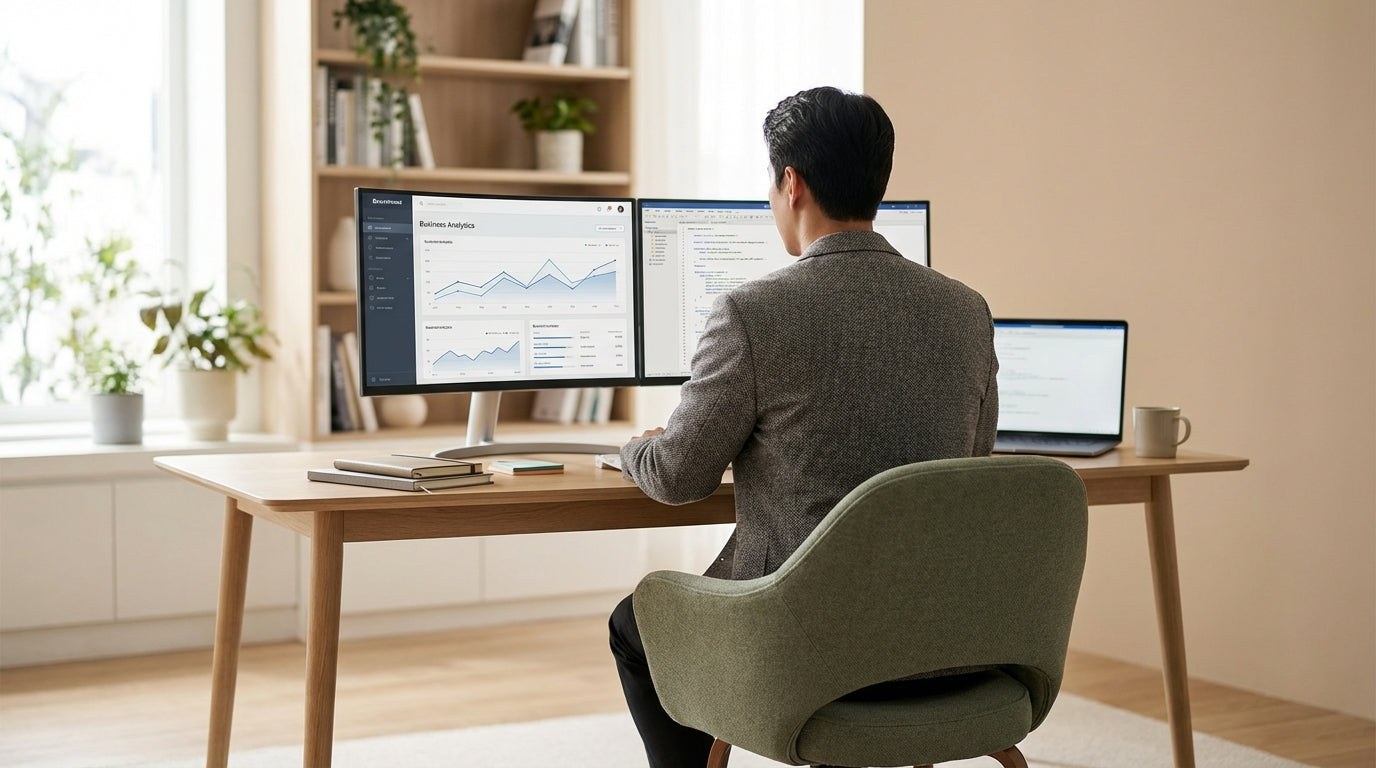
Why Style-Focused Office Seating Is So Popular
Home offices and modern workplaces are moving away from bulky, corporate-looking task chairs. More people want seating that blends with their décor while still supporting long days at the desk.
This shift is driven by the rise of hybrid work, where a study often doubles as a living space. A chair that looks like it belongs in a lounge or boutique hotel can make a room feel calmer and less like a cubicle. At the same time, it still needs to provide ergonomic support, meaning it should help you sit in a healthy posture, reduce strain on your back and neck, and be comfortable for several hours at a time.
Design-led seating is also becoming more affordable and accessible across Australia. Collections once reserved for high-end interiors are now common in workplaces, co-working hubs, and home offices alike. Choosing pieces that feel more like furniture and less like equipment lets you create a cohesive look without sacrificing comfort.
When you’re browsing for alternatives, pay attention to key details such as seat height, lumbar (lower back) support and cushioning density. These factors matter just as much as aesthetics, even when the chair looks like it belongs in a lounge room.
Guest & Visitor Seating That Doubles as a Work Chair
Guest chairs can be surprisingly effective as primary work seats, especially in compact or multi-use rooms. The right design offers both a professional look and a relaxed feel.
Stylish visitor chairs often come with sleigh or timber legs, upholstered shells, and subtle curves that wouldn’t look out of place around a dining table. Because they’re built for reception areas and meeting rooms, they’re usually designed to stay comfortable for extended sitting without screaming “office chair”. Look for models with a gently reclined backrest and supportive foam so you can switch between focused work and informal chats.
When using this style of seating at a desk, match the chair height to your work surface. Your hips should sit slightly above your knees, and your feet should rest flat on the floor or a footrest. Pairing a visitor chair with a height-adjustable desk can give you the flexibility to stand, perch, or sit through the day without changing furniture.
If your workspace doubles as a client area or meeting nook, coordinating your desk chair with surrounding reception seating creates a polished, consistent look. Mixing similar fabrics and leg finishes helps everything feel intentional rather than improvised.
Lounge-Inspired Comfort for Long Work Sessions
Lounge-style chairs bring a softer, more residential feel to any workspace. They’re ideal for focus corners, reading zones, and relaxed laptop work.
Contemporary single lounges provide deep seats, generous arm support, and plush cushioning that works beautifully for creative or strategic tasks. While they don’t always offer the same adjustability as conventional desk chairs, their comfort and broader seating angles can encourage you to shift positions through the day, which helps circulation and reduces stiffness.
Compact tub chairs are a smart option when space is tight. With wrap-around backs and slim footprints, they tuck neatly into corners while still looking inviting. Opt for models with a medium-firm seat base so you don’t sink too low, which can strain your lower back if you’re working with a laptop or tablet.
For shared offices and collaboration zones, mix and match breakout seating with a few lounge pieces to create varied postures: upright for video calls, semi-reclined for deep thinking, and casual for quick catch-ups. The key is to anchor the arrangement with side tables and power access so these chairs are genuinely functional, not just decorative.
Elevated Designs for Creative and Flexible Spaces
In studios and multi-purpose areas, higher seating options can do double duty for work and socialising. They keep the environment flexible and visually open.
Quality bar stools paired with a bench-height desk or counter create a dynamic setup that suits sketching, quick emails, or informal meetings. Choose stools with backs, footrests, and at least some padding if you’ll be sitting for more than a few minutes at a time. Swivel bases make it easier to turn between screens, colleagues, and shared tables without constantly repositioning the stool.
If your workspace spills into a kitchen or café-style zone, café-ready hospitality chairs can seamlessly cross over into everyday laptop use. These designs are built to withstand heavy use in busy venues, so they’re usually sturdy, easy to clean, and available in a range of colours and finishes that complement modern fit-outs.
Layering these pieces with softer elements, such as upholstered armchairs nearby, lets people choose the posture that suits their task. High stools encourage active, shorter sessions, while lounge-like options invite slower, more reflective work, all without relying on conventional office seating.
Premium Finishes That Work in Living Spaces
If your desk is in a living area, premium finishes can help your chair blend in seamlessly. Leather and upholstered armchairs are particularly effective.
Australian homeowners often gravitate toward leather chairs because they age gracefully and are easy to wipe clean. A compact leather armchair with a supportive back can sit just as comfortably in a lounge room as it does at a study nook. Look for tight upholstery (not overly soft or saggy), a seat height that matches your desk, and armrests that don’t clash with your tabletop’s underside.
Upholstered armchairs also make excellent dual-purpose pieces. In the evening, they serve as reading chairs; during work hours, they become your main task seat with the addition of a side table or compact workstation. Neutral fabrics work well in minimalist interiors, while bolder colours can define a dedicated work zone within an open-plan area.
In client-facing settings such as studios or consulting rooms, blending armchairs with coordinated reception seating creates a cohesive, welcoming space. This approach supports long-term comfort without making the environment feel like a traditional corporate office, keeping both aesthetics and practicality in balance.


