

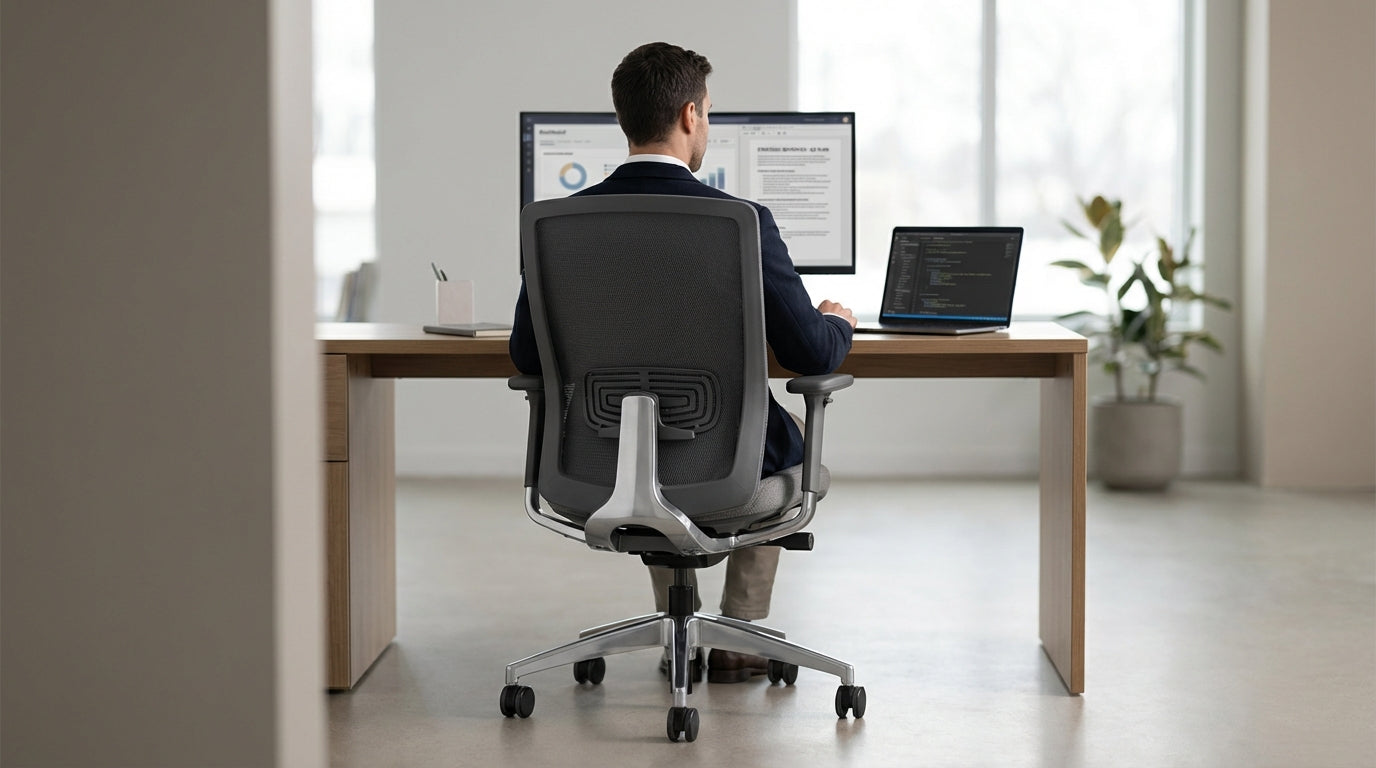
Why Breathable Mesh Seating Matters in Australian Workspaces
Spending long hours at a desk in our warm climate can quickly become uncomfortable. That’s where a ventilated backrest makes a real difference.
Unlike traditional upholstered backs, mesh allows air to circulate around your spine and shoulders, helping regulate body temperature throughout the day. This reduces that sticky, overheated feeling that often leads to distraction and fatigue. A cooler sitting experience supports better focus, particularly in open-plan offices where temperatures can fluctuate.
Good mesh designs also distribute weight evenly across the back. Instead of pressure building up on a few contact points, the flexible material supports your natural posture and reduces strain on your lower back. Combined with a supportive base and adjustable features, this creates a more ergonomic workstation that can help limit common issues like stiffness, tight hips, and aching shoulders.
For teams working in shared spaces, pairing breathable seating with acoustic solutions such as Office Pods can create a comfortable, quiet, and productive zone. Likewise, remote workers can improve comfort at home by matching a mesh chair with the right Home Office Desks to achieve proper posture and airflow in smaller rooms.
Key Features to Look for in a Ventilated Office Chair
A mesh back alone isn’t enough; it needs to be paired with smart adjustments and supportive design. Focusing on a few critical features will help you choose a chair that truly fits your body.
Prioritise adjustable lumbar support so the curve of the backrest aligns with your lower spine. This helps maintain a neutral posture, where your ears, shoulders, and hips are in line. Look for chairs with height and tilt adjustments, and ideally a synchro-tilt mechanism, which lets the seat and back move together in a controlled way. This keeps your hips at a comfortable angle, even when you recline slightly to relax your back muscles.
Seat pan depth is another important consideration. Your thighs should be supported without the front edge pressing into the back of your knees, which can restrict circulation. Adjustable arms can also help reduce neck and shoulder fatigue by supporting your forearms while typing. Many high-quality Task Chairs offer these ergonomic features, making them suitable for all‑day use at a computer.
Think about how the chair will be used in your specific environment. Staff who frequently move between workstations may benefit from lightweight Mesh Office Chairs that are easy to reposition. For training rooms or collaboration zones, consider combining breathable seating with stackable options such as Training Chairs or welcoming Visitor Chairs for guests and clients.
Comparing Mesh to Fabric and Leather in Real-World Use
Choosing between mesh, fabric, and leather comes down to comfort, maintenance, and how the chair will be used day to day. Each material has its strengths.
Mesh excels in breathability and is especially suited to warmer regions and busy open-plan offices where air can feel stagnant. It tends to be lighter than many leather or heavily padded fabric options, making it easier to move around meeting rooms or collaborative hubs. Modern mesh is typically durable and resistant to sagging when sourced from reputable brands that focus on commercial-quality furniture.
Fabric and leather can provide a plush, executive look, but they often trap more heat. Leather, in particular, can feel cold at first and then warm quickly, which may not be ideal for all‑day computer work. However, in boardrooms and formal settings, you might combine mesh-based task seating for staff with elegant Meeting Chairs for clients to strike a balance between comfort and presentation.
For heavier users or high-traffic environments like control rooms and call centres, structure and weight capacity are just as important as material choice. In these scenarios, look to specialised Heavy Duty Chairs that still offer breathable backrests where possible. If your team spends time sketching, drafting, or working at benches, pairing a raised workstation with supportive Drafting Chairs can bring mesh comfort to higher seating positions as well.
Setting Up a Healthy Ergonomic Workspace
A well-designed chair is only one part of a healthy workstation. How you adjust and position it relative to your desk and screen is just as important.
Start by setting your seat height so your feet rest flat on the floor and your knees are roughly at hip level or slightly below. Adjust the backrest so the lumbar support fits the curve of your lower back, then bring your chair close enough that you’re not reaching or leaning forward to type. Your elbows should be at about a 90‑degree angle, with your shoulders relaxed rather than hunched.
The top of your monitor should sit at or just below eye level to avoid craning your neck. This can be easier to achieve when you pair a breathable chair with height-appropriate Home Office Desks or adjustable office workstations. If your desk is fixed and higher than ideal, you may need a footrest to keep your legs supported while maintaining good arm posture.
In multi-use spaces such as training rooms and breakout areas, aim to keep seating layouts flexible. Blending ergonomic mesh options with adaptable pieces like Training Chairs allows you to reconfigure the room without sacrificing comfort. For quieter zones, pairing task seating with enclosed Office Pods gives staff a chance to work in a focused, acoustically controlled environment.
Choosing Quality Seating for Every Area of the Office
Different parts of a workplace have different seating needs. It’s worth matching chair styles to how each space is actually used.
For individual workstations and home offices, ergonomic Mesh Office Chairs or supportive Task Chairs are usually the best fit, as they’re designed for long periods of focused work. In reception areas, comfortable Visitor Chairs help create a positive first impression while still offering decent back support. Meeting rooms can benefit from a combination of breathable seating and more formal Meeting Chairs to support both short catch-ups and longer presentations.
If you’re furnishing a workplace with heavy use or varied user sizes, explore ranges specifically designed for higher load ratings, such as Heavy Duty Chairs. Australian organisations often prefer locally made products for quality assurance and shorter lead times, making Australian Made Chairs an appealing option. These can deliver ergonomics suited to local standards while supporting domestic manufacturing.
Ultimately, choosing the right mix of breathable seating, supportive work surfaces, and flexible zones will do more for productivity and wellbeing than any single item on its own. By understanding how mesh, adjustment options, and different chair categories work together, you can create a workspace that’s comfortable, adaptable, and ready for the demands of modern Australian work life.


