

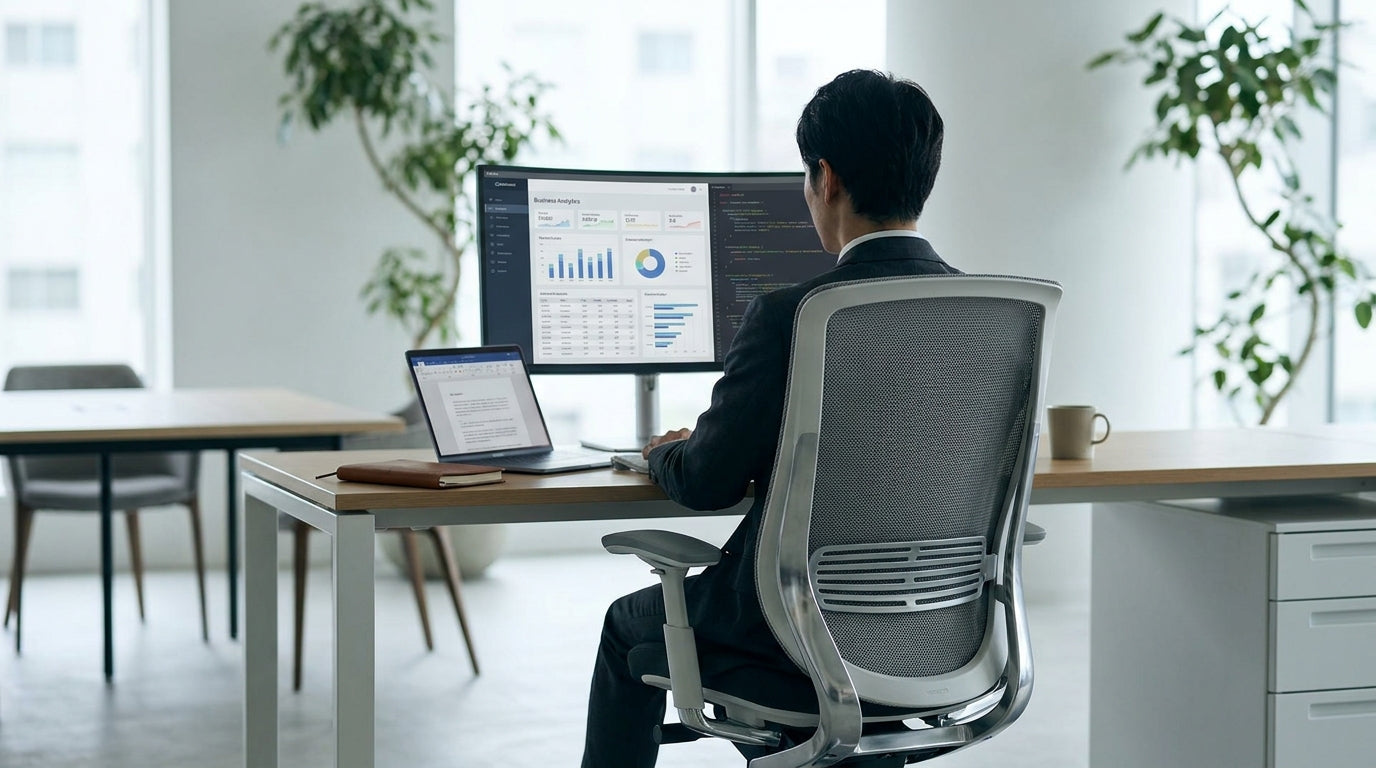
Why Japanese-Inspired Ergonomic Seating Suits Australian Workspaces
Japanese furniture design focuses on balance, comfort, and mindful use of space. That makes it a natural fit for modern Australian offices, where long hours at the desk are common.
A key principle in Japanese ergonomics is harmony between body and environment. Instead of forcing your posture to match the chair, the chair is shaped to support your natural spinal curve, relaxed shoulders, and neutral hip position. This helps reduce everyday issues like neck strain, lower back pain, and tight hips from static sitting.
You’ll also notice a focus on simplicity. Lines are clean, adjustments are logical, and aesthetics are calm rather than flashy. Whether you’re fitting out a home office in a small apartment or a larger commercial site, a slimline profile and compact footprint can still offer high-end support. For open-plan settings, pairing minimalist seating with breathable mesh office chairs creates a cohesive, uncluttered look.
Japan’s culture of precision work influences how these chairs are engineered. Fine-tuned adjustment points, a wide recline range, and clever lumbar support are designed for people who sit and focus for hours at a time. That aligns perfectly with the needs of Australian professionals, designers, and remote workers who want to stay comfortable and productive all day.
Core Ergonomic Features Inspired by Japanese Design
Good ergonomics starts with how your spine, hips, and shoulders are supported. Japanese-influenced seating tends to prioritise subtle, continuous support over bulky padding.
A defining feature is dynamic lumbar support that follows the natural S-curve of your spine. Instead of a fixed pillow, you’ll often see flexible back frames or adjustable lumbar pads that move with you as you shift position. This reduces the urge to slouch and keeps pressure away from the lower vertebrae, which is crucial during long stints at a screen.
Seat design is equally important. Slightly waterfall front edges reduce pressure on the backs of your thighs, keeping circulation flowing to your legs and feet. Height, recline tension, armrest width, and headrest height are usually highly adjustable, letting you fine-tune the setup in minutes. Many refined task chairs now incorporate these multi-point adjustments with a slim, understated frame.
Japanese minimalism also shows up in clever use of materials rather than bulky cushions. Flexible mesh backs, responsive foams, and supportive frames can create comfort without excess thickness. This keeps the chair visually light while still delivering the postural support you need for both focused work and relaxed reclining.
Choosing the Right Style for Your Work and Body
The right chair depends on what you do each day, not just how it looks. Consider your work style, height, and any existing aches or injuries.
If you move between multiple tasks or desks, a lightweight, manoeuvrable design with a breathable back is ideal. Look for models similar to advanced mesh office chairs, which offer airflow and flexible support across the shoulder blades and lower back. For focused computer work, opt for a height-adjustable seat, 3D or 4D armrests (which move up, down, in, out, and sometimes forward or back), and a reclining mechanism that lets your hips open while your back stays supported.
Taller or heavier users should prioritise rated load capacity and a solid mechanism. Heavy-duty frames and reinforced gas lifts, like those used in many heavy duty chairs, help maintain stability and longevity. Look for wide seat pans with high-density foam or responsive mesh that won’t compress too quickly. Shorter users, on the other hand, may prefer a slightly shallower seat to keep feet flat on the floor without cutting into the backs of the knees.
If you attend frequent stand-up meetings or creative sessions at benches, a taller option inspired by drafting or studio seating can help. Models similar to contemporary drafting chairs often include foot rings and extra height adjustment, keeping your hips in a neutral position even at higher work surfaces. For lab-style or technical environments, low-profile, easily cleanable designs like lab chairs & stools provide ergonomic support without cluttering up the workspace.
Matching Japanese Aesthetics with Australian Office Needs
Japanese-inspired seating is known for its clean lines and calming presence. It blends particularly well with Australian interiors that favour light, open spaces and natural textures.
In corporate settings, the subtle design language pairs neatly with contemporary boardrooms and collaborative zones. Sleek silhouettes can sit alongside refined meeting chairs or understated visitor chairs without visual clutter. Neutral colours like charcoal, grey, and muted blues tend to work best, allowing timber desks, greenery, and natural light to become the focal points.
For executive offices or home workspaces where a more luxurious look is desired, consider finishes akin to premium leather chairs combined with ergonomic shaping. High-quality leather or leather-look materials, when paired with slim armrests and a supportive back, preserve that Japanese sense of restraint while still looking plush. If you want to support local manufacturing standards and quality assurance, choosing options comparable to Australian made chairs ensures designs are tailored for our climate and usage patterns.
Accessibility and inclusivity are also key considerations. For users with mobility issues or who need extra help standing up from a seated position, seating solutions similar to power lift chairs can offer gentle, controlled assistance while still reflecting minimalist design principles. The goal is to create an environment where every team member, client, or guest can sit comfortably, work effectively, and feel welcome.
Setting Up and Maintaining Your Chair for Long-Term Comfort
Even the most advanced chair won’t help if it’s set up poorly. Take a few minutes to tailor it to your body and desk.
Start by adjusting seat height so your feet rest flat on the floor and your knees are roughly at a 90-degree angle. Your hips should sit slightly higher than your knees to reduce lower back strain. Next, bring the backrest forward or adjust lumbar depth so it meets the natural curve of your lower spine when you sit upright. Armrests should support your forearms lightly while your shoulders stay relaxed, not hunched.
For collaborative spaces, apply the same principles across all shared seating. Comfortable, well-positioned meeting chairs help keep everyone focused during longer sessions, while thoughtfully chosen visitor chairs signal that guests’ comfort is valued. If your workspace includes specialised zones like design benches or labs, ensure compatible options drawn from styles like drafting chairs and lab chairs & stools are adjusted for bench height and task requirements.
To extend the life of your chair, clean fabric or mesh regularly, check castors for debris, and tighten any loose screws or levers. If you rely on a heavier-rated model similar to heavy duty chairs, periodic inspections are especially important to preserve stability. With simple setup and occasional maintenance, you’ll get the full benefit of Japanese-inspired ergonomics—better posture, less fatigue, and a workspace that supports you throughout the day.


