

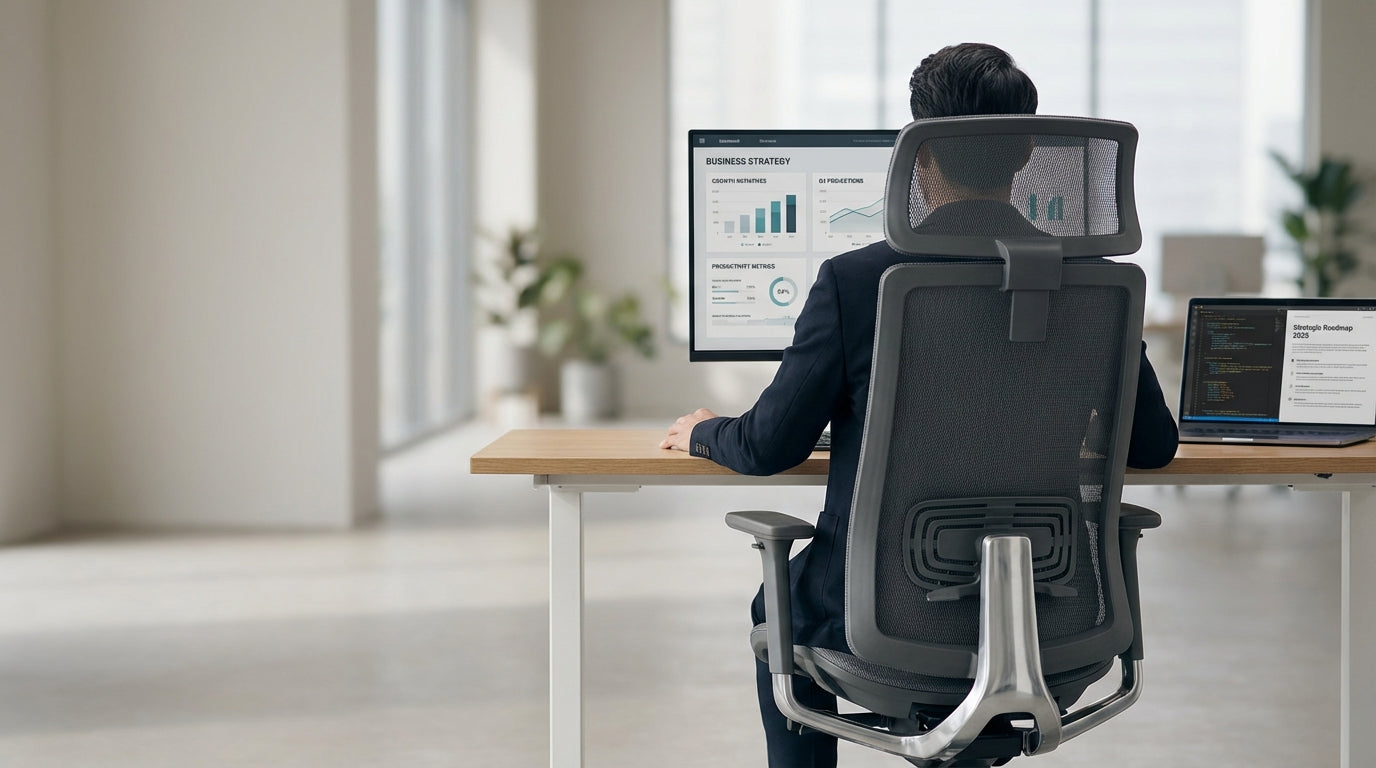
Why a Higher Weight Rating Matters for Office Seating
Choosing a chair with a higher load rating isn’t just about numbers on a spec sheet. It’s about safety, comfort, and long‑term durability in your workday.
Standard office seating is often tested to support around 100–120 kg, which may not be enough for many Australian workers, or for shared environments where multiple people use the same workstation. A chair engineered for 150 kg and above usually has a reinforced frame, tougher gas lift, and stronger castors. This reduces the risk of structural failure, annoying squeaks, and that wobbly feeling when you lean back or roll across the floor.
Beyond safety, high‑capacity models are built to stay comfortable over longer periods. Thicker foam, wider seat pans, and improved lumbar (lower back) support help distribute weight more evenly, reducing pressure on hips and thighs. That can make a real difference if you’re at your desk eight hours a day, or if you’re using specialised seating such as task chairs for focused computer work or drafting chairs at higher benches.
Investing in a properly rated chair is also smart from a compliance point of view. Employers have a duty of care to provide safe, suitable furniture, and choosing certified high‑capacity options can help reduce workplace injury claims and downtime. For individuals working from home, the same principles apply: a purpose‑built chair will generally outlast a cheaper, under‑rated option by years.
Key Features to Look For in High‑Capacity Office Chairs
Not all heavy‑duty seating is created equal. Look beyond the weight limit label and focus on the core design details that influence comfort and lifespan.
Start with the base and frame. A high‑quality steel or reinforced aluminium base usually offers better stability than basic plastic. Large, smooth‑rolling castors help support higher loads without gouging your floors. From there, check the mechanism: chairs with multi‑tilt or synchro‑tilt controls let you adjust seat angle and recline tension, helping you maintain a neutral posture whether you’re typing, taking calls, or joining quick catch‑ups on meeting chairs nearby.
Seat dimensions are just as important as capacity. Look for a generous seat width and depth so your thighs are supported without the front edge cutting into your legs. Height‑adjustable lumbar support, a contoured backrest, and adjustable armrests (height and width) allow you to customise the fit. Many ergonomic models share design principles with high‑end mesh office chairs, combining breathable materials with firm support where you need it most.
Finally, consider the type of upholstery and foam. Dense, commercial‑grade foam resists sagging, while fabrics and leathers rated for heavy use (often called “commercial” or “contract” grade) are tested for abrasion and colourfastness. If you prefer a premium feel, high‑capacity leather chairs offer a more executive look without compromising on performance, though you’ll want to make sure stitching and panels around high‑stress areas are reinforced.
Popular Chair Types That Support Higher Weight Loads
Once you know what to look for, the next step is matching the right style of chair to your workspace, task, and body type.
For everyday desk work, ergonomic task chairs are a practical starting point. Many models in this category offer versions with upgraded components and higher load ratings, including wider seats and heavy‑duty gas lifts. If you’re in a warmer climate or a non‑air‑conditioned space, high‑capacity mesh office chairs can help keep you cooler while still providing a supportive frame and responsive backrest.
In specialist environments, you’ll often find purpose‑designed options built to handle more demanding conditions. For example, drafting chairs with higher cylinders suit standing desks and design benches, using ring footrests and weighted bases for extra stability. In clinical, research, or technical settings, lab chairs & stools feature easy‑clean surfaces and robust components to stand up to constant adjustments and movement.
Not every work seat is behind a desk. Reception and casual spaces benefit from stronger visitor chairs that can comfortably accommodate a range of body sizes, while boardrooms often rely on stylish yet sturdy meeting chairs that see heavy use. If mobility or standing up from a seated position is difficult, power lift chairs add an electric lift mechanism to help you rise more easily, pairing support with accessibility in home offices and care environments.
Choosing Materials: Mesh, Fabric, Leather and Beyond
The right materials can significantly influence how supportive and cool your chair feels over a full workday. Different finishes also affect maintenance and durability.
Breathable backs, like those on many mesh office chairs, are popular in Australian offices because they allow air to circulate and reduce heat build‑up. When combined with a solid, upholstered seat and a reinforced frame, they can provide a good balance between comfort and structure. Fabric‑covered heavy‑duty chairs are another common choice, especially in open‑plan offices, as they’re available in a wide range of colours and are often treated for stain and abrasion resistance.
If you prefer a more corporate or executive look, consider high‑capacity leather chairs. Genuine leather has a premium feel and tends to age well if cared for properly, while quality synthetic leathers offer similar aesthetics with simpler maintenance. In healthcare, labs, and education settings, smooth‑surface lab chairs & stools and some Australian made chairs are designed so they can be wiped down quickly, helping maintain hygiene standards.
Don’t overlook the benefits of locally produced seating. Many Australian made chairs are engineered specifically for local workplace standards and body types, with options for custom upholstery and components. That can be particularly useful if you need matching finishes across heavy duty chairs, task chairs, and visitor chairs while keeping a consistent, professional look in your office.
Practical Buying Tips for Australian Workspaces
Before you invest, it pays to line up your requirements with the right specification and supplier support. A little planning can prevent costly mistakes.
Start by confirming the actual user weight and how many hours per day the chair will be used. Many heavy duty chairs are also rated for “24/7” or “intensive use”, which is ideal for call centres, control rooms, or multi‑shift environments. For typical office hours, a standard high‑capacity rating with quality components is often enough, provided you combine it with good ergonomic adjustment and a suitable desk setup.
Next, consider the broader seating mix in your space. Reception areas may call for matching visitor chairs, while collaboration zones can benefit from flexible meeting chairs that are easy to move and stack. If you have height‑adjustable or drafting‑height benches, rounding out your selection with compatible drafting chairs will keep staff comfortable whether they’re sitting or perching.
Finally, think about long‑term value. Look for local warranties, readily available spare parts, and models from ranges that also include task chairs, mesh office chairs, and Australian made chairs so you can expand or reconfigure later. For home offices or users needing extra assistance, pairing a supportive desk chair with a power lift chair in a nearby rest area can provide comfort throughout the day without relying on a single piece of furniture for every task.


