

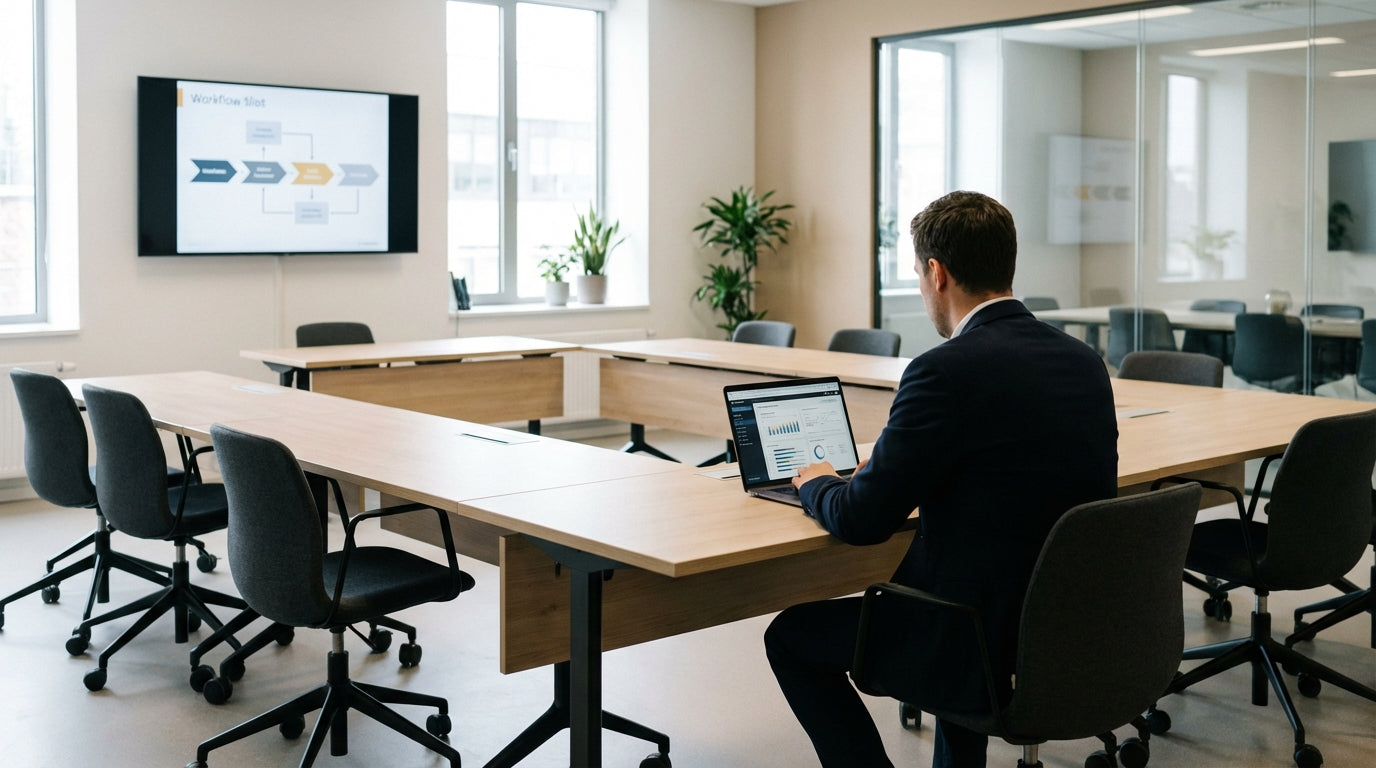
Why Purpose-Built Training Furniture Matters
Well-planned training areas help teams learn faster and stay engaged. The right mix of tables, chairs and whiteboards makes every session smoother for both facilitators and participants.
In modern corporate environments, meeting rooms now double as workshops, onboarding hubs and project spaces. Furniture needs to adapt quickly between lecture-style layouts, small group activities and hybrid training with remote staff. Versatile pieces such as height-appropriate Training Tables and easily movable Training Chairs give you the flexibility to reconfigure the room with minimal downtime.
Purpose-built solutions also support workplace health and safety. Stable frames, quality castors and compliant materials reduce trip hazards and equipment failure during busy sessions. When you combine this with supportive seating and well-sized surfaces, you minimise fatigue, improve focus and create a more professional training experience for staff and clients alike.
Designing a Flexible Training Layout
Corporate training spaces work best when they can switch quickly between different setups. Flexibility should guide your choice of tables, seating and presentation tools.
Start with tables that can be rearranged without heavy lifting. Options like Mobile Tables, Flip Top Tables and compact Folding Tables let you move from classroom rows to U-shapes or pods in minutes. This is ideal for alternating between presentations, group discussions and breakout activities throughout the day.
When space is tight, look for furniture that stacks, folds or nests together. Pairing slimline Training Tables with Stacking Chairs or Folding Chairs frees up valuable floor area for workshops and role plays. A mobile layout also supports hybrid training, allowing you to position participants and equipment so cameras capture the room clearly during video calls.
Finally, consider how trainers move through the room. Clear walkways between tables, easy access to Mobile Whiteboards and line-of-sight to screens all contribute to better communication. A well-designed layout reduces distractions and makes it easier for everyone to stay focused on the learning at hand.
Choosing the Right Tables for Modern Training
Training tables are the backbone of any learning space. They need to balance durability, mobility and comfort for long sessions.
For most corporate rooms, modular Training Tables with robust frames and easy-clean tops are a smart starting point. These can be grouped together for workshops or separated for exam-style layouts without fuss. Where sessions change frequently, Mobile Tables with lockable castors make reconfiguration quick while keeping surfaces stable during writing or laptop use.
If you regularly clear the room for town halls or events, invest in space-saving designs. Flip Top Tables allow tops to tilt vertically, so you can nest multiple units together along a wall. Similarly, Folding Tables collapse flat for storage in cupboards or behind partitions. These options help you get maximum value out of multipurpose corporate spaces.
Also think about table size and access to power. Narrow tables work well for lecture-style setups, while deeper surfaces are better for collaborative sessions where participants spread out documents and devices. Combining different table types across your training floor gives you the flexibility to support everything from quick toolbox talks to full-day workshops.
Seating That Supports Focus and Long Sessions
Comfortable, practical seating keeps participants alert and reduces fatigue. The right chairs also streamline storage and room turnover.
Dedicated Training Chairs are designed for longer periods of sitting, with shaped backs and stable frames that support good posture. For rooms that host large groups, Stacking Chairs are especially useful, as they can be stacked vertically when not in use, freeing floor space quickly. Where rapid setup and pack-down is essential, lightweight Folding Chairs are easy to move and store between sessions.
Some training formats call for built-in writing surfaces. Tablet Arm Chairs provide an attached tablet that swings in and out, giving each participant a stable surface for note-taking without needing separate tables. These are ideal for short inductions, compliance briefings or overflow seating in compact rooms.
Whichever style you choose, make sure the chair height matches your table range to avoid strain on shoulders and wrists. Mixing a core set of ergonomic Training Chairs with a bank of Stacking Chairs or Folding Chairs gives you both comfort and scalability for growing teams and larger events.
Essential Presentation Tools for Effective Learning
Clear visuals keep training sessions structured and on track. Quality whiteboards and display tools make it easier to communicate key points.
A reliable wall-mounted surface, such as Magnetic Whiteboards, allows trainers to map out agendas, diagrams and timelines that stay visible throughout the session. The magnetic surface also lets you attach printed materials, charts and process maps without extra equipment. For rooms that change configuration regularly, Mobile Whiteboards can be wheeled between spaces or positioned near small groups during breakout exercises.
When planning your setup, think about how participants will interact with these tools. Position whiteboards so they are clearly visible from all configurations of Training Tables and seating. In larger rooms, using more than one Mobile Whiteboard helps ensure everyone can see instructions and contribute to group work without crowding at the front.
Combining flexible tables, fit-for-purpose seating and adaptable writing surfaces gives your organisation a training environment that supports both current and future learning needs. With the right furniture in place, trainers can focus on content and delivery, while participants benefit from a comfortable, well-organised space that encourages engagement and retention.


