

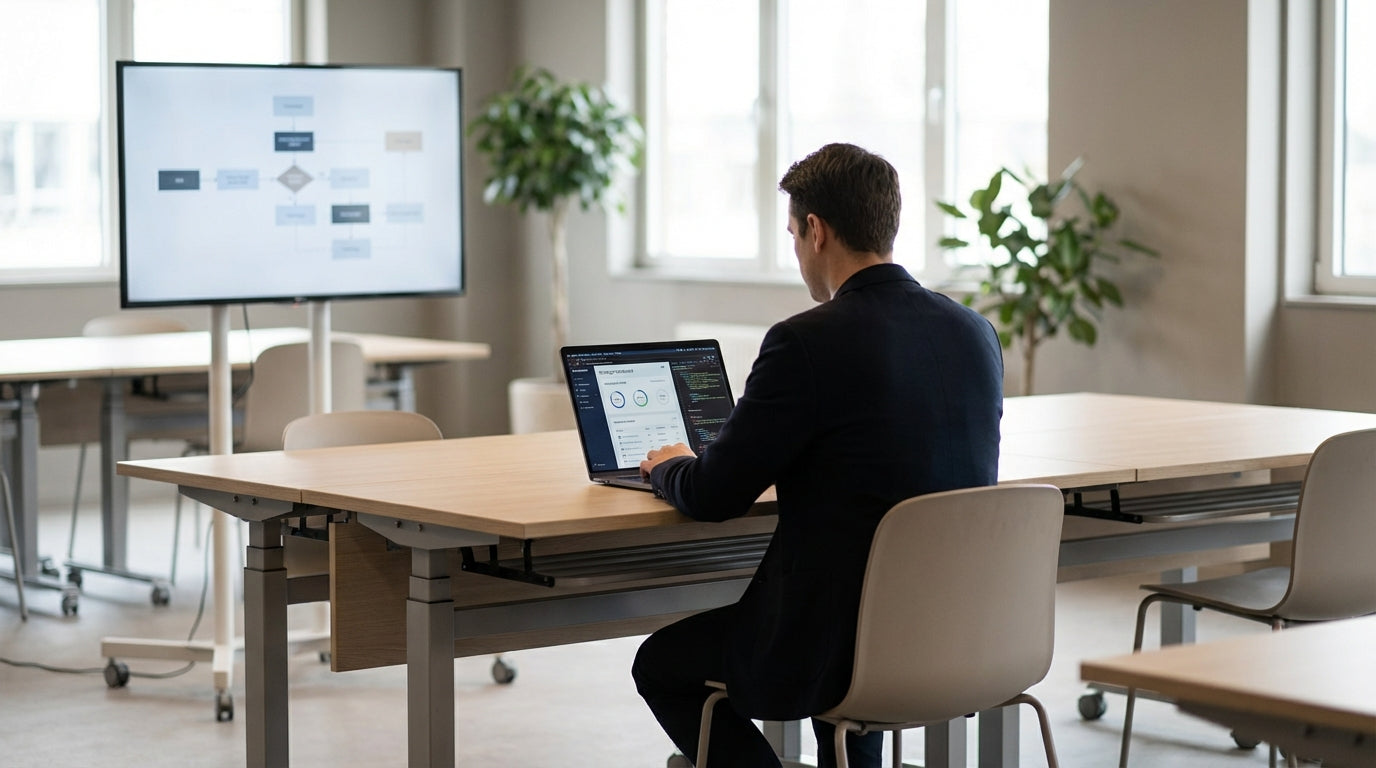
Why flip-top tables are ideal for modern training rooms
Flexible, space-saving furniture is essential in today’s learning and collaboration spaces. Flip-top training tables make it easy to change layouts quickly, without sacrificing comfort or durability.
Unlike fixed desks, these tables are designed to tilt the top into a vertical position, allowing staff to nest them neatly when not in use. This makes them perfect for multipurpose areas that switch between classroom-style training, workshops and project work. Many models are fitted with castors, so one person can move several units at once, reducing setup time between sessions.
For organisations that run frequent learning programs, pairing flexible desks with dedicated training tables and agile mobile tables ensures the room can handle everything from small team huddles to large seminars. When combined with ergonomic training chairs, the result is a professional, efficient environment that helps participants stay focused.
In many Australian offices and education centres, floor space is at a premium. Flip mechanisms and nesting frames let you reclaim that expensive square metreage for other activities, avoiding the need for extra rooms. Over time, this adaptability can offer far better value than fixed furniture that locks you into a single layout.
Key features to look for in flip-top training tables
Not all flip-top tables are built the same. Paying attention to a few core features will ensure they stand up to daily use and constant reconfiguration.
Start with the frame and mechanism. A sturdy steel underframe with a reliable locking system keeps the worktop stable when in use and safe when flipped. Look for user-friendly levers or handles so staff don’t struggle to tilt the surface. Heavy-duty castors with locking brakes are also important, allowing you to roll furniture into position and then secure it firmly.
The work surface itself should be durable and easy to clean. Laminated tops with impact-resistant edging are ideal for training environments where laptops, notebooks and coffee cups are constantly moved around. If you’re furnishing a boardroom that doubles as a learning space, consider coordinating finishes with your existing office & meeting tables so everything feels cohesive.
Cable management is another detail that makes a big difference. Integrated cable trays or discreet ports keep power leads tidy when multiple devices are plugged in. When used alongside digital tools and mobile whiteboards, this helps maintain a clean, professional appearance that’s easier to navigate and safer for participants.
Designing a flexible training layout
An effective training space needs to change configuration quickly. The right mix of tables and seating allows you to switch from presentation mode to group work with minimal disruption.
Start by mapping your most common room setups: theatre-style, U-shape, classroom rows or cabaret (small clusters). Compact flip-top desks can be wheeled into each arrangement in minutes, particularly when paired with lightweight stacking chairs or practical folding chairs that store away when not required. This lets you scale seating capacity up or down depending on attendee numbers.
For workshops that involve breakout tasks, consider combining slimline desks with versatile meeting tables. These larger surfaces can act as collaboration hubs where small groups gather to discuss ideas, while narrow training desks remain available for note-taking or laptop work. Mobile surfaces with a flip-top design make it easy to carve out zones within the same room—presentation at the front, group work in the middle, and review or debrief spaces at the back.
If your training program also utilises open-plan areas, agile furniture such as folding tables and mobile tables can extend the capacity of your dedicated room. This approach supports hybrid working and hot-desking, giving you extra surfaces whenever you host larger induction days or compliance sessions.
Choosing sizes, configurations and accessories
Selecting the right dimensions and accessories will determine how well your training furniture performs day to day. Think about who uses the room, how often, and for what types of sessions.
Standard rectangular tables suit most training layouts, but narrow depths can be useful where walkways are tight. If you run interactive sessions or workshops, mix in a few larger units to accommodate team activities. Organisations that frequently host external guests often match these pieces with existing flip top tables in adjacent meeting spaces, ensuring a consistent look across the floor.
Height is another factor. Fixed-height models work well for traditional classroom setups, while adjustable options can double as standing workstations for energising longer sessions. Accessories like modesty panels, linking brackets and power boxes add functionality: panels provide visual privacy, while links keep rows aligned when you need a formal arrangement.
Don’t overlook seating and presentation tools. Partner your tables with supportive training chairs to maintain comfort during long workshops, and keep at least one mobile whiteboard available for facilitators and group brainstorming. This mix ensures the space can adapt to structured courses, interactive sessions and collaborative project work without needing a full refit.
Maximising value and longevity
Investing in quality flip-top furniture pays off when it’s used smartly and maintained well. A little planning upfront will help you protect your budget over the long term.
First, buy with daily use in mind. Robust frames, strong locking mechanisms and commercial-grade tops will handle repeated flipping, nesting and relocation better than lightweight options designed for occasional events. Matching your training room pieces with durable training tables and resilient stacking chairs reduces the risk of early replacement and keeps the room looking professional.
Next, plan clean storage. Because surfaces tilt vertically, you can nest several units in a compact footprint, freeing up floor space for other uses. Clear storage zones also protect your furniture from accidental knocks or damage when rooms are reconfigured. Coordinating with foldable options like folding tables and easily stored folding chairs can further streamline changeovers between events.
Finally, implement basic care routines. Wipe down tops regularly, check castors and locks, and train staff on safe flipping and nesting techniques. When your flexible tables and complementary office & meeting tables are well maintained, they’ll continue to support productive training, meetings and workshops for years without unexpected downtime or replacement costs.


