

Planning Your Reception Layout for Flow and First Impressions
A well-planned reception layout makes visitors feel welcome and helps staff work efficiently. Before you start positioning furniture, take time to assess the space and how people will move through it.
Begin by mapping out the entry point, sightlines, and traffic paths from the door to the main desk, lifts, and meeting rooms. Your counter should be clearly visible as soon as someone walks in, without blocking access or creating bottlenecks. Consider whether you’re combining straight counters with other reception counters or using one main unit as the focal point.
Think about the experience from a visitor’s perspective: where will they stand, where will they wait, and what do they see while they’re there? Pairing your main desk with well-placed reception seating and accessible visitor chairs ensures a clear journey from entry to check-in and then to a comfortable waiting area.
Also factor in compliance and accessibility. Leave enough circulation space for prams, wheelchairs, and mobility aids, and ensure the front of the counter is easy to approach. If your floorplan is irregular, supplementing the main desk with flexible mobile partitions can help subtly guide traffic while keeping the space open and welcoming.
Choosing the Right Counter Size, Shape, and Orientation
The dimensions and placement of your reception desk directly affect usability. Matching the unit to your room size, staff numbers, and storage needs is essential.
Measure the room carefully and allow generous clearance behind the desk for staff to move, access cupboards, and use equipment. Browse purpose-built straight reception counters that fit your width and depth requirements, then decide whether the unit will sit parallel to the entry, angled towards it, or centred as a feature. A long, linear counter works well in wide lobbies, while a more compact footprint suits smaller practices and studios.
If your reception team handles multiple functions—such as payments, sign-ins, and general enquiries—consider zoning the front edge. You can angle the counter relative to walls to create a “primary” approach zone and quieter side areas. In busier workplaces, combining a linear desk with complementary L-shaped reception counters can carve out extra workspace without crowding the entry.
Orientation also influences acoustics and privacy. Facing the desk away from noisy corridors, or backing it onto floor partitions, helps shield phone calls and confidential conversations. Where desks sit in open-plan foyers, slimline desk mounted partitions can separate staff work areas from public zones without closing off the space visually.
Creating an Efficient Work Zone Behind the Counter
What happens behind the front desk matters just as much as the façade. A tidy, well-organised work zone helps your team respond quickly and professionally.
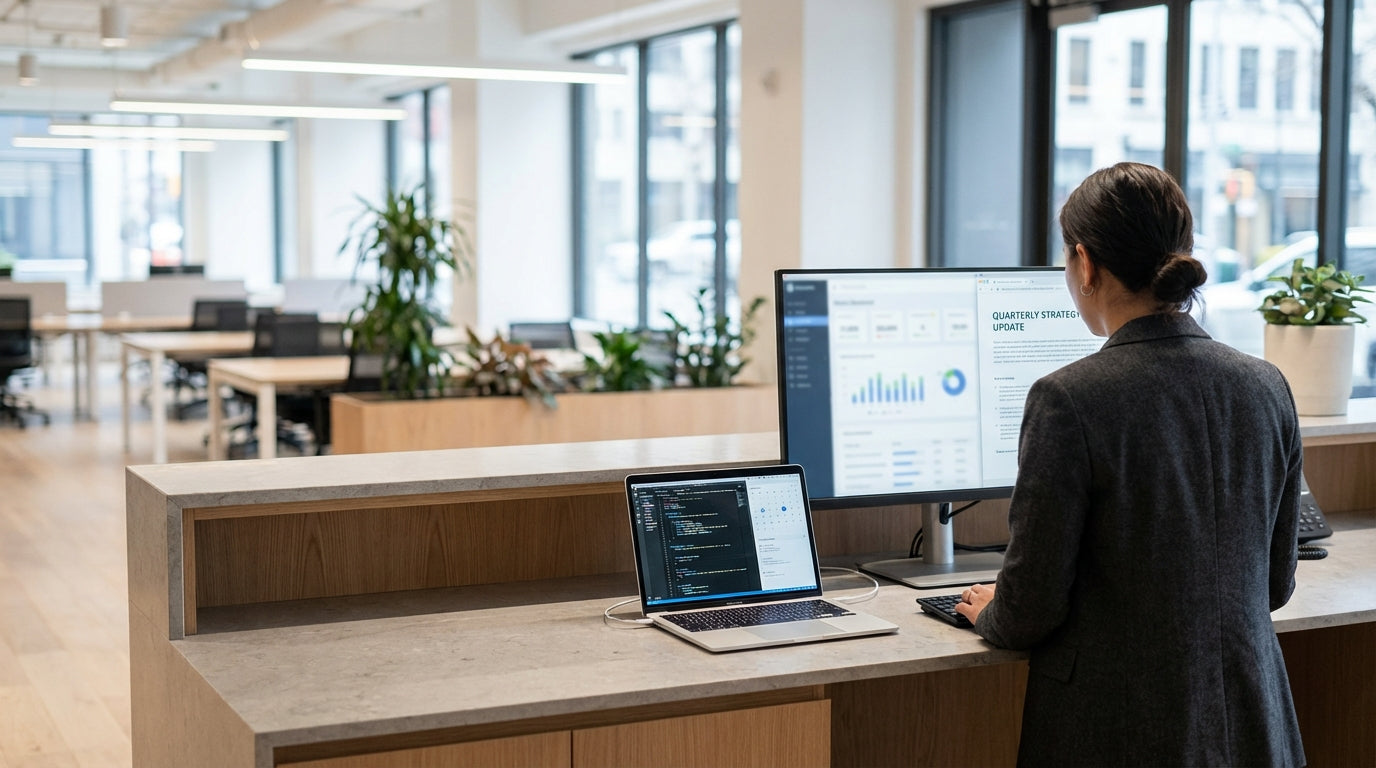
Start by planning the workflow: where phones, computers, printers, and stationery will go, and how staff will share the space. The counter depth should comfortably accommodate monitors and paperwork while leaving room for writing and signing documents. Many reception counters include built-in shelves or modesty panels; use these to keep everyday items within arm’s reach but out of the visitor’s direct line of sight.
Behind the desk, maintain clear pathways so staff aren’t squeezing past each other or stepping around bags and boxes. Storage units, such as under-desk pedestals or credenzas, should sit close enough for easy access without crowding the chair. If you need extra focus space for private calls or complex tasks away from the front, consider nearby office pods that staff can duck into between visitor interactions.
Acoustic control is another key part of an efficient work zone, particularly in busy medical, legal, or corporate settings. Using higher hutches or pairing your desk with floor partitions can help absorb sound and reduce distractions. For flexible or shared foyers, portable screens from the mobile partitions range allow you to reconfigure noise control as your needs change.
Positioning Seating and Managing Visitor Comfort
Comfortable, well-positioned seating supports both your visitors and your brand. The goal is to keep guests close to the desk without cluttering the approach.
Place your main waiting area within clear sight of the reception desk so visitors can see when they’re being called. Investing in quality reception seating that matches your décor signals professionalism and care, especially in healthcare, education, and professional services. Arrange chairs in small clusters rather than long, rigid rows to make conversations easier and reduce the “queue” feeling.
Mix fixed lounges with individual visitor chairs to cater for different needs—solo guests, families, and those who prefer space. Leave enough room between each piece to move comfortably, and maintain clear access paths from the door to the desk and from seating to exits. If you need to subtly separate a children’s corner or quiet zone, light-touch solutions like mobile partitions can provide definition without blocking visibility.
Lighting, ventilation, and sightlines all contribute to how the area feels. Try to orient chairs so people aren’t staring directly at staff monitors yet can still see when their name is called. Where privacy is important—such as medical or financial receptions—strategic use of floor partitions can shield sensitive discussions near the desk while keeping the waiting area open and calm.
Using Partitions and Accessories to Refine the Space
Subtle additions around the reception desk can improve privacy, safety, and visual appeal. The right accessories make the space easier to manage day-to-day.
Partitioning is one of the most effective tools. Low desk mounted partitions can define staff-only sides of the counter and create a barrier between screens and visitors, which is helpful wherever confidential information is displayed. For larger lobbies or shared foyers, combining floor partitions with agile mobile partitions lets you shape zones for queuing, waiting, and circulation without structural changes.
Signage, wayfinding, and branding elements should be integrated with the counter rather than added as an afterthought. Use the front panel of your main unit from the straight reception counters collection to display your logo cleanly, and keep directional signs at eye level as people enter. Accessories such as brochure holders, visitor sign-in tablets, and hand sanitiser stands should be easily accessible but not clutter the main work surface.
Finally, keep future changes in mind. Flexible solutions like modular reception counters, movable seating, and reconfigurable partition systems make it easier to adapt to new team sizes, technologies, or health and safety requirements. Thoughtful arrangement now means your reception can evolve gracefully as your organisation grows.


