

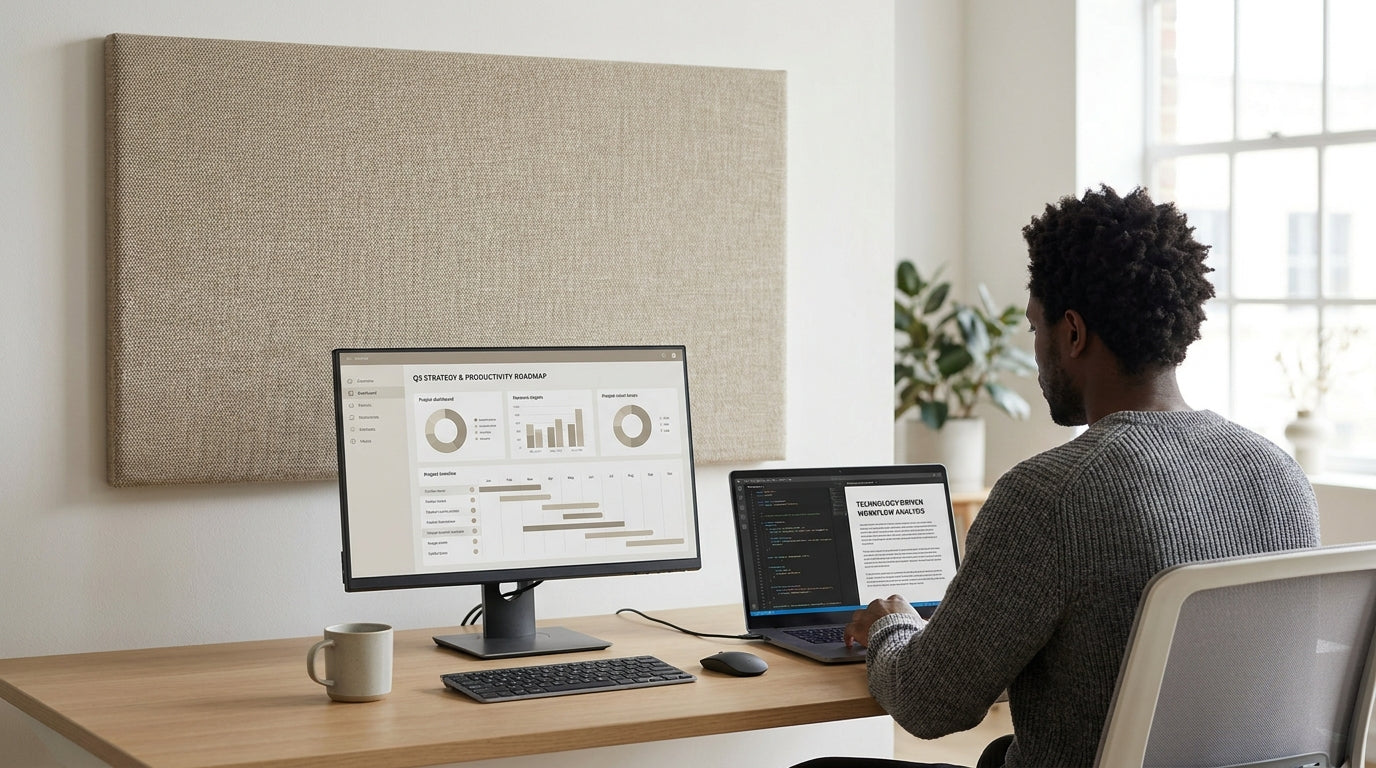
Understanding Acoustic Wall Art and Why It Matters
Acoustic wall art does more than decorate a room; it controls echo and background noise. When chosen well, it makes offices, meeting rooms and home studios look polished and sound better.
Traditional soundproofing can be bulky and unattractive, which is why many designers now turn to decorative acoustic panels. These products are made from sound-absorbing materials shaped and printed to resemble contemporary artwork, geometric patterns or branded graphics. By combining visual appeal with acoustic performance, you can improve speech clarity, reduce fatigue and create a more comfortable space for clients and staff alike.
In practical terms, acoustic wall panels help manage reverberation, which is the lingering echo you hear in hard, open rooms. Reducing reverberation time makes conversations easier to follow, cuts down on distractions and can even help meet workplace standards for noise. If you need a highly visible solution, consider feature pieces from an Acoustic Wall Art range that double as a focal point in reception areas or open-plan offices.
Acoustic treatments are often most effective when they complement other sound control products. Ceiling surfaces and partitions frequently reflect noise back into the room, so combining wall art with solutions like Acoustic Ceiling Traps or strategically placed Floor Partitions can dramatically improve overall performance. Thinking of acoustic wall art as one element in a broader acoustic plan will help you achieve a more professional result.
Balancing Design, Branding and Room Function
Professional-looking acoustic artwork should reflect both your brand and the way the room is used. Start by clarifying whether the space is for focused work, collaboration, or welcoming visitors.
For client-facing zones such as lobbies and waiting areas, acoustic pieces often set the tone for your brand. Coordinating colours, materials and shapes with existing furniture, including items like Reception Seating, creates a cohesive first impression. Consider subtle branding through colour blocking or abstract motifs instead of heavy-handed logos, which can date quickly or feel less refined.
In meeting rooms and executive spaces, wall art should support concentration and clear communication. Calm, structured patterns near key furniture such as Boardroom Tables help frame the room and make video calls and presentations easier to hear. Neutral bases with a limited accent palette tend to appear more corporate and timeless, which is ideal if you often host external partners or clients.
Open-plan offices call for a different approach. Here, acoustic artwork works best when coordinated with desk dividers and screens that define personal zones. When your wall art echoes the colours or shapes of Desk Mounted Partitions or Mobile Partitions, the entire layout feels intentional rather than piecemeal. This visual consistency signals a well-planned environment, even if the workspace needs to remain flexible for future changes.
Choosing the Right Size, Placement and Coverage
Even the best-looking acoustic panels will underperform if they are the wrong size or in the wrong place. A professional result comes from matching coverage to the room’s volume and main sound sources.
A useful rule of thumb is to treat the surfaces that sound hits first: walls opposite desks, conversation clusters and hard reflective surfaces like glass. Large, continuous pieces of acoustic artwork on these walls help capture sound before it bounces around the room. In high-ceiling spaces or converted industrial offices, pairing these panels with overhead options such as Acoustic Ceiling Traps brings the perceived height down and minimises echo.
Scale matters as much as placement. Undersized panels scattered randomly can look like afterthoughts and provide limited acoustic benefit. Instead, consider grouping multiple panels into a deliberate composition or choosing one oversized feature piece from an Acoustic Wall Art collection to anchor the room. In narrow corridors, long horizontal layouts work better, while in tall stairwells, vertical arrangements are usually more effective and visually balanced.
If your office layout is flexible, wall coverage should coordinate with movable elements that change the way sound travels. Artwork positioned to work in tandem with Floor Partitions or Mobile Partitions lets you reshape zones without losing acoustic control. In spaces that also rely on private pods or focus rooms, make sure corridors and approach paths contain enough absorption so that noise does not leak in and undermine the performance of Acoustic Pods.
Materials, Acoustic Performance and Maintenance
The material behind the artwork determines how well it reduces noise. Look for panels with clear acoustic ratings and finishes suited to commercial use.
Many decorative acoustic panels are made from dense polyester or foam designed to absorb mid to high frequencies, such as speech and office noise. Product specifications often quote an NRC (Noise Reduction Coefficient) or similar rating, which indicates how much sound the panel absorbs: higher numbers mean better absorption. When comparing options, choose materials with proven acoustic data rather than purely decorative items, especially for large meeting rooms or open-plan areas where noise control is critical.
Durability and cleaning are just as important in a professional environment. In reception and breakout spaces with heavy traffic, opt for robust fabrics or printed surfaces that resist marks and are easy to wipe down. Coordinating finishes with other acoustic solutions such as Acoustic Wall Tiles can help keep maintenance simple, because you can apply the same cleaning routine across multiple products without damaging the materials.
Some workplaces need additional acoustic solutions beyond wall art, particularly if there are exposed ceilings or shared workbenches. In these cases, combining wall panels with products like Acoustic Ceiling Traps, Desk Mounted Partitions and enclosed Acoustic Pods can deliver a more balanced sound environment. Choosing matching or complementary materials across these products helps them read as a single, purposeful design rather than a mix of unrelated elements.
Coordinating Acoustic Wall Art with the Rest of Your Fitout
To look truly professional, acoustic artwork should feel integrated into the entire fitout, not just stuck on the walls at the end of a project. Think about how each piece connects visually and functionally with the surrounding furniture.
Start by mapping key sightlines: what people see when they enter reception, sit down at their desks, or join a meeting. Use wall art to highlight important areas, such as behind Reception Seating or along the main circulation path into the boardroom. Aligning panel edges with architectural lines, doors or major furniture items like Boardroom Tables creates clean, ordered compositions that read as part of the architecture.
Next, consider how your acoustic artwork interacts with spatial dividers. If you already rely on Floor Partitions, Mobile Partitions or Desk Mounted Partitions, echo their forms, colours or textures in your wall treatments. This approach visually stitches the space together and signals that noise control has been intentionally addressed at multiple levels: seated eye height, standing eye height and overhead.
Finally, ensure enclosed spaces benefit from the same design language. Meeting rooms, focus rooms and collaboration hubs often use Acoustic Pods to provide quiet zones, but the areas outside these pods also need control to preserve privacy. Coordinating wall art with adjacent Acoustic Wall Tiles or ceiling elements ensures both aesthetics and performance carry through the entire floorplate. When acoustic solutions are consistent, visitors are less aware of individual products and more aware of a calm, professional atmosphere that supports productive work.


