

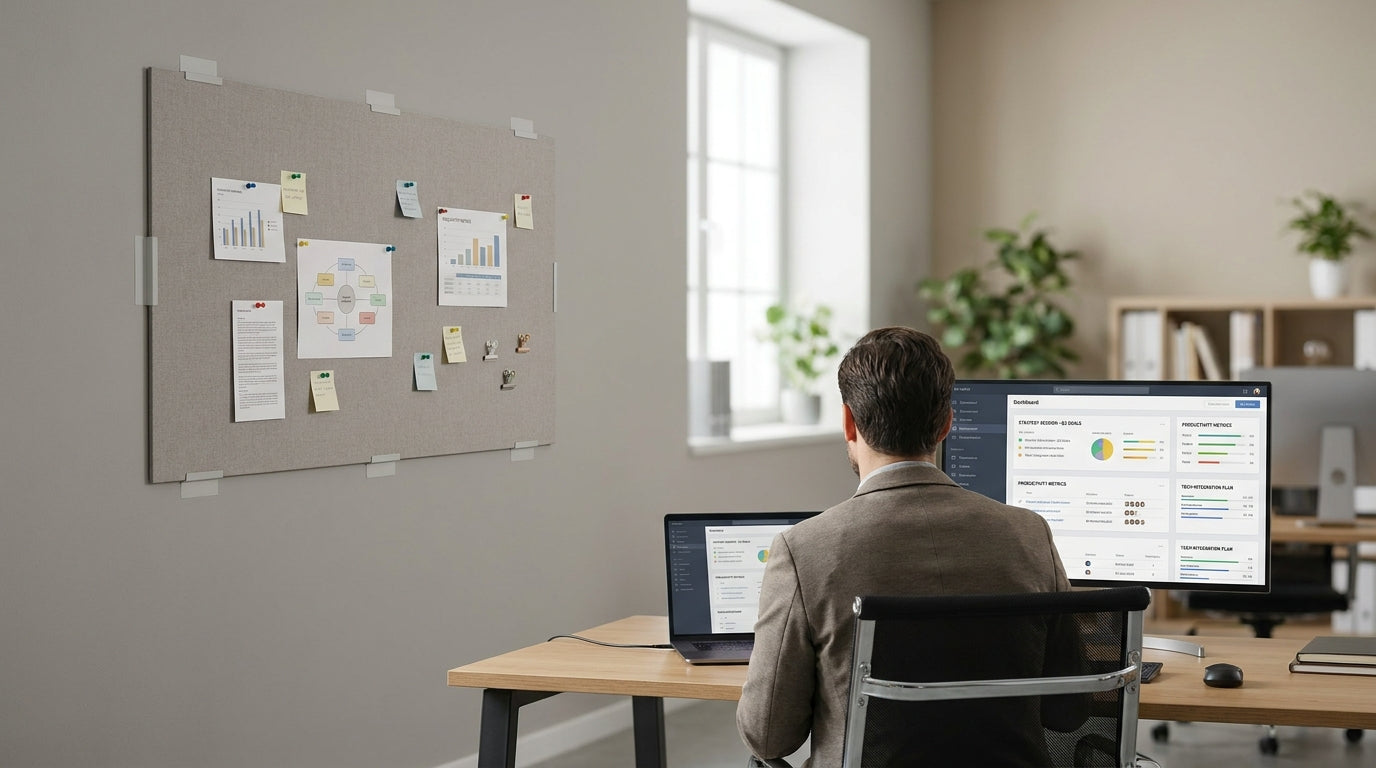
Understanding Wall-Friendly Pinboard Options
Choosing a pinboard that won’t ruin your walls starts with understanding how it’s made and mounted. Materials, backing and fixtures all affect whether you end up with cracks, chips or torn paint.
Traditional cork and fabric boards are popular because they’re lightweight and easy to mount, especially when bought through specialist suppliers of Pinboards & Corkboards. Look for products with a stable backing (like MDF or honeycomb board) that spreads weight evenly across the wall, reducing the risk of pressure points and dents. Avoid very heavy glass or metal frames on weak plasterboard unless you’re prepared to install suitable anchors or fix into studs.
The mounting system matters just as much as the board itself. Many modern boards come with concealed brackets or split battens that spread the load and minimise the number of fixing points. Others use lightweight aluminium frames that can be safely attached with appropriately rated plasterboard fixings rather than masonry plugs. Reading the installation instructions before buying will help you match the board to your wall type.
If you also need space for printed notices, lockable options or community information, consider pairing a pinboard with purpose-designed Noticeboards & Display Cases. These products often include tailored mounting kits, reducing the guesswork and helping you protect painted or tiled surfaces in offices, schools and shared spaces.
Choosing the Right Fixing Method for Your Wall Type
Your walls determine how you should mount a pinboard. Brick, plasterboard and concrete each need different fixings to stay secure without damage.
For plasterboard, it’s best to fix into studs wherever possible. Use a stud finder to locate framing and attach the main load-bearing brackets there. Where studs don’t line up with your preferred board position, choose high-quality plasterboard anchors rated for the weight of the board. This prevents the fixings from pulling out and taking chunks of plaster with them.
On masonry or concrete walls, drilling is usually unavoidable, but damage can still be minimised. Select small-diameter wall plugs and screws that match the mounting hardware supplied with your pinboard. Mark and drill carefully to avoid unnecessary holes, and vacuum dust as you go to stop grit scratching painted or tiled surfaces. Where drilling is not allowed—such as some rentals—consider free-standing Floor Partitions or Mobile Partitions that can hold boards without touching the walls.
If you have glazed partitions or acrylic dividers, avoid heavy wall-mounted boards altogether. Instead, use lightweight Acrylic Screens or clip-on panels that attach to the frame rather than the glass itself. Desk areas can benefit from Desk Mounted Partitions, which provide a surface for pinning while leaving walls untouched, ideal in agile offices and coworking spaces.
Damage-Free and Low-Impact Mounting Alternatives
If you’re renting or simply don’t want holes, there are several lower-impact ways to mount a pinboard. The key is matching weight, wall finish and adhesive strength.
Adhesive strips and hook-and-loop systems can support small, lightweight boards, especially fabric or foam-based designs. Make sure both the wall and the back of the board are clean, dry and dust-free before applying. Look for removable products designed to release without pulling paint, and always follow the manufacturer’s weight limits. Test with a small strip in an inconspicuous area first, particularly on older or recently painted walls.
For larger pinning areas, consider modular acoustic solutions that can be attached with more forgiving fixings. Products such as Acoustic Wall Art and Acoustic Wall Tiles double as pin surfaces while improving sound absorption in open-plan offices, classrooms and home studios. Many of these panels are lightweight enough for low-impact fixings, spreading the load over a broader area so individual spots of the wall are less stressed.
Where you can’t use the wall at all, think vertically but off the structure. Mobile Partitions with pinnable surfaces let you create temporary information zones that roll away when not needed. You can also add pinnable extensions or toolbars using compatible Screen Accessories, giving you practical display space without a single screw in the plaster.
Balancing Function, Acoustics and Aesthetics
A wall-safe board still needs to look good and work well. Thinking about use, sound and style together will help you choose better.
In busy Australian offices and classrooms, noise is often as big a concern as wall damage. Fabric pinboards and acoustic panels absorb sound, cutting down on echo and chatter. Options such as Acoustic Wall Art offer decorative printed finishes while acting as pin surfaces and sound absorbers at once. This combination is especially useful in open-plan spaces where hard surfaces amplify noise.
If you already use desk or floor screens, you can spread pinning functionality across different surfaces rather than overloading a single wall. Desk Mounted Partitions and Floor Partitions are ideal for personal task lists, project boards and privacy screens. Adding small tool rails, hooks and document holders via Screen Accessories frees up the pinable area for what really needs to be displayed.
Aesthetics also matter, particularly in client-facing areas. Slimline framed boards, fabric-wrapped acoustic tiles and minimalist Acrylic Screens can all complement modern interiors while remaining practical. Choosing neutral colours for permanent fixtures and bolder shades for movable boards and partitions makes it easier to refresh your look later without repainting or patching walls.
Installation, Maintenance and Long-Term Wall Protection
Once you’ve chosen the right product, careful installation and upkeep will keep both the board and your walls in good condition. A bit of planning now saves patching and repainting later.
Before drilling or sticking anything, map out exactly where the board will go and check for power points, switches and hidden services. Use a spirit level so the board sits straight; a crooked installation increases the risk of one side pulling away and stressing the fixings. Follow the supplied mounting instructions closely, and if you’re attaching large boards or heavy Noticeboards & Display Cases, consider professional installation to ensure appropriate anchors and techniques are used for your wall type.
Over time, check fixings periodically for movement, especially in high-traffic or air-conditioned spaces where walls can flex slightly with temperature changes. Tighten loose screws gently rather than over-driving them, which can strip the hole and cause bigger damage. If a fixing point starts to fail, remove the board and repair the wall properly rather than adding more screws around the damaged area.
Finally, think about flexibility. Using a mix of wall-mounted Pinboards & Corkboards, movable Mobile Partitions and acoustic panels such as Acoustic Wall Tiles gives you room to change layouts without constant drilling and patching. When a board does need to come down, remove adhesives slowly and repair small holes promptly to stop moisture getting in and weakening the surrounding plaster, helping your walls stay in better shape for longer.


