

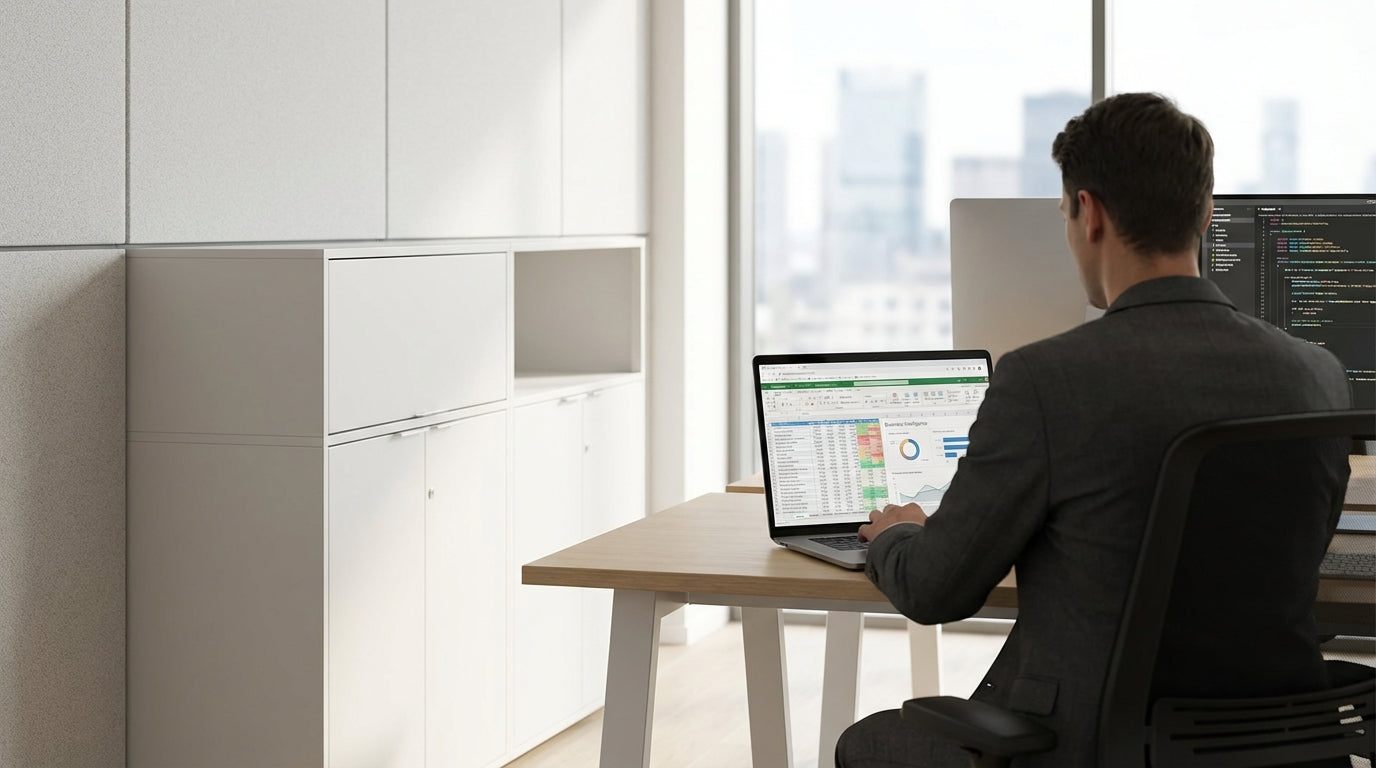
Understanding Steelco modular storage options
Steelco modular units are designed to adapt to changing offices, warehouses, and education spaces. Before you buy, it helps to understand the different cabinet types and how they work together in a system.
At the core of the range are vertical cabinets, credenzas, and multipurpose cupboards that can be stacked, joined, or reconfigured. These can sit alongside traditional office cupboards, giving you a mix of open and closed storage. For high‑use environments, pairing modular units with heavy‑duty office shelving creates a complete storage wall that handles everything from lever‑arch files to archive boxes.
Steelco systems often integrate with specialist products such as filing cabinets for organised records and stationery cupboards for consumables. The benefit of this modular approach is consistency: matching finishes, standard heights, and compatible footprints. That makes it easier to expand your storage over time without creating a mismatched, cluttered look.
Because these cabinets are steel, they typically offer higher durability and better fire resistance than many timber options. When combined with products like GO Steel Storage or Premier Storage, you can build a versatile, secure storage solution that still looks clean and professional in a modern Australian office.
Assessing your office layout and access needs
The physical layout of your workplace will strongly influence which cabinet formats make sense. Think about walkways, desk clusters, and shared zones before choosing door styles or sizes.
In narrow corridors and compact offices, swing doors can easily block circulation. Here, units with sliding or retractable doors are more practical. For example, pairing Steelco modules with sliding door cabinets helps maintain safe walkways while still giving full access to files and equipment. In contrast, larger open‑plan areas can comfortably accommodate deeper units and traditional hinged office cupboards.
Consider visibility and noise as well. Tambour (roll‑back) doors open into the cabinet itself, so they are ideal beside workstations or in meeting areas where you don’t want doors swinging out. Integrating modular units with tambour cupboards lets staff access supplies quietly and safely without interrupting others. This is especially useful in hot‑desk environments where multiple people share nearby storage.
Don’t forget ceiling height and wall length. A row of stackable Steelco units can create a streamlined storage wall, particularly when combined with adjustable office shelving above or beside them. Measuring carefully before you order ensures every module fits neatly, avoids blocking power points, and leaves enough clearance for doors and drawers to open fully.
Matching cabinet styles to what you store
The best cabinet system is the one that suits what you actually keep on site. Start by listing the types of items you need to store now and in the next few years.
Paper‑heavy workplaces such as legal, accounting, and government offices usually rely on a mix of vertical files, archive boxes, and active casework. Combining modular units with dedicated filing cabinets helps separate long‑term archives from everyday documents. Open shelves in your Steelco set‑up can hold frequently accessed folders, while lockable sections protect confidential records.
For admin teams managing office supplies, cleaning products, and tech accessories, a blend of stationery cupboards and modular cabinets with adjustable shelves gives you flexibility. Shelves can be repositioned to suit everything from printer paper to bulk packaging. When paired with GO Steel Storage units, you also gain heavy‑duty options for tools and spare parts in back‑of‑house areas.
Where you have a lot of mixed storage – books, samples, marketing materials, or personal lockers – modular systems work well alongside Premier Storage and other specialist ranges. Sliding units from the sliding door cabinets collection can hold display items, while deeper closed modules safely hide bulk stock. This layered approach keeps reception and client areas tidy, with less‑attractive items stored out of sight but still close at hand.
Door types, security, and ergonomics
Cabinet doors and locking options affect safety, usability, and compliance. Choosing the right combination reduces strain on staff and keeps valuable items secure.
Hinged doors are straightforward and cost‑effective, but they need space to open. In busy corridors, opt for tambour or sliding systems instead. Products from the tambour cupboards and sliding door cabinets ranges are popular where access space is tight, such as print rooms and utility nooks. These can sit alongside your modular steel units to form a continuous, low‑impact storage run.
Security matters anywhere you store IT equipment, confidential files, or controlled substances. Look for integrated locking mechanisms and consider separating high‑security sections in stand‑alone office cupboards. For records, lockable filing cabinets and secure Premier Storage units can complement the main modular system, ensuring sensitive materials are clearly segregated and easier to audit.
Ergonomics is often overlooked. Place heavier items between knee and shoulder height to minimise lifting strain, using adjustable office shelving inside cabinets where possible. Frequently used stationery should be stored in waist‑height shelves or shallow drawers, while rarely accessed archives can go in taller GO Steel Storage units or high cupboards. Planning these details upfront makes day‑to‑day work safer and more efficient for your team.
Planning for growth and a cohesive storage system
Australian workplaces change quickly, so your storage needs to keep up. Modular steel systems shine when you plan with expansion in mind.
Start by standardising heights, colours, and handle styles wherever you can. Aligning your Steelco pieces with complementary ranges like Steelco Modular Cabinets, GO Steel Storage, and Premier Storage helps you add new units later without visual clutter. A consistent palette also makes small offices feel larger and more organised, especially when mixing open office shelving with closed cupboards.
Think about future re‑zoning of your workplace: today’s quiet room may become tomorrow’s hub for collaboration. Flexible modules can be moved to support hot‑desking, project teams, or new departments, while dedicated stationery cupboards, office cupboards, and filing cabinets anchor key functions like admin and records. As your staff count grows, you can extend storage runs or add extra tambour or sliding door cabinets without redesigning the whole space.
Finally, map out a clear storage strategy: what lives in shared areas, what is allocated to teams, and what needs high‑security segregation. When you combine flexible Steelco units with a well‑planned mix of cupboards, shelves, and specialist cabinets, you create an organised, future‑ready office that’s easy for everyone to navigate.


