

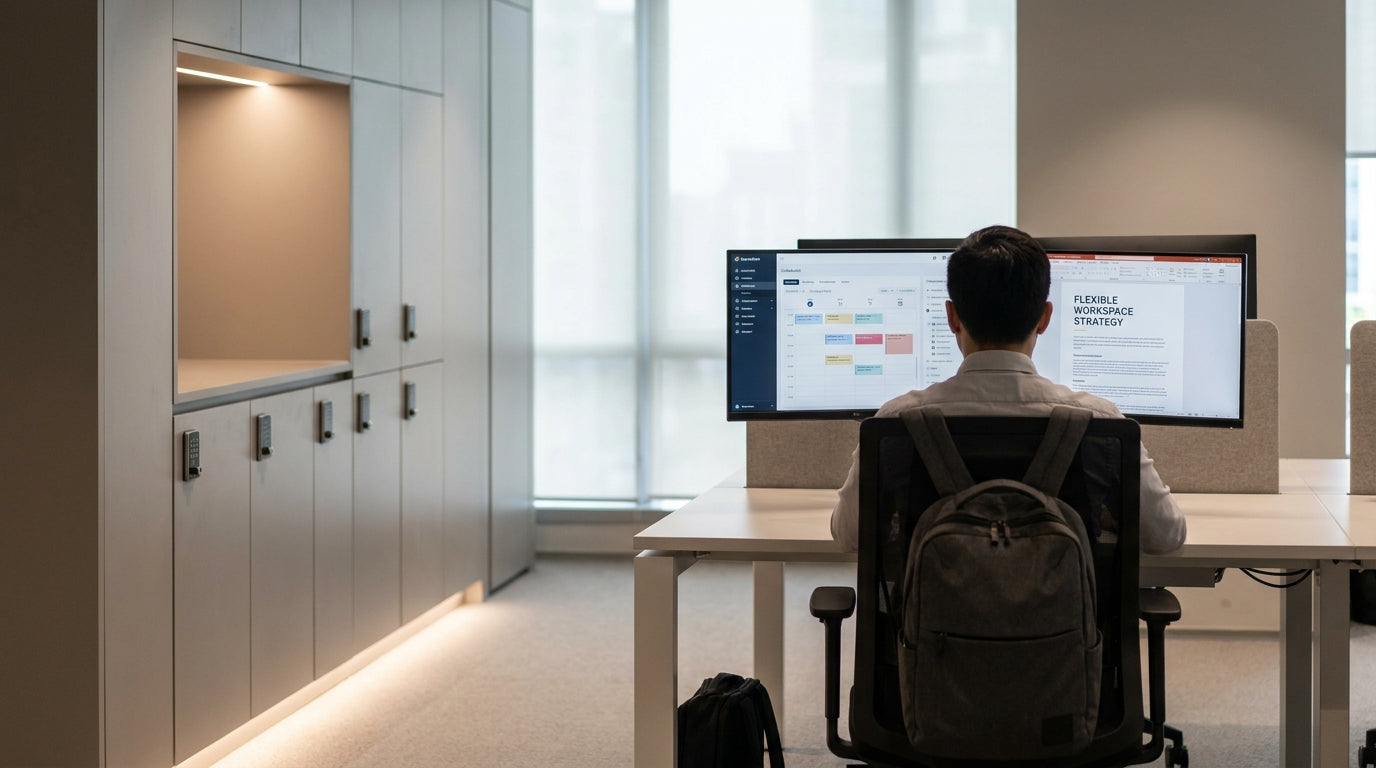
Why Hot Desking Needs Smart Locker Storage
Hot desking works best when staff can quickly find a spot, plug in, and get going. Lockers fill the gap by giving people a secure “home base” in an otherwise flexible office.
Without storage, hot desking can feel chaotic: people lug bags around, desks get cluttered, and personal items end up scattered. Introducing a bank of well‑planned lockers allows employees to store laptops, headsets, documents, and personal gear safely, while keeping shared desks tidy and ready for the next user.
In Australian workplaces, where hybrid and activity-based working are now common, this combination of flexible seating and secure storage supports both mobility and privacy. Lockers also help you enforce clean‑desk policies, which are vital for data security and professional presentation when clients visit the office.
Planning Your Layout: Desks, Zones, and Flow
A successful hot desk setup starts with the right mix of workstations and a logical office layout. The goal is to balance flexibility, privacy, and easy access to storage.
Begin by mapping how your team actually works. If most tasks are individual and focus-heavy, scatter several Single Person Workstations around quiet zones. For collaboration-heavy teams, consider clusters of 2 Person Workstations and larger 4 Person Workstations to encourage quick catch-ups and shared projects without needing formal meeting rooms.
Larger teams can benefit from bench-style 6 Person Workstations or 8 Person Workstations, which maximise floor space and make it simple for groups to sit together on busy days. To support different working styles and wellbeing, mix in Height Adjustable Workstations so users can switch between sitting and standing throughout the day.
Once work zones are defined, plan locker locations along natural pathways rather than in hidden corners. Position locker banks near entrances, breakout areas, or between desk zones so staff can drop off bags and gear before they sit down. This improves traffic flow and reduces people wandering through focused work areas to access their storage.
Choosing the Right Lockers for a Flexible Office
The type of locker you choose directly affects how efficient and secure your hot desking environment will be. Think about durability, security, and how often lockers will be used each day.
For high-traffic corporate or education settings, robust Steel Lockers are a practical choice. They handle frequent opening and closing, resist dents and knocks, and are easy to wipe down at the end of the day. If your office aesthetic leans towards a warmer, more contemporary look, consider Melamine & Laminate Lockers, which come in finishes that blend with joinery, worktops, and other furniture.
Workplaces with heavy-duty requirements—such as warehouses, workshops, or sites where staff store tools and PPE—should look at Heavy Duty Lockers designed to withstand tougher conditions. These are ideal where steel thickness, reinforced doors, and more rugged hardware are essential. Regardless of material, ensure there’s a mix of full-height lockers for bulky items and smaller compartments for day‑use personal belongings.
Don’t forget the finer details that make lockers user-friendly. Add Locker Accessories such as shelves, hanging rails, numbering plates, and bag hooks so users can organise their space properly. Well-planned accessories reduce clutter spilling over onto shared desks and encourage staff to keep their personal storage neat and efficient.
Practical Policies: Booking, Clean Desks, and Security
Even with the right furniture, hot desking only runs smoothly when supported by clear, simple policies. Make it easy for staff to understand how to book desks and use lockers.
Set up a straightforward desk-booking system so people can see availability across Single Person Workstations, shared 2 Person Workstations, and larger benches like 4 Person Workstations or 6 Person Workstations. Whether you use a software tool or a simple calendar, the main thing is transparency and fairness. Combine this with a clear timeframe for reservations—such as half-day or full-day slots—to keep things moving.
Introduce a concise clean‑desk policy to keep shared surfaces ready for the next user. Staff should store all personal and paper-based items in their lockers at the end of their booking, leaving only standard equipment like monitors and docking stations on the workstation. This policy is easier to follow when lockers are close to desks and well-equipped with Locker Accessories such as shelves and hanging options.
For security, decide whether lockers are assigned or used on a daily, first‑come basis. In some offices, permanent lockers suit full-time staff, while day-use lockers support visitors and hybrid workers. Whichever method you choose, document how lost keys, forgotten codes, or access issues will be managed so facilities teams have a clear process and downtime is minimised.
Implementation Tips and Future-Proofing Your Workspace
Rolling out hot desking with lockers is best done in stages, with room to adjust based on real-world use. Involving staff early helps reduce resistance to change.
Start by piloting the new setup in one area with a mix of 8 Person Workstations, a few Height Adjustable Workstations, and a bank of Steel Lockers or Melamine & Laminate Lockers. Observe how people naturally move between desks and storage, then tweak locker placement or workstation types as needed. This trial phase lets you refine your approach before fitting out the entire office.
As you expand, keep an eye on occupancy data: are certain zones or workstation sizes—such as 4 Person Workstations or 6 Person Workstations—consistently full while others sit empty? Use this insight to reshuffle layouts or add more of what’s genuinely popular. At the same time, monitor locker utilisation so you can increase banks of Heavy Duty Lockers or standard units where demand is highest.
Finally, design with future flexibility in mind. Choose modular furniture and locker systems that can be reconfigured as your team grows, shifts to more hybrid work, or changes its mix of collaboration and focus work. With thoughtful planning and the right combination of workstations, lockers, and Locker Accessories, your workplace can stay adaptable while giving everyone a secure place to store their gear.


