

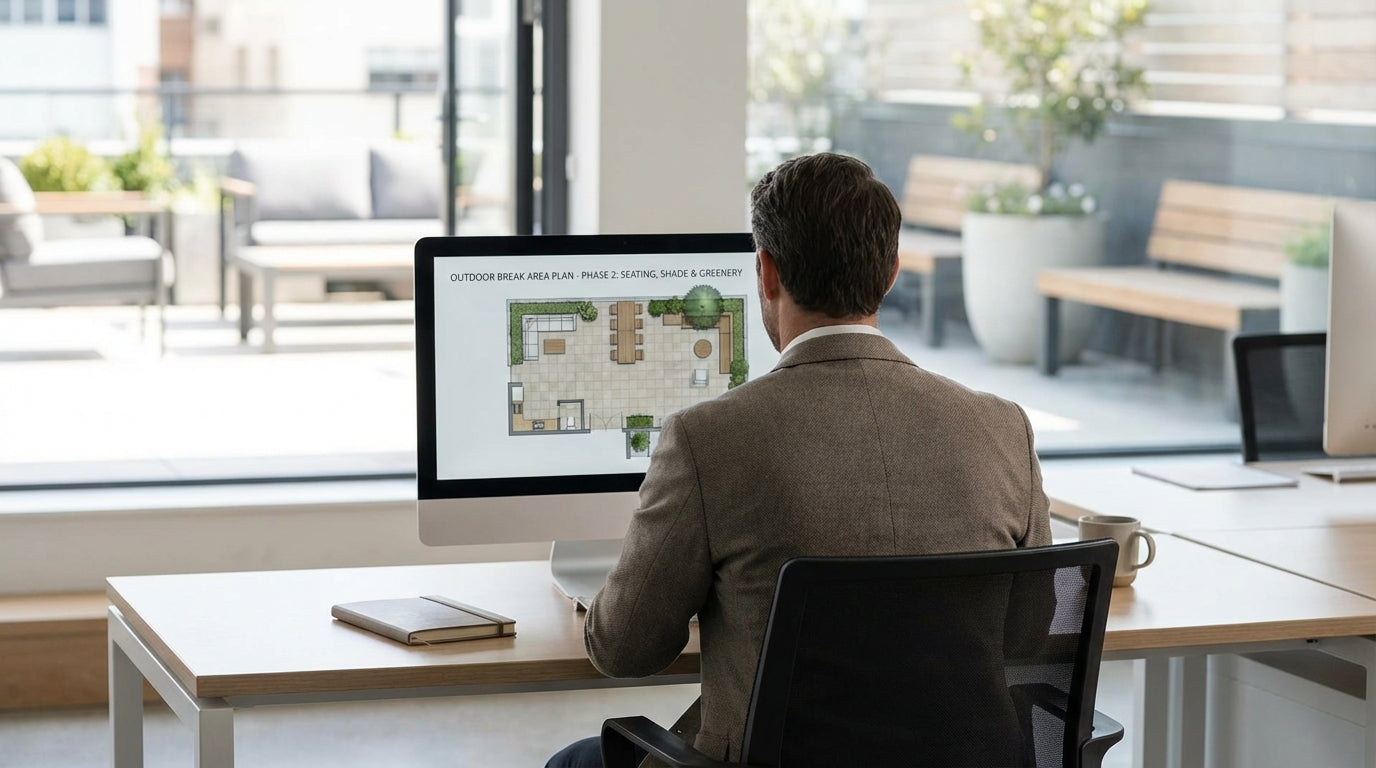
Understanding What Staff Need From an Outdoor Break Space
A successful outdoor break area starts with understanding how your team actually uses their downtime. Think about comfort, privacy and flexibility before buying any furniture.
Begin by asking staff how they prefer to spend their breaks: quick solo coffee, quiet reading time, or social catch‑ups. Their answers will guide whether you prioritise individual seating, shared tables or relaxed lounge zones. Observing how people currently use informal spaces such as balconies, office entrances or nearby parks can also highlight what’s missing in your workplace.
Different break styles call for different types of furniture. For short, individual breaks, lightweight outdoor chairs paired with compact café tables work well. For collaborative chats or team lunches, larger outdoor tables or complete outdoor dining sets give people room to spread out without feeling cramped.
Also consider accessibility and inclusivity. Ensure there is step‑free access, a mix of seat heights and stable surfaces that suit everyone, including people with mobility aids. Providing a range of seating options helps all staff feel welcome to use the space, not just those who are comfortable with high bar stools or low lounge furniture.
Planning Layout, Zones and Traffic Flow
Good layout turns a simple courtyard or balcony into a functional retreat. Think in zones rather than one large, open area.
Start by mapping how people will move through the space. Pathways from the office to the outdoor area should be clear, direct and wide enough for two people to pass comfortably. Avoid placing large outdoor settings directly in walkways, as staff may feel they’re in the way of others trying to get past. Keeping thoroughfares separate from seating areas also reduces noise and distractions for people on break.
Create distinct zones for different activities. A quiet corner with cushioned outdoor lounges suits relaxation and reading, while a central area with robust outdoor tables is ideal for meals or informal meetings. High bar tables paired with bar stools can be grouped near doors for quick, stand‑or‑perch coffee breaks that don’t require staff to fully “settle in”.
Where space allows, mix smaller tables with larger configurations. Two‑seater café tables and compact coffee tables suit individuals and pairs, while bigger outdoor dining sets support team lunches and social events. This blend prevents one group from dominating the area and gives staff the freedom to choose how social they want to be on any given day.
Choosing Durable, Comfortable Outdoor Furniture
The right outdoor furniture must withstand Australian conditions while staying comfortable for daily use. Prioritise weather resistance and easy maintenance alongside style.
Look for frames made from powder‑coated aluminium, treated timber or high‑quality resin that won’t rust or warp in the sun. Cushions should have UV‑resistant, quick‑dry covers so they don’t fade or stay wet after rain. Sturdy yet lightweight outdoor chairs are practical in shared workplaces, allowing staff to move pieces as needed without dragging heavy items across the floor.
Comfort directly affects how often staff use the space. Consider pairing supportive seating with low coffee tables in lounge zones for a relaxed feel, while choosing ergonomic chairs and spacious outdoor tables in eating areas so people can sit upright to work or dine. For a more casual, café‑style vibe, mix in a few bar tables with matching bar stools where staff can enjoy quick chats between tasks.
If you’d prefer a coordinated look, consider complete outdoor settings or matching outdoor dining sets for the main eating zone, then add contrast with softer outdoor lounges in complementary colours. This approach keeps the area visually cohesive while still offering varied seating experiences.
Balancing Shade, Weather Protection and Comfort
Outdoor break areas need to be usable in real weather, not just on perfect days. Plan for sun, wind and rain from the start.
In Australia, sun protection is non‑negotiable. Combine fixed shade structures or awnings with movable umbrellas that can be shifted over outdoor tables or outdoor dining sets as the sun moves. For lounge zones, choose UV‑resistant fabrics on outdoor lounges and consider lighter colours that stay cooler in direct light.
Wind and rain can make a space unusable if not managed properly. Position higher pieces like bar tables and bar stools in more sheltered spots so they aren’t easily toppled or uncomfortable in gusts. For higher levels or exposed rooftops, windbreaks such as planters or screens can create calmer pockets around outdoor chairs and café tables.
Weather protection also includes surfaces. Ensure water drains away from seating areas so staff aren’t dodging puddles to reach their break spot. Selecting furniture from coordinated outdoor settings ranges can simplify this, as pieces are designed to perform well together in the same conditions and are typically easy to wipe down and reset after wet weather.
Adding Finishing Touches for a Welcoming Atmosphere
Details make the difference between a basic outdoor area and a break space staff genuinely enjoy. Small touches can significantly boost comfort and appeal.
Soft elements such as planters, greenery and outdoor rugs help define zones and reduce the “car park” feel many external spaces have. Choose easy‑care plants that handle sun and wind, and arrange them to frame clusters of outdoor chairs or highlight key pieces like outdoor lounges. This creates a more private, calming environment without building solid walls.
Lighting is essential if staff use the area early in the morning or later in the afternoon. Warm, indirect lighting around coffee tables, café tables and main outdoor tables helps people relax and move around safely. Avoid harsh overhead floodlights where possible; softer bollard or string lighting creates a more inviting, café‑style mood.
Finally, keep practicality in mind. Provide bins, access to power where appropriate, and clear sightlines from indoors so the area feels safe. When all elements work together—seating, outdoor settings, shade and ambience—you create an outdoor break space that supports wellbeing, social connection and productivity throughout the workday.


