

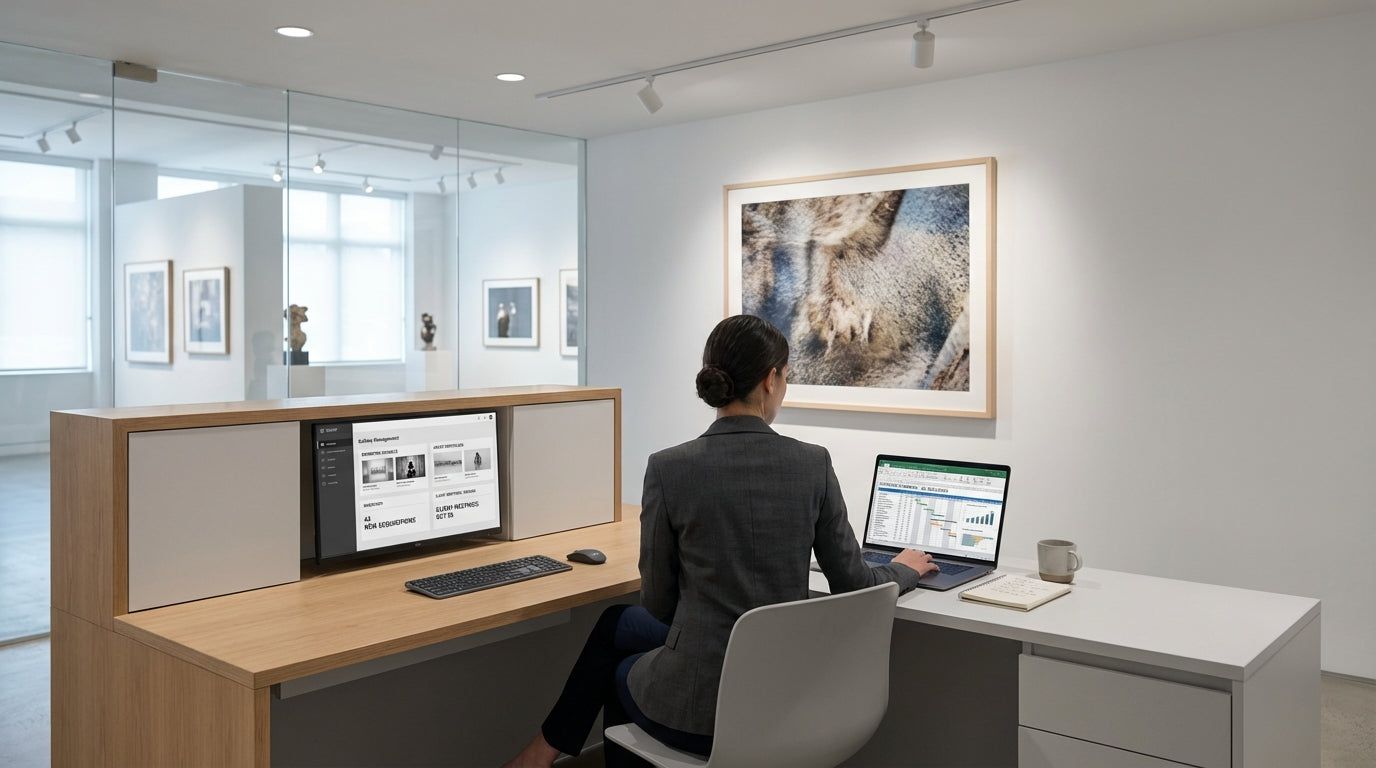
First Impressions in the Gallery Foyer
The reception area of a gallery does more than welcome people; it sets the tone for the entire visit. Furniture choices here need to balance aesthetics, practicality, and visitor flow.
Reception counters are often the first large visual element guests see, so they should complement the gallery’s architecture and brand. Neutral colours, clean lines, and minimal clutter help keep the artwork as the hero while still giving staff a functional space. Consider an L-Shaped Reception Counter to create a clear division between staff work zones and public interaction areas without feeling closed off.
For narrow foyers or smaller independent galleries, a streamlined Straight Reception Counter can maintain an open, airy feel while still providing storage and surface area. Choosing counter heights that are comfortable for both standing and wheelchair users supports accessibility and a welcoming guest experience. Look for designs with cable management to hide EFTPOS terminals, visitor sign-in tablets, and gallery lighting controls.
Comfortable Reception Seating is also essential for guests who are waiting for guided tours, events, or curator appointments. Opt for durable, easy-clean fabrics that suit high-traffic public spaces, and position seating so visitors can see key artworks or feature walls while they wait. Adding a few coordinated Visitor Chairs near the reception desk can create flexible spots for short consultations or ticketing queries.
Designing a Reception Desk That Works for Staff and Visitors
Behind the beautiful front-of-house design, the reception desk has to function like a small control centre. Staff need clear visibility, easy reach to tools, and secure storage.
When selecting from various Reception Counters, think about how the space is used across a full day. Ticketing, membership sign-ups, tour bookings, and retail sales may all happen in this one location. A corner-friendly L-Shaped Reception Counter can create separate zones for public-facing work and back-end administration, helping staff stay organised during busy exhibition openings.
Straight-line layouts are often better suited to long, open foyers where staff need to face multiple entrances or display areas. In these spaces, a Straight Reception Counter provides a clear, continuous surface for brochures, catalogues, and exhibition guides without visually blocking artworks or sightlines. Ensure there is enough depth and under-bench storage for POS hardware, printers, and gallery catalogues so the benchtop stays tidy.
Visitor comfort should also guide your choices. Provide a small cluster of Visitor Chairs on one side of the desk for people filling out forms, joining mailing lists, or discussing commissions. Pair this with nearby Reception Seating so groups can wait together without crowding the service point. This configuration keeps the reception zone efficient while still feeling relaxed and welcoming.
Curating the Back-of-House Office
Gallery offices need to handle everything from curatorial planning to grant applications and roster management. Thoughtful furniture selection supports focus, collaboration, and secure storage.
Leaders such as directors and senior curators often benefit from dedicated workspaces that double as meeting zones. Well-proportioned Manager Desks can provide space for large exhibition plans, catalogues, and laptop docking stations while still keeping the office streamlined. For smaller teams, simple Straight Desks lined along a wall can save floor space and allow for generous circulation, which is important when staff regularly move large artworks or crates.
When each staff member needs a defined workstation, look at Single Person Workstations that integrate storage and cable management. These set-ups are ideal for administration, marketing, and education teams who work with digital files, event schedules, and online ticketing platforms. Ergonomic layouts, with correct chair height and monitor positioning, reduce fatigue during long days preparing for exhibition launches.
Storage is critical in galleries, where documents, condition reports, and promotional materials accumulate quickly. Sturdy Office Cupboards allow teams to keep paperwork, AV equipment, and packaging out of sight yet easy to access. Choosing lockable models helps protect confidential contracts, lender agreements, and valuation documents. Combine cupboards with open shelving to display reference books and catalogues within arm’s reach of workstations.
Spaces for Meetings, Briefings, and Artist Consultations
Meeting areas in galleries support everything from artist talks to sponsor briefings. The right tables and seating help these conversations run smoothly.
Centralised Meeting Tables give teams room to spread out floor plans, mock-ups, and catalogues during exhibition planning. Choose shapes that suit the room: rectangular tables for narrow spaces, or round and boat-shaped tables where collaboration and eye contact are key. Durable finishes are helpful, as surfaces often host models, samples, and materials that may scuff less robust tops.
Comfortable, movable Visitor Chairs allow you to quickly adapt the room for artist consultations, board meetings, or press previews. In smaller galleries, these chairs can be shared between the meeting room and front-of-house, supporting multipurpose use. Pairing them with modest-sized Straight Desks in adjacent offices gives staff extra surfaces for pre-meeting preparation without cluttering the main table.
For confidential discussions around acquisitions, pricing, or partnerships, directors may host meetings within their own offices. A spacious Manager Desk can double as a small meeting surface for two or three people, while a secondary compact Meeting Table nearby works for larger groups. This dual approach keeps sensitive conversations away from public exhibition areas while still making effective use of available floor space.
Balancing Aesthetics, Accessibility, and Durability
Every furniture choice in a gallery needs to respect the artwork, visitors, and staff. Balancing style with function ensures the space works day after day.
Choose reception pieces that feel like part of the exhibition environment rather than competing with it. Subtle Reception Counters in matte finishes and simple forms reduce glare and distraction in light-sensitive spaces. An L-Shaped Reception Counter can be positioned to manage queues and accessibility ramps, while a Straight Reception Counter suits linear, gallery-style entry halls.
Accessibility should inform seat heights, circulation space, and desk clearances. Mix low, casual Reception Seating with upright Visitor Chairs with arms to support guests with reduced mobility. In offices and back-of-house spaces, well-arranged Single Person Workstations and Straight Desks help staff move safely when transporting framed works or handling deliveries.
Durability is also vital for busy public venues. Hard-wearing Office Cupboards and robust Meeting Tables stand up to constant use, from education programs to late-night events. Quality Manager Desks and reception units made from commercial-grade materials may cost more upfront but typically offer better longevity, reducing disruption and replacement costs over time.


