

Designing Staff Zones for High‑Traffic Venues
Staff areas in convention centres need to handle long shifts, high foot traffic and constant change. The right layout and furniture choices support productivity while keeping teams comfortable.
Begin by mapping how your staff actually move through the back‑of‑house spaces during bump‑in, live events and pack‑down. Identify where supervisors need privacy, where teams collaborate, and where quick touch‑down spaces are enough. This helps you decide where to place dedicated offices, hot desks and shared hubs without wasting square metres.
For team leaders and operations managers who need a quiet base, a dedicated office with practical Manager Desks keeps paperwork, radios and event schedules under control. Pair these with ergonomic Task Chairs so long planning sessions don’t lead to fatigue. Good task seating usually includes adjustable height, lumbar support and tilt, which should be explained and demonstrated during staff inductions.
Floor plans also need to allow clear lines of sight between control points and key access doors. Compact Single Person Workstations fit neatly along corridors or near loading docks, providing a secure spot for sign‑in, security checks or vendor support without blocking traffic. Flexible furniture solutions are vital because convention centre operations change with every event.
Workstations That Match Operational Rhythm
Convention centre staff rarely sit still for long, so workstation design must suit short, intense bursts of desk work. Flexible configurations let you re‑set the space between events quickly.
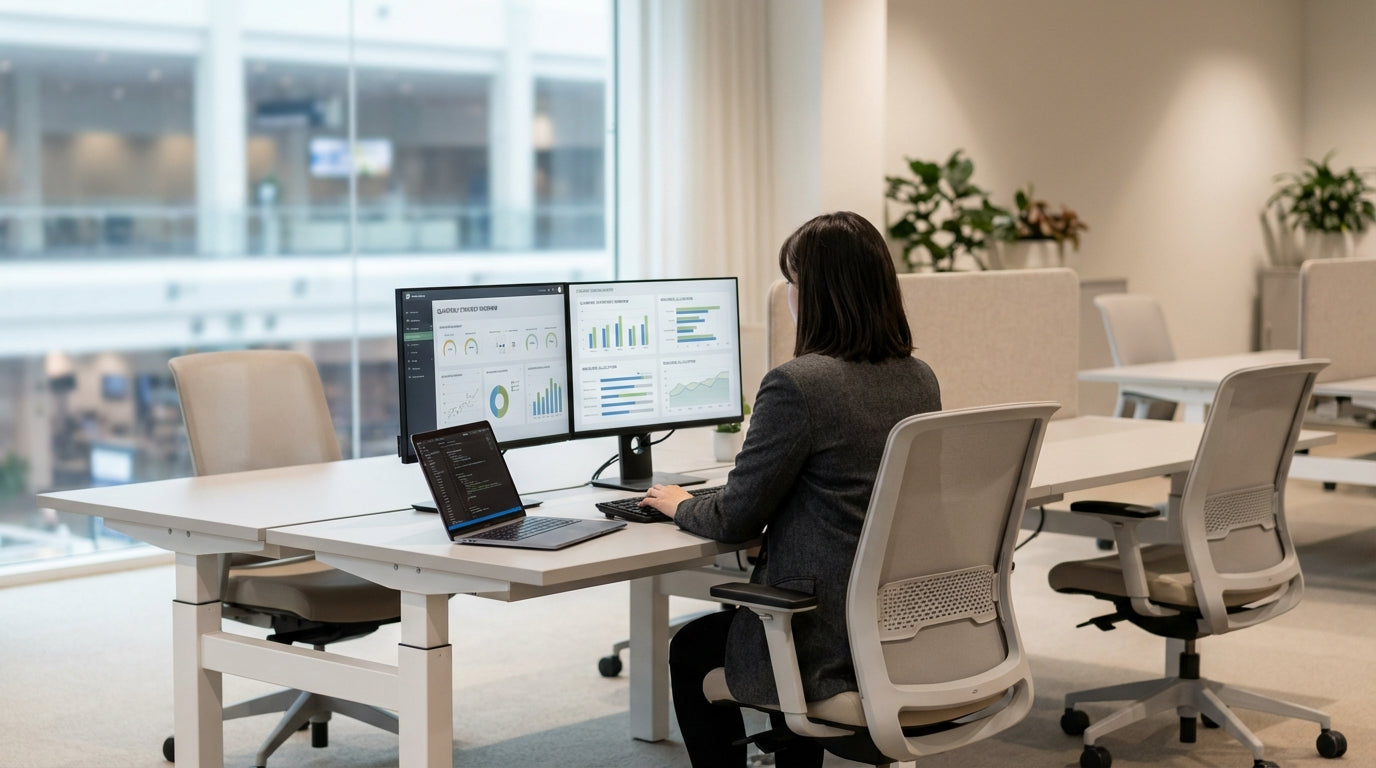
For rostered roles like event coordinators, rostering teams or AV schedulers, clusters of 2 Person Workstations keep communication tight while still giving each person their own surface. These pods support quick check‑ins and shared screens without needing a full meeting room. When privacy or focus is more important, such as for finance, HR or contract administration, consider Partition Workstations to control noise and visual distractions.
Not every role needs a fixed desk. Hot‑desk zones using slim Single Person Workstations allow casual staff, ushers and temporary contractors to log in, complete reports or access digital run‑sheets between shifts. This approach maximises workstation utilisation, especially during peak exhibition seasons when more people rotate through the same area.
To support staff wellbeing across long event days, incorporate Height Adjustable Workstations into shared spaces. Sit‑stand desks reduce strain from standing on concrete floors for hours by giving staff a comfortable way to alternate between sitting and standing. Over time, this can lower fatigue and improve concentration when making time‑critical decisions about crowd flow, security and technical issues.
Seating and Meeting Spaces for Fast‑Paced Teams
Comfortable, supportive seating is critical when staff move between control rooms, break areas and quick huddles. Meeting spaces must also support fast decision‑making during events.
Investing in quality Task Chairs for control rooms, scheduling areas and supervisor offices cuts down on back and neck strain. Look for chairs with adjustable armrests, seat depth and back support so they can be customised for different body types. In hot‑desking or shared environments, clearly labelled adjustment levers make it simpler for staff to get comfortable quickly between sessions.
In warmer Australian climates or venues with intensive AV equipment, heat build‑up can be a real issue. Mesh Office Chairs offer breathable backs that promote airflow, keeping staff cooler across long shifts. They’re ideal in IT hubs, broadcast rooms and ticketing areas where staff often remain at screens for extended bursts while still needing to move or swivel rapidly.
For pre‑event briefings, debriefs and supplier meetings, robust Meeting Tables create a central point for communication. Choose sizes and shapes that suit your typical group numbers—round tables help encourage collaboration, while rectangular tables can be better for structured updates. Combining these tables with mobile task seating allows you to reconfigure briefing rooms quickly depending on the event type or department needs.
Storage, Security and Back‑of‑House Organisation
Behind the scenes, secure and tidy storage keeps operations moving smoothly. Well‑planned storage furniture protects staff belongings and event equipment alike.
For shared documents, cleaning supplies and AV accessories, sturdy Office Cupboards are essential. Lockable doors help manage access to sensitive items such as radios, keys and incident reports, while adjustable shelves let you handle everything from signage to spare uniforms. Labelling shelves and implementing simple storage rules reduces time spent searching for gear during critical changeovers.
Staff who move between halls, loading docks and function rooms often need a safe place to store personal items and uniforms. Installing Steel Lockers in staff‑only corridors or near amenities gives employees peace of mind that their valuables are secure. Metal lockers stand up well to heavy daily use, cleaning chemicals and occasional bumps from trolleys, making them a smart long‑term investment for high‑traffic venues.
Combining lockers with nearby compact Partition Workstations or Single Person Workstations creates mini hubs where staff can clock on, check rosters and access incident reporting systems. This reduces congestion around main control rooms and spreads traffic more evenly through back‑of‑house corridors. Good storage planning contributes directly to faster turnarounds between events and fewer misplaced items.
Practical Tips for Future‑Proofing Staff Areas
Convention centres evolve with technology, security requirements and guest expectations. Choosing adaptable furniture now will help your staff areas stay efficient for years.
Start by standardising key elements like Task Chairs, workstation sizes and storage units. When most pieces share similar dimensions and finishes, it’s easier to re‑arrange rooms or expand operations without starting from scratch. Using combinations of 2 Person Workstations and Partition Workstations lets you flex between open collaboration zones and focused work areas as your staffing model changes.
Health and safety should also guide your furniture choices. Sit‑stand options like Height Adjustable Workstations and breathable Mesh Office Chairs support staff comfort during back‑to‑back events. Durable Steel Lockers and clearly positioned Office Cupboards reduce trip hazards by keeping bags and equipment off the floor.
Finally, plan for surge capacity during major conferences and exhibitions. Having a pool of extra Single Person Workstations, multi‑use Meeting Tables and a few additional Manager Desks in storage means you can quickly scale staff areas up or down. With thoughtful choices across workstations, seating, storage and meeting zones, your convention centre can support staff performance as effectively as it serves delegates and exhibitors.


