

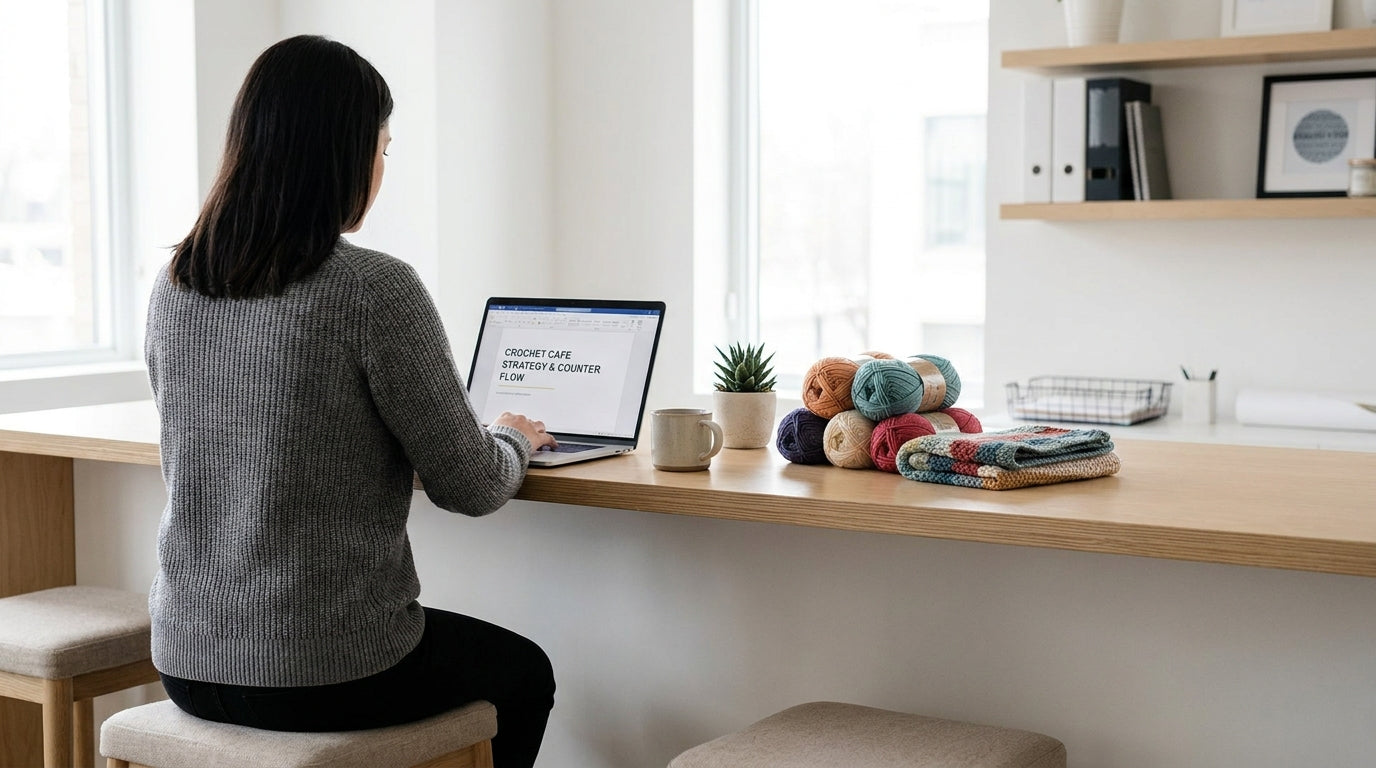
Designing a Welcoming Crochet Counter Experience
A crochet café counter needs to feel warm, approachable, and highly functional. It’s the first touchpoint for yarn lovers grabbing a latte, booking a workshop, or asking for pattern help.
Start by thinking about the customer journey from the front door to the main counter. A well-planned reception-style area with suitable reception counters helps guests understand where to order, pay, and ask questions. For narrow shopfronts shared with retail yarn displays, sleek Straight Reception Counters provide clear sightlines while maximising every centimetre of space.
The visual style of your counter should reflect your brand: soft colours, natural timber, or matte finishes often suit creative spaces. Consider how your yarn walls, hooks, and displayed projects will look from the perspective of a guest waiting at the counter. Consistent design makes the café feel intentional rather than cluttered, even when every surface is filled with fibre inspiration.
Beyond aesthetics, think about how easily staff can step from service roles into hosting crochet circles or classes. A layout that keeps the counter close to communal seating makes it easier to top up teas, offer advice on stitches, and maintain a relaxed, friendly vibe without constant walking back and forth.
Choosing the Right Counter Shape for Your Yarn-Focused Café
The shape of your main service area strongly influences flow, comfort, and how long people stay. Matching the counter style to your floor plan is crucial.
In cosy corner sites or longer, narrow spaces, L-Shaped Reception Counters are especially useful. They create a natural division between the point-of-sale area and a small yarn display, cake stand, or pattern library, without erecting solid walls. This L-configuration can also shelter staff from drafts and noise while still feeling open and friendly to customers.
For crochet cafés with an open, rectangular floor plate, a simple straight design often works best. Using Straight Reception Counters keeps the front-of-house clean and linear, leaving more room for creative seating clusters and workshop tables. A straight layout also makes it easier to add mobile trolleys or extra display units behind the counter when you run special yarn events or trunk shows.
Some venues blend both approaches, using a primary straight counter for ordering and a shorter side run for pick-up, class registrations, or yarn advice. This modular approach, built from compatible reception counters, lets you expand as your crochet community grows, rather than locking you into a single arrangement from day one.
Seating Zones That Support Crocheters and Coffee Lovers
Once your counter is sorted, seating becomes the backbone of your crochet café experience. Crocheters need comfort, good posture, and enough space to manage yarn and tools.
For everyday visitors who just want a cuppa and a small project, a mix of Cafe Tables and Hospitality Chairs works beautifully. Standard table heights support neutral wrist and shoulder positions, which reduces fatigue during longer sessions. Choose chairs with supportive backs and stable bases so patrons can sit for an entire workshop without fidgeting or straining.
Higher seating adds variety and suits smaller projects like granny squares or amigurumi. Introducing a few Bar Tables paired with sturdy Bar Stools creates social perches near the counter or windows. Just be sure stools have footrests and stable frames; this helps crocheters maintain balance while counting stitches or changing yarn colours.
Low, cosy setups encourage longer stays and group conversations. Scattering a couple of Coffee Tables with surrounding armchairs or benches gives regulars somewhere to spread out pattern books and multiple skeins. Add small Side Tables between seats so every guest has a safe place for drinks, scissors, and stitch markers, keeping hot beverages away from delicate yarn.
Maximising Workflow and Storage Behind the Counter
Behind the scenes, a crochet café counter needs smart workflow and hidden storage. The goal is to stay organised without looking like a stockroom.
Map out key work zones: order taking, coffee prep, food plating, yarn retail, and class administration. Your selection of reception counters should allow for under-bench shelving or cabinets for patterns, extra hooks, and neatly labelled yarn stock. Keeping crochet supplies close to the point-of-sale means staff can quickly grab spare hooks or a different yarn weight while still chatting with customers.
Where you run regular workshops, consider dedicating part of an L-Shaped Reception Counter to class packs: pre-made bundles of hooks, stitch markers, and printed instructions. This preparation reduces congestion when a group arrives, and stops your main service area from being overwhelmed. Add a narrow bench or mobile unit alongside your Straight Reception Counters for additional storage that doesn’t intrude into customer space.
Cable management is another practical detail. Keep charging points for tablets, EFTPOS machines, and laptops built into or just under the counter surface, with tidy cable runs that don’t tangle with yarn. Good lighting above the counter and in shelving units helps staff read labels and count change quickly, which keeps queues moving smoothly, even during busy craft nights.
Creating Flexible Gathering Spaces for Workshops and Events
Crochet cafés thrive on community events, from beginner classes to themed stitch nights. Flexible furniture and counter design make hosting these gatherings much easier.
Use light but sturdy Cafe Tables that can be pushed together to form a long workbench when you’re running a workshop. Surround them with stackable Hospitality Chairs so you can quickly add or remove seats as bookings change. During peak coffee hours, separate the tables again to serve individual customers, keeping the space profitable throughout the day.
For more relaxed, social crochet circles, low Coffee Tables combined with scatter cushions or lounge chairs encourage people to linger. Add a few movable Side Tables for yarn cakes and project bags, allowing guests to rearrange the layout to suit the group. If you host late-evening events, you can also integrate a small run of Bar Tables and Bar Stools near the counter for those who prefer a higher perch while they stitch and chat.
Keep lines of sight between the counter and main gathering areas open. This lets staff monitor drink refills and provide quick help without interrupting the creative flow. With the right mix of counter configuration and multi-purpose seating, your crochet café can smoothly switch from weekday coffee spot to vibrant after-hours craft hub, keeping both yarn enthusiasts and casual customers coming back.


