

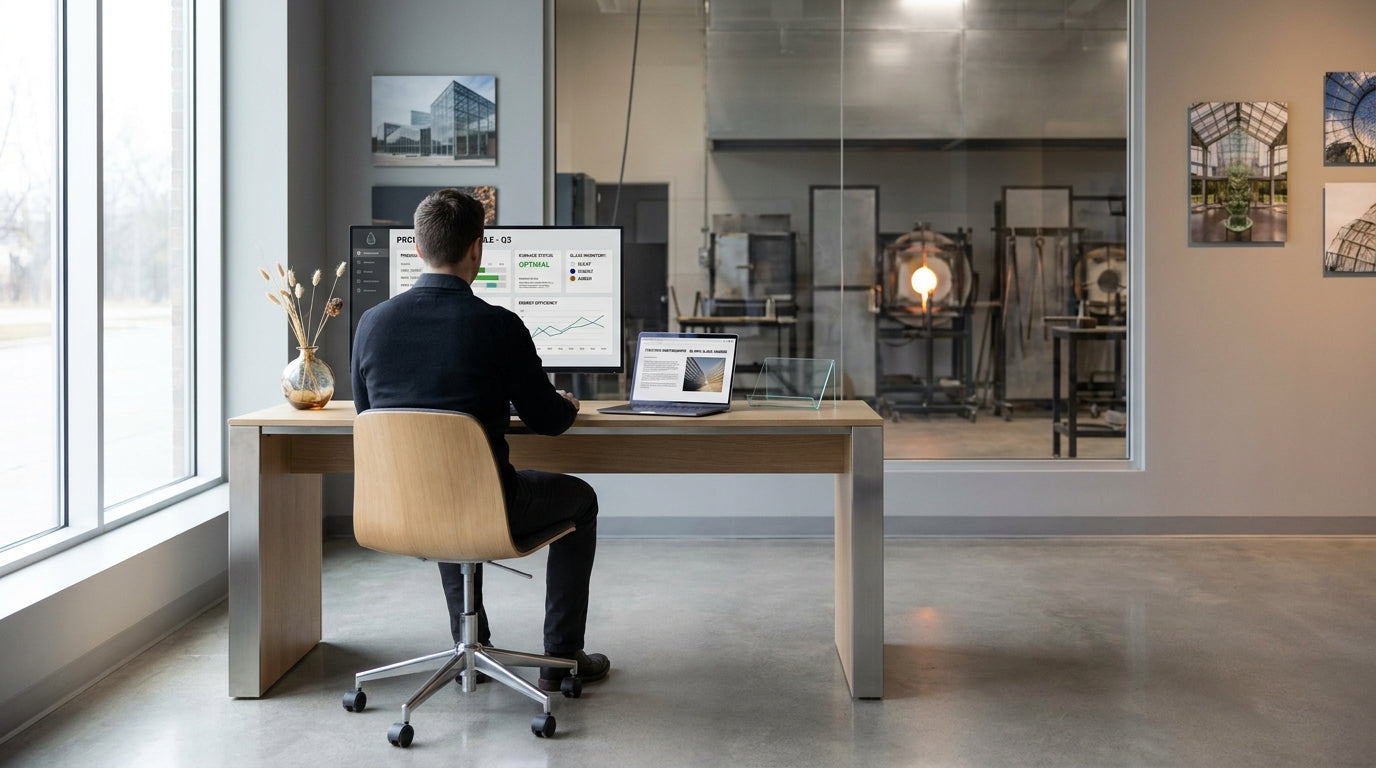
Designing a Safe and Welcoming Entry for a Hot Glass Studio
The reception area of a glass blowing studio has to do more than look good. It must manage safety, dust, and noise while giving visitors a professional first impression.
Unlike a typical office, a hot shop brings heat, sound, and occasional vibration through the building. Your reception counter, seating, and storage need to handle higher wear, frequent cleaning, and a steady flow of curious visitors and clients. Balancing industrial practicality with inviting design helps reassure newcomers that they’re entering a well-run, safety-conscious studio.
Durable materials that resist scratches and heat transfer are essential, especially around front counters and waiting zones closest to the workshop doors. Choosing commercial-grade finishes and solid construction reduces wobble, warping, and damage from grit tracked in from the studio floor. Good design also supports compliance with workplace safety standards while still presenting your brand clearly.
When planning your front-of-house layout, consider sight lines to the studio, secure storage for valuables, and simple wayfinding. Clear reception zones make it easier to check in participants for classes, sell retail pieces, and manage deliveries without congestion at the entrance.
Choosing the Right Reception Counter Layout
Your reception counter is the control point for visitors, couriers, and students. The layout you choose affects workflow, privacy, and crowd control.
Studios that run classes, tours, and retail sales often benefit from an L-Shaped Reception Counter. This configuration creates a defined “front” for greeting, with a return side for admin tasks like paperwork, bookings, and POS terminals. The extra surface helps keep hot-shop forms, waiver documents, and studio schedules organised without clutter spilling into public view.
Smaller glass studios or shared creative spaces may prefer Straight Reception Counters that take up less floor space. A simple straight unit is often enough for greeting visitors, handling payments, and managing basic enquiries. This layout works well in narrow foyers or heritage buildings where walls can’t be moved.
For multi-purpose venues, browsing a broader range of Reception Counters lets you match bench height, cable management options, and storage to your exact needs. Look for counters with built-in modesty panels to hide cabling and under-bench equipment, especially when kilns and compressors are drawing power nearby. Raised transaction shelves are useful for separating clean customer-facing surfaces from the tools and paperwork you use every day.
Comfortable, Hard-Wearing Seating for Visitors and Students
Waiting areas in glass blowing studios must be comfortable but tough. Seating should cope with repeated use by students, clients, and guests wearing all kinds of clothing and footwear.
Start with commercial-grade Reception Seating that’s easy to wipe down and resistant to stains from workshop dust and occasional grime. Sturdy frames and quality upholstery reduce sagging, squeaks, and early wear, which is important when visitors often sit in heavier workwear or carrying gear. Neutral tones work well, letting your colourful glass artworks stand out as the main visual feature.
Adding individual Visitor Chairs gives you flexibility for class intakes, client meetings, and small events. Moveable chairs can be rearranged to create group discussion zones, quiet waiting spots, or extra seating for exhibition openings. Choose models with supportive backs so guests can sit comfortably while viewing safety videos or waiting for demonstrations to begin.
For high-traffic studios that host school groups or frequent tours, Beam Seating offers fixed, tamper-resistant seating that’s easy to keep aligned. Because the chairs are connected to a shared beam, cleaning underneath is simple and there’s less risk of pieces being dragged too close to doors leading into the hot shop. This is especially helpful where you need clear walkways for emergency egress and equipment movement.
Tables, Storage, and Displays That Work in a Creative Space
Reception furniture in a glass studio should support both function and storytelling. Tables and storage units can help frame your work and keep the space tidy.
Use sturdy Coffee Tables to display catalogues, studio brochures, and care instructions for hand-blown pieces. Low tables also provide a convenient spot for visitors to rest bags or safety information kits while they check in. Look for stable bases and weighted designs so tables aren’t easily tipped if someone brushes past with a tool bag or crate.
Compact Side Tables beside seating can showcase smaller glass works or sample colour palettes used in your furnace. These accent pieces help introduce visitors to your style before they even see the workshop itself. Consider placing safety goggles or ear protection on these tables when visitors need to gear up before entering viewing areas.
To communicate class timetables, safety guidelines, and upcoming exhibitions, mount Noticeboards & Display Cases in clear sight of the reception desk. Lockable display cases are ideal for highlighting fragile or high-value items that shouldn’t be handled, while pinboards make it easy to swap out signage as your schedule changes. Behind the desk, robust Office Cupboards keep chemicals, paperwork, and packaging materials secure and out of public reach, helping you maintain a clean, professional front-of-house area.
Layout, Safety, and Visitor Flow in a Hot Work Environment
A smart reception layout keeps visitors safe and your team efficient. Think about circulation, noise, and clear boundaries between public and production spaces.
Position your main counter so staff have a direct line of sight to the entry door and any corridor leading to the hot shop. This makes it easier to intercept visitors before they wander into restricted areas without PPE (personal protective equipment). Seating zones should be set back from doorways to prevent congestion when groups arrive together or when glass pieces are being moved to and from kilns or cold-working rooms.
Create logical paths using furniture placement rather than barriers wherever practical. For instance, align Reception Seating and Coffee Tables so there’s a clear “lane” from the door to the desk, and then onwards to viewing windows or gallery areas. This helps first-time visitors understand where to go without constant verbal directions, reducing stress during busy class changeovers.
Acoustic considerations also matter. Hard surfaces in workshops create echo, so soft seating and strategically placed Noticeboards & Display Cases can help absorb sound in the reception zone. Finally, ensure furniture choices support accessibility: select counters with wheelchair-friendly sections, stable Visitor Chairs with arms for easier standing, and clear turning circles so everyone can move safely from reception to the glass viewing areas.


