

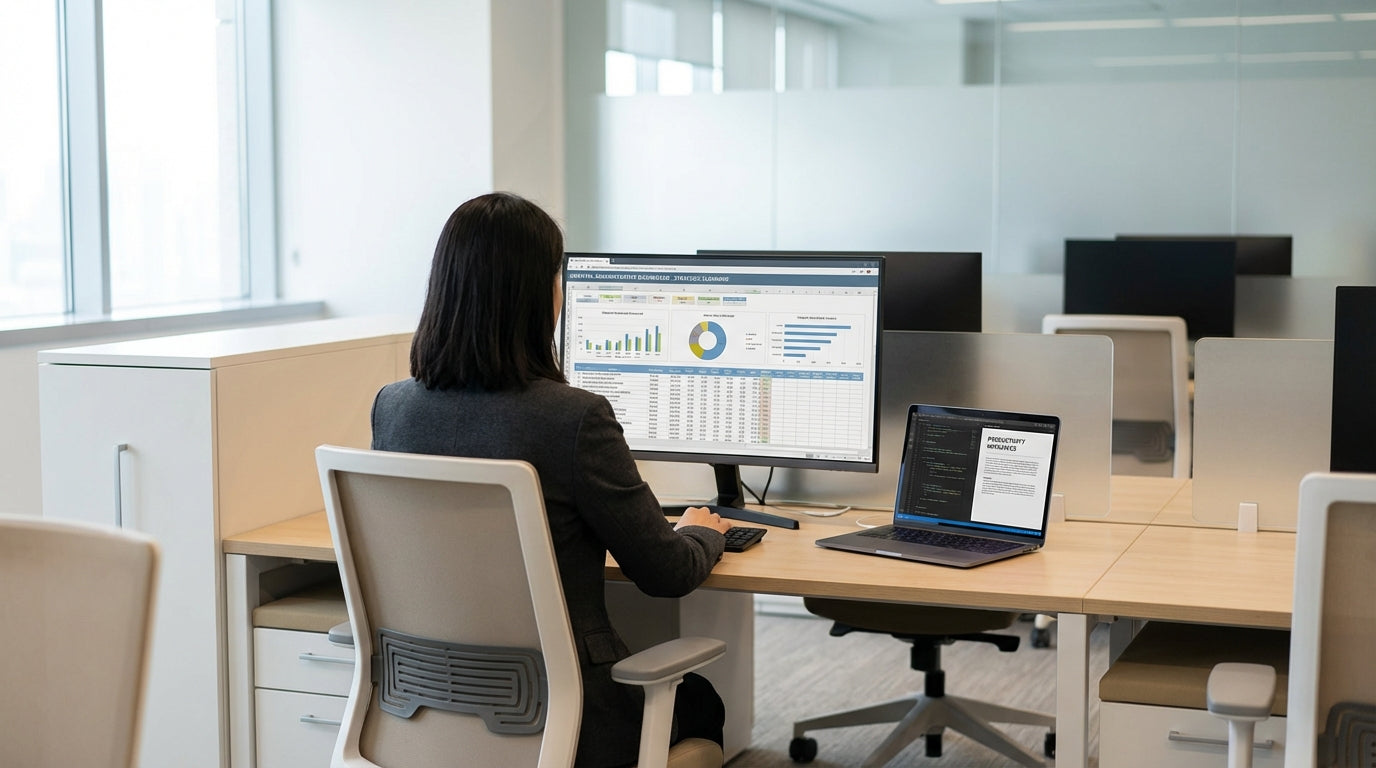
Designing a Functional Hospital Admin Workspace
Behind every efficient health service is a well-organised administration team. The right workspace layout and furnishings directly influence accuracy, privacy, and staff wellbeing.
Hospital administration areas need clear zones for reception, patient billing, HR, finance, and management. Each space should support focus work, quick collaboration, and easy movement between departments. Using a mix of Corner Office Desks, Straight Desks, and L-Shaped Desks helps tailor stations to different tasks, whether staff are processing admissions or handling confidential records.
Australian hospitals must also consider infection control and accessibility regulations when planning their layouts. Smooth, wipeable surfaces, adequate circulation space for wheelchairs, and unobstructed walkways are essential. Flexible layouts that allow desks and storage to be reconfigured quickly make it easier to respond to peak periods, restructures, and new service lines without major disruption.
Ergonomics should be embedded from the outset, not treated as an add-on. Ensuring each workstation has an adjustable chair, appropriate desk height, and clear monitor positioning can significantly reduce strain injuries and fatigue. This is especially important in 24/7 facilities where multiple staff members may share the same station across shifts.
Reception Areas that Support Patients and Staff
The reception area is often a patient’s first physical contact with a hospital. It needs to balance welcoming design with security, privacy, and efficiency.
Well-chosen Reception Counters help staff manage high volumes of enquiries while protecting sensitive information. Options such as L-Shaped Reception Counters create a natural separation between patient-facing and administrative zones, leaving room for documents, printers, and card terminals behind the main interaction point. For streamlined check-in points or smaller clinics, Straight Reception Counters provide a clean, simple footprint that is easy to position along walls or in narrow foyers.
Reception furniture also needs to support infection control and quick cleaning. Durable, non-porous surfaces, cable management that doesn’t trap dust, and integrated modesty panels all contribute to a more hygienic environment. Adequate under-counter storage, complemented by nearby Office Cupboards, keeps forms, labels, and PPE organised yet out of public view, which reduces clutter and improves perceived professionalism.
Patient privacy is critical in Australian healthcare settings. Taller counter sections or stepped designs provide discreet areas for discussing personal details without broadcasting them to the waiting room. Carefully positioned Task Chairs for reception staff enable quick height adjustment to maintain good eye contact with seated patients while minimising neck and back strain over long shifts.
Workstations for Accuracy, Comfort, and Compliance
Admin teams in hospitals handle continuous streams of data, calls, and paperwork. Well-designed workstations help them stay accurate and comfortable over long hours.
Desks should match the type of work being performed. Compact Straight Desks work well in rows for billing or data entry teams, where consistency and ease of cabling are important. For roles that require more equipment or dual monitors, such as ward clerk stations or scheduling hubs, L-Shaped Desks and Corner Office Desks offer extended surface space for files, telephones, and technology without spilling into walkways.
Supportive seating is essential in environments with shift work and heavy computer use. Quality Task Chairs with adjustable height, lumbar support, and seat depth allow different staff members to quickly customise their setup. This reduces the risk of repetitive strain injuries and helps maintain focus during peak times, such as change of shift or end-of-month reporting. Where staff regularly meet clinicians at their desks, keeping a couple of additional Meeting Chairs nearby allows for quick, comfortable discussions without compromising staff posture.
Storage and document control also play a big role in compliance with record-keeping and privacy regulations. Lockable Office Cupboards placed close to work areas give staff secure, organised access to forms, stationery, and archived records. Combining under-desk mobile drawers with shared cupboards or cabinets keeps individual workstations tidy, which in turn simplifies cleaning and reduces the chance of misplacing sensitive paperwork.
Finally, acoustic considerations are often overlooked in busy admin hubs. Thoughtful placement of desks, cupboards, and screens can help reduce noise from printers, phones, and foot traffic. This quieter environment not only improves concentration but also helps maintain confidentiality when discussing patient details over the phone.
Executive and Management Offices in Clinical Settings
Management spaces within hospitals require a different mix of privacy, authority, and collaboration. The furniture needs to support both daily operations and strategic planning.
Hospital executives, HR leaders, and department heads benefit from larger work surfaces and dedicated meeting zones within their offices. Purpose-built Manager Desks provide ample room for laptops, paperwork, and dual monitors, along with cable access to keep the workspace tidy. Pairing these with a matching Corner Office Desks or side returns can create a separate area for paperwork or signing documents, keeping digital and physical tasks clearly separated.
Because managers often host staff consultations and family meetings, guest seating is essential. A small cluster of comfortable Meeting Chairs near the desk or at a side table allows for confidential conversations away from the noise of wards and corridors. This layout gives leaders space to review rosters, financial reports, and clinical governance documents without losing the human connection that is central to healthcare.
Secure storage, such as lockable Office Cupboards, is particularly important in management areas where HR records, contracts, and sensitive financial information are handled. Keeping these close at hand, instead of in remote storerooms, ensures compliance while supporting quick decision-making. Where space allows, adding a compact meeting table also reduces the need to book separate rooms for short check-ins or incident reviews, making leadership more visible and accessible to frontline teams.
Meeting, Training, and Shared Support Spaces
Shared spaces in hospitals need to handle frequent use, constant movement, and a wide range of activities. Furniture choices here should prioritise flexibility and durability.
Clinical governance meetings, training sessions, and multidisciplinary case conferences all rely on comfortable, supportive seating for long periods. High-quality Meeting Chairs with ergonomic features help staff stay focused during complex discussions about patient care, policy updates, or accreditation requirements. These chairs can be combined with adaptable tables and nearby Office Cupboards to store training materials, devices, and reference documents between sessions.
Back-office support spaces, like medical records, ICT, or procurement, often need a blend of individual and shared work zones. Straight Desks configured in pods encourage collaboration within small teams, while L-Shaped Desks can be allocated to roles requiring additional monitors or scanning equipment. Integrating a few Task Chairs with advanced ergonomic adjustments helps support staff who spend large portions of their day at computers or handling digital records.
Some hospitals also repurpose admin and training rooms during surge events or emergencies. Choosing mobile furniture elements, and keeping key items stored in well-labelled Office Cupboards, makes it easier to convert these spaces quickly. That agility allows hospitals to create temporary command centres, briefing rooms, or additional coordination hubs when demand spikes, without sacrificing safety or organisation.


