

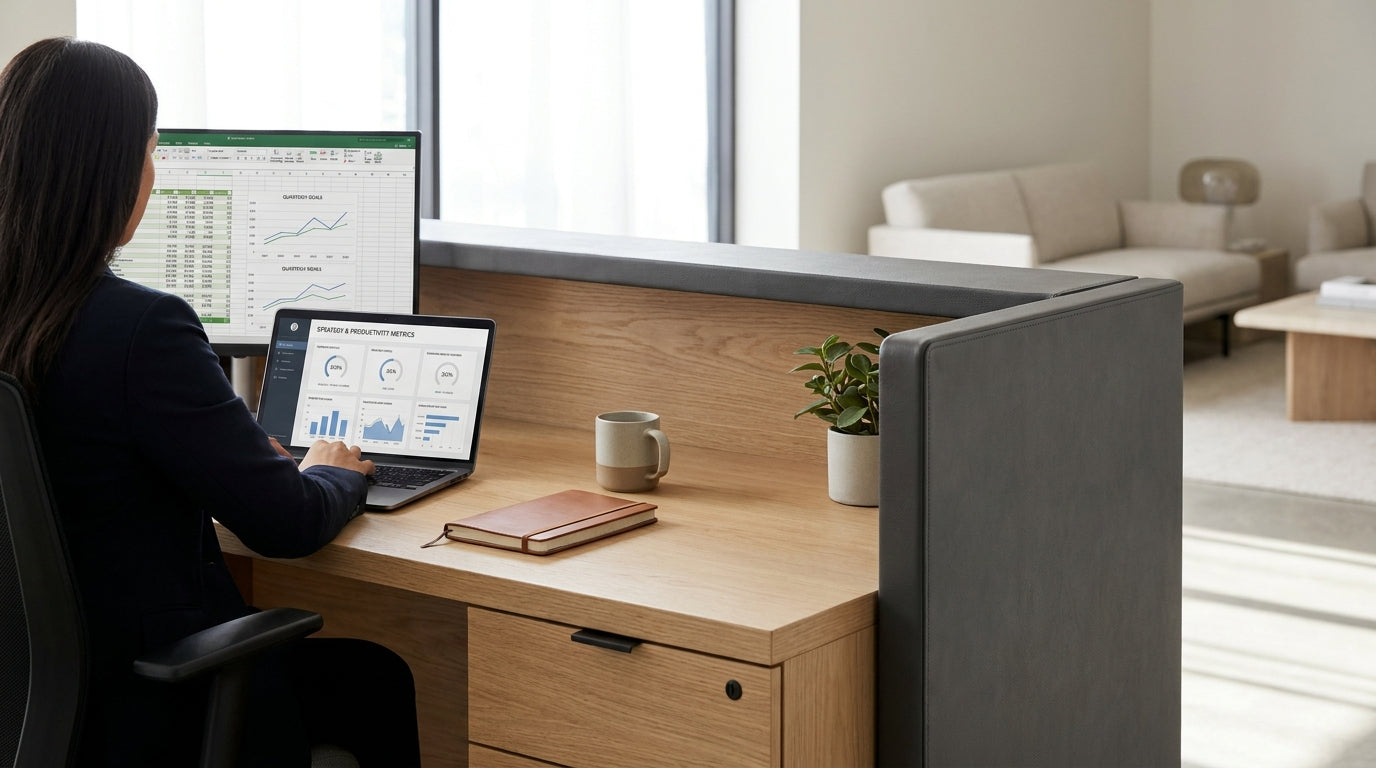
Designing a Welcoming Entry for Leather Craft Clients
A leather studio’s entry area does more than greet visitors; it sets expectations for craftsmanship, reliability, and style. The furniture you choose at the front sets the tone for every consultation and sale that follows.
Clients visiting a leather workshop are usually drawn to detail, texture, and finish. That means the front area needs to feel curated rather than cobbled together. Consider how the grain of timber, the depth of colour, and the softness of upholstery echo the quality of your hides and handmade products. A cohesive palette across counters, seating, and storage will make the space feel intentional and professional, even if the floor area is small.
Traffic flow is also crucial in a creative environment where people may arrive with samples, tools, or bulky bags. Plan the layout so visitors can easily identify where to check in, where to wait, and where to browse any displayed leather goods or sample books. Leaving clear pathways around your counter and seating reduces clutter and helps prevent damage to delicate pieces or machinery near the front.
Think about first impressions from the street as well. A neat, organised reception zone visible through the window reassures walk-ins that your workshop is well managed, safe, and worth exploring. Matching materials or finishes between your entry furniture and the rest of the studio helps the space feel like one continuous, creative environment.
Choosing the Right Counter for Craft Consultations
Your front counter is the functional heart of the reception area, handling everything from bookings to sample showings. For a leather studio, it must balance display, storage, and durability.
Studios with a broader floor plan or a corner entry often benefit from L-Shaped Reception Counters. The wraparound shape gives staff more surface area for pattern books, sample swatches, and order forms while creating a natural boundary between public and work zones. It also makes it easier to separate a computer or POS system from the client-facing surface, so visitors focus on leather pieces rather than cables and clutter.
Where space runs in a straight line from door to workshop, Straight Reception Counters work particularly well. They provide a clean, minimalist face that suits contemporary or industrial studio aesthetics, and they’re easier to place against a wall or window. This style is ideal when you want to keep the view through to your benches or sewing machines clear, showcasing the making process as part of the experience.
If you’re not sure which configuration suits your space, browsing a general range of Reception Counters can help clarify your needs. Look for high-wear surfaces that resist scratches from tools, buckles, or metal hardware. A counter with built-in cable management will also stop cords from snagging on hides or sample boards, keeping both your equipment and your products safe.
Comfortable Seating for Clients and Collaborators
Comfortable seating in the front area encourages clients to relax, take their time, and make more considered decisions. It’s especially important for longer design consultations and fittings.
For a dedicated waiting zone, consider a mix of lounge-style Reception Seating and individual Visitor Chairs. Softer lounges suit clients who may be waiting while alterations are made, while upright chairs are better for quick meetings or paperwork. Choose upholstery that complements the tones of your leather stock—think deep browns, charcoal, or earthy neutrals—so the whole space feels like an extension of your material library rather than an office tacked on the front.
Many leather studios double as teaching spaces or host small workshops. In those cases, flexible visitor seating that’s easy to move or stack becomes crucial. Individual chairs allow you to quickly shift from a formal consultation setting to a more collaborative arrangement when reviewing swatches, sketching custom designs, or talking through tooling options with clients.
Durability matters just as much as comfort. Look for fabrics or finishes that can handle contact with dyes, conditioning oils, and occasional scuffs from belts or bags. Stain-resistant upholstery, wipe-clean surfaces, and dark colours will maintain a professional look with less maintenance, freeing up more of your time for actual craft work.
Tables and Storage That Work with Leather Tools
Front-of-house surfaces need to support both display and practical work. At the same time, storage must keep tools, documents, and materials out of sight but close to hand.
Low tables in the waiting area are perfect for showcasing smaller leather goods, lookbooks, or material samples. A sturdy piece from a range of Coffee Tables can double as a mini display platform, while compact Side Tables next to chairs give clients somewhere to rest their bag or a cup of coffee. When choosing finishes, consider how they’ll cope with metal zips, rivets, or hardware brushing against them; harder-wearing tops will age more gracefully.
Behind the counter, closed storage keeps the front area tidy and reduces visual noise. Lockable Office Cupboards are ideal for paperwork, packaging supplies, and everyday consumables that don’t need to be on display. For items you want to access frequently—such as pattern folders, catalogues, or sample binders—a low Credenzas / Buffets gives you both bench space and concealed storage in one unit.
Open shelving still has its place in a craft environment, especially when you want to celebrate tools or display finished work. Tall Bookcases can hold design books, care guides, and reference materials, but they also make a great backdrop for small leather goods or boxed samples. Combining open and closed storage lets you keep the reception visually calm while still keeping your creative identity front and centre.
Creating a Cohesive, Brand-Driven Front Area
The most effective front areas in leather studios are unified by a clear visual language. Every piece of furniture should reinforce your brand story and support how you work.
Start by mapping how clients move from the door to the counter, then to seating or display areas. Align your Reception Counters so they’re immediately visible and approachable, with seating zones slightly off to the side to prevent congestion. A combination of Reception Seating, Visitor Chairs, and carefully placed Coffee Tables or Side Tables can then be arranged to create natural conversation areas.
Next, tie your choices together with consistent materials and colours that echo the character of your leatherwork. If your pieces lean toward classic saddlery, warm timber, traditional counters, and darker upholstery will fit best. For modern, minimalist accessories, sleek Straight Reception Counters, simple shelving, and clean lines in storage such as Office Cupboards and Credenzas / Buffets will reflect that aesthetic. This consistency helps clients immediately understand what kind of craft and service they can expect.
Finally, keep flexibility in mind. As your leather studio grows—adding new product lines, running classes, or expanding custom services—you may need to reconfigure the front area. Choosing modular pieces, such as movable counters from the broader L-Shaped Reception Counters range or reconfigurable shelving like Bookcases, means you can evolve the layout without starting from scratch. A well-planned, adaptable front area will continue to support your craft and your clients for years to come.


