

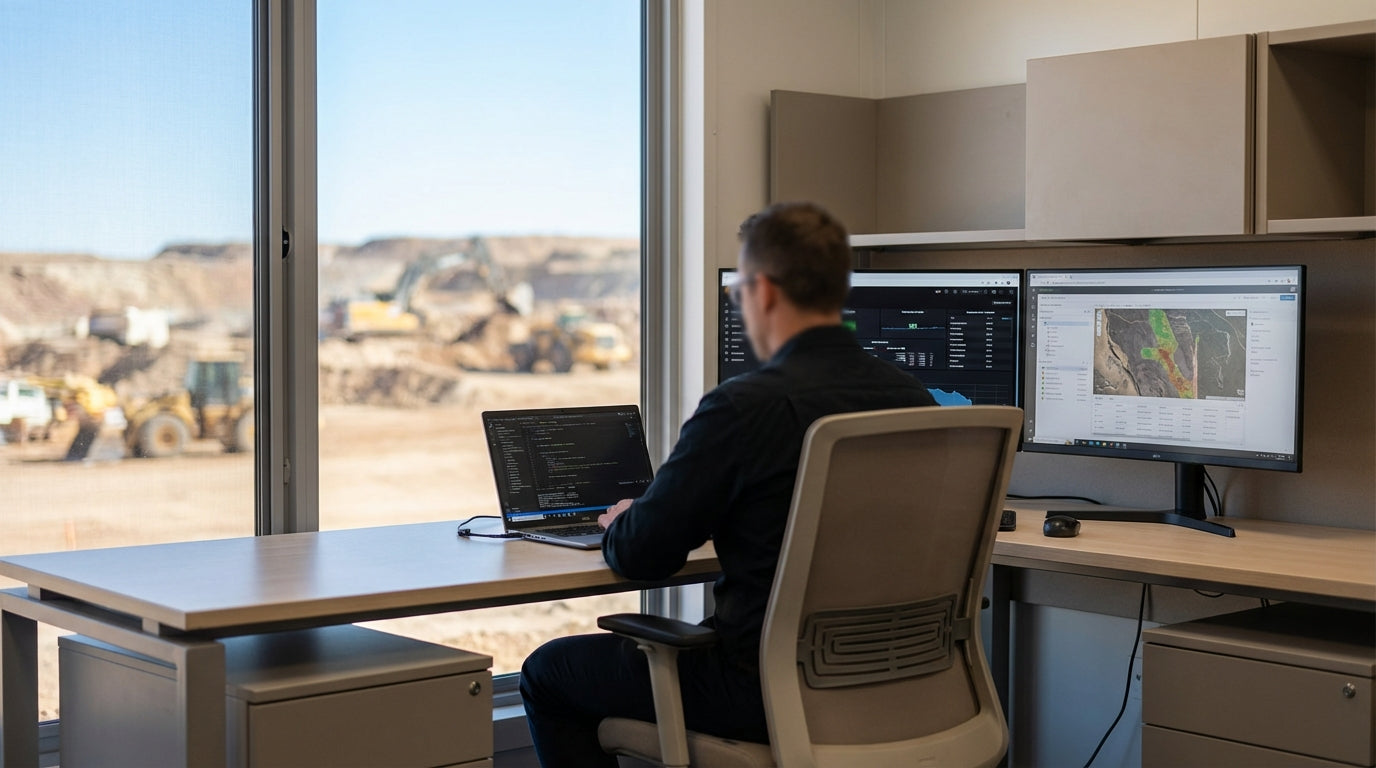
Designing a Practical Site Office Layout for Remote Mining
Mining compounds are demanding environments, so the way you plan your site office layout matters. A functional floorplan supports productivity, safety, and clear communication across shifts.
Start by mapping how people actually move through the building: supervisors, engineers, contractors, and visitors. Group related functions together, such as planning teams near operations coordinators, to reduce time wasted walking between rooms. Use modular furniture like Single Person Workstations and 2 Person Workstations to create clear zones for focused work versus collaboration.
In small or temporary buildings, maximising corners and wall space is crucial. Compact Corner Office Desks and L-Shaped Desks can create extra surface area without expanding the footprint, allowing more people to work comfortably in transportable offices. Keep traffic paths wide enough for workers in PPE to move freely, and position meeting points away from high-noise areas like radio rooms or crib areas.
Finally, consider future expansion right from the start. Mining projects often scale up quickly, so choose furniture systems that can be added to or reconfigured with minimal disruption. Standardising on compatible desks and storage makes it easier to add new staff, rearrange teams as rosters change, or transition from exploration to production without a complete refit.
Choosing Durable Desks and Workstations for Harsh Conditions
Equipment on site needs to handle dust, vibration, and long operating hours, and desk systems are no exception. Prioritise durability, easy cleaning, and simple setup.
Mining staff routinely bring in mud, red dirt, and oily residues from plant areas. Select robust surfaces on Straight Desks and Manager Desks that resist staining and are quick to wipe down. Look for frames with solid steel construction and strong fixings that won’t loosen under constant use or after repeated relocations of transportable buildings.
Shift-based work also means desks may be shared across multiple crews. Adjustable setups such as Single Person Workstations allow workers to tweak screen height, keyboard placement, and legroom quickly at the start of each shift. Where supervisors need extra room for plans, maps, and production reports, an L-Shaped Desk or corner configuration gives more bench space without blocking movement through the office.
For senior engineers, managers, and HSE leads who handle sensitive documentation and frequent stakeholder meetings, dedicated Manager Desks offer greater surface area and a more formal setup. Pair these with nearby storage such as Office Cupboards for controlled access to site procedures, safety files, and compliance records. Choosing a consistent colour palette and finishes across the office also helps create a professional environment despite the remote location.
Seating That Supports Long Shifts and Safety
Long shifts, rotating rosters, and heavy PPE all place extra pressure on workers’ bodies. The right seating reduces fatigue and helps prevent musculoskeletal injuries.
Task-based roles such as control room operators, dispatchers, and planners spend many hours at a screen monitoring production or fleet movements. Ergonomic Task Chairs with lumbar support, adjustable armrests, and seat depth control are essential for these staff. When chairs can be tuned quickly to the user, it supports better posture across day, night, and swing shifts.
Standard office chairs often aren’t designed for bigger bodies, heavy use, or workers who stay in PPE while seated. This is where Heavy Duty Chairs are more suitable, offering higher weight ratings, tougher upholstery, and reinforced frames. They cope better with high-traffic environments, rougher handling, and the extra load from hi-vis gear, tool belts, and radios.
Consider hygiene and cleaning as well. Choose chair fabrics or finishes that are easy to sanitise and resistant to sweat, dust, and grease from operational areas. Having a consistent set of Task Chairs and Heavy Duty Chairs across the office makes it simple to rotate or replace units without disrupting the look or ergonomics of your workspace.
Secure Storage for Personal Gear, Tools, and Documents
Site offices must handle everything from PPE and personal valuables to controlled documents and small tools. Secure, well-planned storage reduces clutter and risk.
Workers often arrive with bags, boots, and personal items that can’t go into plant areas. Installing Steel Lockers near entry points gives staff a safe place to store valuables while they’re on shift. Metal lockers are tough enough for remote camps, easy to label by crew or department, and simple to clean between roster swings or contractor rotations.
For files, manuals, and consumables, centralised Office Cupboards keep critical information accessible but controlled. Use lockable cupboards for safety procedures, incident reports, and training records to support compliance and audits. Open-shelf units can hold frequently used items such as forms, stationery, and radio batteries without clogging up work surfaces.
Combining personal storage with desk-based solutions keeps workspaces clear and safe. Staff using Straight Desks, Corner Office Desks, or L-Shaped Desks can add under-desk pedestals for everyday documents while using Steel Lockers for personal gear. This separation of personal and operational storage makes cleaning easier and supports safer evacuation routes.
Improving Productivity and Comfort in Remote Operations
A well-furnished site office does more than look tidy; it directly affects productivity, communication, and staff retention. Investing in comfort and function helps your teams perform at their best in tough environments.
When desks, seating, and storage match the way teams actually work, people waste less time looking for equipment, shuffling papers, or hunting for a spare workspace. Coordinators on Straight Desks can quickly collaborate with supervisors at Manager Desks, while planners using Single Person Workstations can focus on detailed scheduling without constant interruptions. Clear zoning of quiet work areas versus high-traffic spots reduces noise and distractions.
Comfort is just as important. High-quality Task Chairs and Heavy Duty Chairs support workers through long shifts and night work, helping reduce aches, fatigue, and lost concentration. Pairing ergonomic seating with the right combination of Corner Office Desks and L-Shaped Desks gives each person enough space for laptops, dual monitors, radios, and paperwork without creating cluttered, unsafe benches.
Over time, a consistent furniture standard across your mining village or remote camp simplifies maintenance and replacement. Using compatible systems for 2 Person Workstations, desks, and Office Cupboards makes it easier to relocate teams between donga offices, add capacity during ramp-up stages, or refurbish older buildings. The result is a site office that adapts as the project evolves, supporting both productivity and the wellbeing of your workforce.


