

Why Your Quilting Studio Needs a Professional Front Counter
A quilting studio is more than a workspace; it’s a creative business that deserves a professional welcome area. The front counter is often the first thing customers see, so it needs to look inviting and work hard behind the scenes.
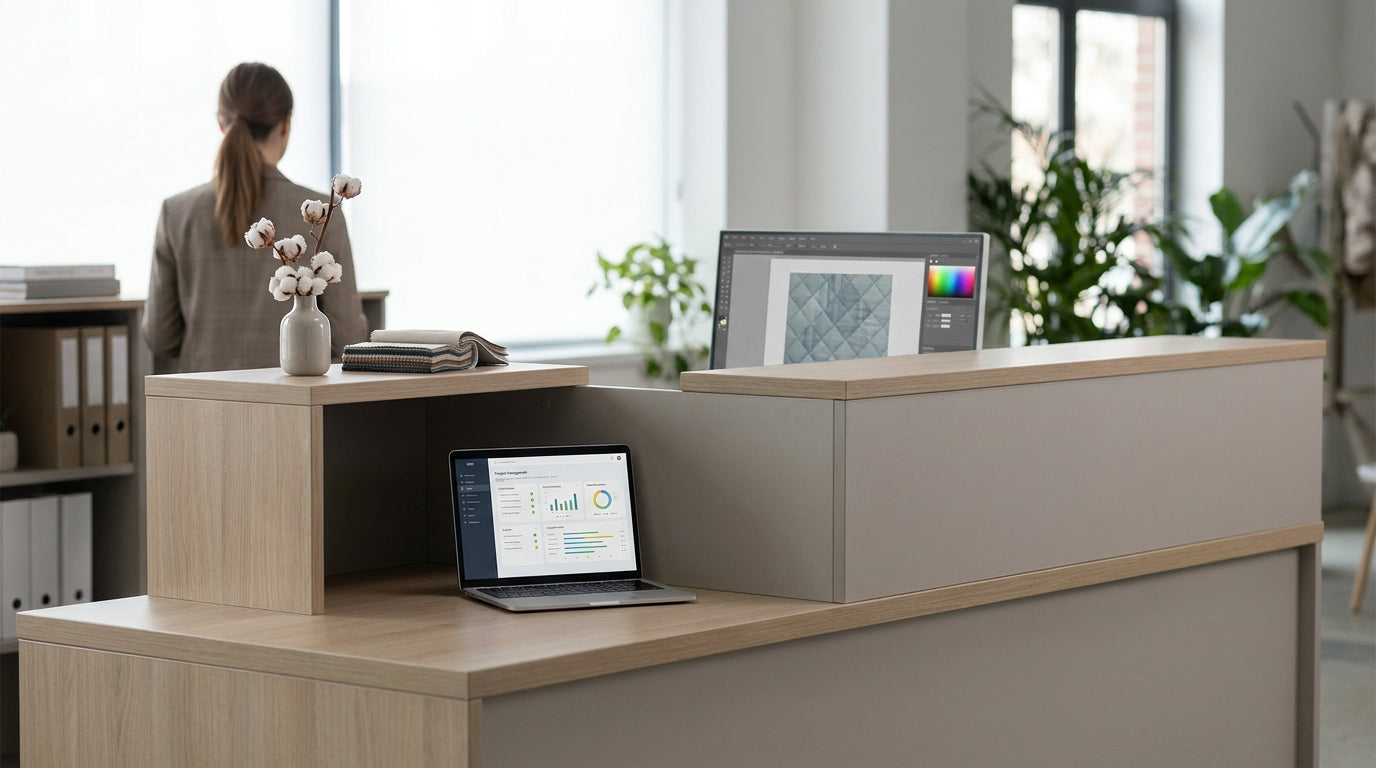
For many long-arm quilters and fabric shop owners, the reception zone doubles as a sales counter, consultation space, and booking desk. Choosing the right style from a range of dedicated Reception Counters helps you create a tidy, efficient hub for taking payments, storing patterns, and managing workshop enrolments. A well-designed counter also hides cables, sewing machine accessories, and paperwork so the focus stays on your quilts and curated fabrics, not the clutter.
Because quilting often involves bespoke orders and detailed conversations, the counter needs room for design books, fabric swatches, and sample blocks. Matching it with practical storage like Office Cupboards and Bookcases means patterns, wadding, and rulers can stay close at hand without taking over your cutting tables. Thoughtful office furniture choices bring structure to your studio, so you spend less time hunting for supplies and more time stitching.
Choosing the Right Counter Shape for Your Quilting Workflow
The shape of your front counter has a big impact on how smoothly your quilting studio runs. It should support the way you greet clients, sell retail stock, and handle bookings.
If you regularly juggle fabric sales, quilt intake and workshop registrations, an angled workstation such as the options in L-Shaped Reception Counters can separate these tasks into distinct zones. One side can be dedicated to point-of-sale and EFTPOS, while the return provides space to lay out quilt designs, measure tops, or confirm edge-to-edge patterns without disturbing other customers. This layout also creates a subtle boundary between staff-only areas and public space, which is useful when handling customer quilts that must stay clean and protected.
Smaller studios or mobile quilting businesses operating from shared premises may prefer streamlined pieces from the Straight Reception Counters range. A linear design maximises walkway space, keeps movement simple, and works well when your studio footprint is narrow or combined with a retail fabric shop. You can still boost storage capacity by sliding Pedestal Drawer Units underneath for thread, bobbins and notions, keeping the countertop clear for customer interactions.
When comparing counter shapes, think about where customers queue, where quilts are handed over, and how you move between sewing machines, cutting tables and the front door. Mapping out your traffic flow on paper before ordering furniture helps avoid bottlenecks and ensures your workspace remains comfortable during busy pre-Christmas rushes or workshop days.
Creating a Welcoming Waiting Area for Quilting Clients
A comfortable waiting space reassures clients who are trusting you with heirloom quilts and special memory projects. It also sets the tone for group classes and sit-and-sew sessions.
Start with supportive seating from the Reception Seating range that suits your studio’s style, whether that’s modern, country, or vintage-inspired. Adding a mix of armchairs and lighter Visitor Chairs allows you to reconfigure the space for trunk shows, guild meetings or private consults. Aim for fabrics and finishes that are easy to clean, especially if you frequently host groups who bring in their own projects and supplies.
A sturdy surface for magazines, lookbooks and quilting catalogues is essential. Compact Coffee Tables work well for pattern books and class flyers, while Side Tables can hold thread charts, colour cards and booking forms near each chair. This encourages customers to browse ideas while they wait, often leading to extra quilting add-ons such as custom borders or specialty batting once they reach the counter.
Linking the waiting area visually to your front counter—through matching finishes, a shared colour palette, or repeated timber tones—creates a cohesive, professional look. Customers will feel they’ve stepped into a well-organised creative studio rather than a makeshift workroom, boosting their confidence in your services and increasing the likelihood of repeat bookings.
Smart Storage Solutions for Fabrics, Tools and Paperwork
Clutter builds up quickly in a busy quilting business. Good storage behind and around your counter keeps everything organised and easy to find.
Behind the counter, tall Office Cupboards are ideal for bulk batting rolls, backing fabrics and workshop supplies that you don’t want on open display. Shelved Bookcases are perfect for neatly arranging pattern books, quilt samples and class binders where you can grab them mid-consultation. Label boxes or baskets on these shelves with clear categories like “custom orders,” “binding options,” or “class kits” so you can serve customers quickly.
Smaller essentials such as rotary cutters, spare needles, quilting rulers and marking tools are best kept in lockable Pedestal Drawer Units tucked beneath or beside your counter. These mobile drawers are easy to reposition if you change your studio layout, and they prevent sharp items from ending up on display surfaces where clients might bump them. Dedicate one drawer to admin items—receipts, loyalty cards, booking forms—so you’re not rummaging through sewing supplies when checking someone in for a class.
By combining enclosed cupboards, open shelving and drawer units, you can keep your public-facing counter clear and calm while still having your most-used quilting tools close at hand. This balance between display and concealment helps your studio feel both creative and under control, which is especially important when you’re managing complex commissions or multiple quilts at different stages.
Design Tips to Showcase Your Quilts and Build Your Brand
The way you style your front counter and reception area tells a story about your quilting brand. Thoughtful furniture choices can highlight your craftsmanship and encourage customers to explore more of your services.
Use the clean lines of modern Reception Counters as a backdrop for rotating mini quilt displays, scrappy runners, or seasonal wall hangings. Keeping the countertop mostly clear—beyond a point-of-sale system and a few key samples—lets each piece stand out. If your studio runs regular classes, display a class project near the counter with a simple flyer on a Side Table or small Coffee Table so customers can see and touch the finished quilt as they enquire.
Seating choices also play a role in your branding. Coordinated fabrics on Reception Seating and Visitor Chairs can echo the colours you favour in your quilts, while timber or white finishes on storage pieces like Bookcases and Office Cupboards keep the look fresh and uncluttered. This visual consistency makes your studio memorable, which is important for word-of-mouth referrals and social media photos shared by happy clients.
Finally, plan enough space around your counter for customers to bring in large quilt bags without feeling cramped. Whether you choose an L-shaped layout or a compact straight design, the combination of functional reception furniture and practical storage creates a welcoming, efficient studio that supports your quilting business as it grows.


