

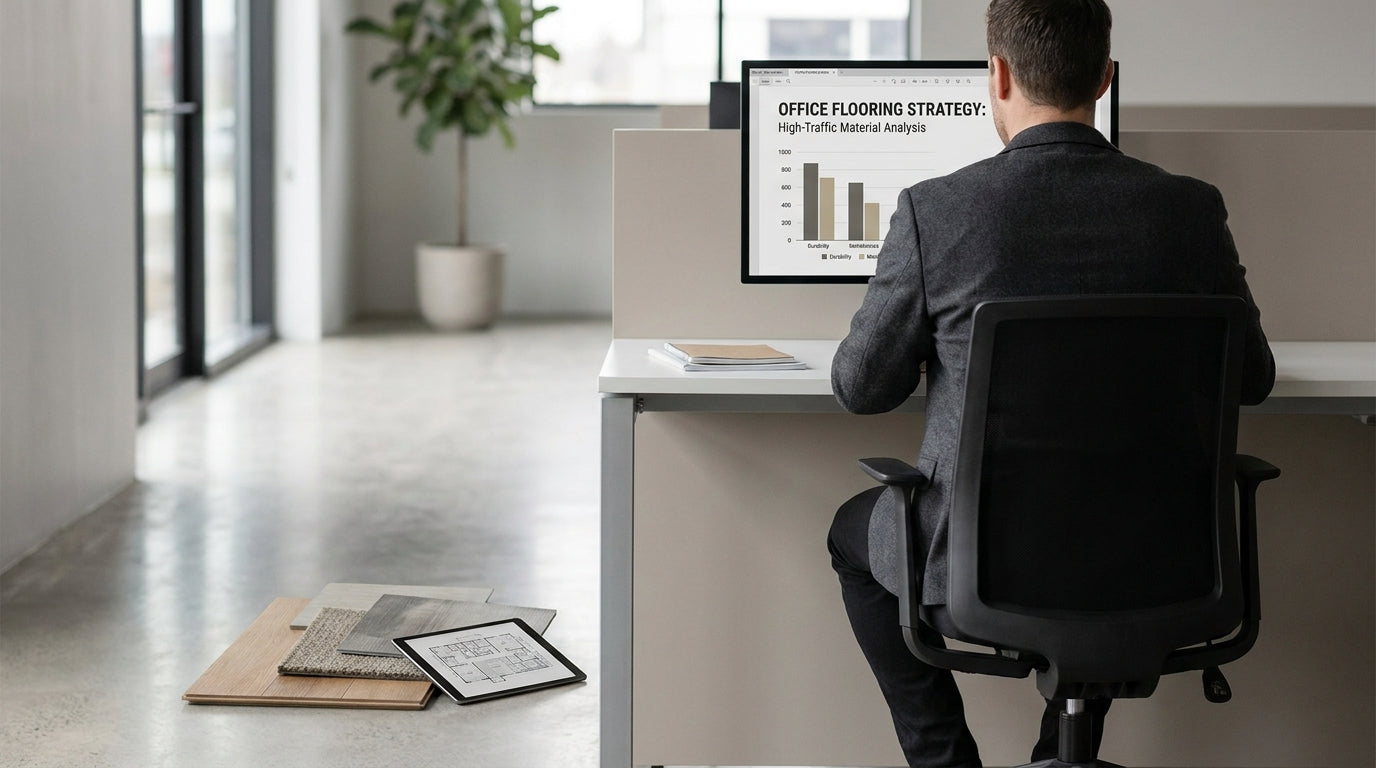
Key considerations for high-traffic office flooring
Flooring in busy workplaces cops a lot of wear and tear. Choosing the right material means balancing durability, safety, maintenance and cost over the long term.
High-traffic areas like reception, corridors, open-plan desks and breakout zones need surfaces that can handle constant footfall, office chairs on castors and regular cleaning. In modern layouts with shared Office Pods, collaborative hubs and flexible desk banks, the floor becomes part of the overall performance of the space, not just a background finish.
When assessing options, look at slip resistance, stain resistance, acoustic performance and how the surface will interact with furniture such as Single Person Workstations or larger 4 Person Workstations. Consider whether the material will dent under table legs, scuff under chair wheels or fade in natural light. These factors all impact how professional your office will look in two, five or ten years’ time.
Budget is important, but it’s the lifecycle cost that matters most for commercial interiors. A cheaper product that needs replacing every few years can end up costing more than a tougher surface with a higher upfront price. Factor in installation downtime, business disruption and the cost of moving workstations, Office & Meeting Tables and storage every time a floor is redone.
Vinyl, hybrid and laminate: hard-wearing everyday heroes
Resilient flooring products like vinyl, hybrid and laminate are common choices for busy offices. They offer good value, easy cleaning and a wide range of styles.
Commercial vinyl tiles or planks are specifically designed for heavy use, with tough wear layers that resist scratches, stains and moisture. They’re a strong candidate for corridors, print rooms and spaces around shared 2 Person Workstations and 6 Person Workstations. Many options mimic timber or stone without the cost or maintenance, giving you a professional look that still stands up to everyday traffic.
Hybrid flooring combines a rigid core with a vinyl top layer, delivering both durability and improved stability under temperature changes. This makes it ideal for open-plan offices with big windows or areas near entryways where the floor has to cope with humidity and tracked-in dirt. Laminate offers similar visual variety, but typically needs a bit more care around moisture and is better suited to drier zones such as meeting rooms with fixed Meeting Tables and boardroom settings.
For all three, check slip ratings and acoustic performance before committing. In open layouts with clustered Partition Workstations, noise control becomes crucial, and a hard surface may need acoustic underlay or pairing with carpet tiles in certain sections to keep sound levels comfortable.
Carpet tiles and modular layouts for flexible offices
Carpet tiles remain a staple in commercial fitouts, particularly in open-plan zones and meeting spaces. They provide warmth underfoot and excellent acoustic control.
In high-traffic offices, carpet tiles are easier to maintain than broadloom carpet because damaged or stained tiles can be swapped out individually. This is especially practical under dense clusters of desks, such as banks of 4 Person Workstations or 6 Person Workstations, where spills and chair wear are more common. Choosing tiles with a tight, low pile and commercial wear rating helps them resist flattening and keep their appearance longer.
Carpet tiles also complement quiet focus areas, including enclosed Office Pods or zones dedicated to Single Person Workstations. The soft surface absorbs sound from phone calls, keyboards and footsteps, improving concentration without major acoustic construction. Many ranges run in coordinated colours and patterns, allowing you to visually define collaboration spaces, circulation routes and private zones simply by changing the tile design.
For reception and waiting areas, pairing carpet tiles with suitable Reception Seating creates a comfortable first impression while still meeting commercial performance standards. Darker, patterned tiles tend to disguise day‑to‑day dirt and wear, making them a practical choice for entries and client-facing spaces where presentation is critical.
Hard surfaces: polished concrete, stone and timber
Hard surface flooring can give a premium feel, but not all options suit constant office traffic. It’s important to match the material to how the space will be used.
Polished concrete is extremely tough and low maintenance, which makes it well suited to ground-floor lobbies and long corridors. It handles rolling loads, making it reliable under mobile storage and around heavier Office & Meeting Tables. The downside is noise and echo, so many workplaces combine concrete with rugs or carpet tiles in desk clusters and around Meeting Tables to manage acoustics.
Natural stone, such as granite or porcelain tiles, offers a sophisticated look for client-facing zones and executive suites. However, these surfaces can feel cold and may become slippery when wet, so they’re usually best limited to controlled areas like reception, paired with quality Reception Seating. In general office areas where Partition Workstations and shared desks dominate, many businesses prefer softer or hybrid options for comfort and quieter footfall.
Timber flooring creates a warm, natural aesthetic but needs careful product selection in a commercial context. Solid hardwood can dent under concentrated point loads from chair legs, table feet and workstation frames, particularly around dense banks of 2 Person Workstations and 4 Person Workstations. Engineered timber with a robust finish is generally more stable and can work well in meeting rooms or private offices where traffic is moderate rather than constant.
Matching flooring to zones, furniture and future growth
The most effective office fitouts use more than one flooring type. Each zone is matched to how people actually work and move through the space.
Start by mapping traffic patterns: entries, kitchenettes, lift lobbies and main corridors usually need the most resilient materials. From there, you can layer in comfort and acoustics in concentration zones with carpet tiles around Single Person Workstations and focused Office Pods, while using hard-wearing vinyl or hybrid surfaces in collaborative areas where food, drinks and equipment are more common. This mixed approach supports both durability and staff comfort.
Think about how your chosen flooring will work with key furniture elements. Heavy Office & Meeting Tables, clusters of 6 Person Workstations and rows of Partition Workstations all place specific demands on the surface below. Check manufacturer recommendations for chair castors, glides and protective pads to avoid premature wear. Planning cable pathways and floor boxes early also reduces the risk of later cutting into your finished surface.
Finally, design with flexibility in mind. As teams grow or move between individual desks, shared 2 Person Workstations and larger 4 Person Workstations, your flooring should still perform and look consistent. Modular products like carpet tiles and vinyl planks make it easier to reconfigure layouts, add extra Meeting Tables, or extend client areas with matching finishes, supporting long-term value and a cohesive, professional appearance.


