

Why Standing Collaboration Matters in Modern Workplaces
Standing collaboration spaces are becoming a staple in Australian offices. They support faster conversations, more energy in meetings, and better use of floor space.
Unlike traditional seated meeting rooms, standing zones encourage short, focused discussions that keep projects moving. Teams can huddle quickly around a surface, jot down ideas, then return to their desks without losing momentum. This style of working is ideal for agile teams, hybrid staff, and anyone juggling multiple projects across the day.
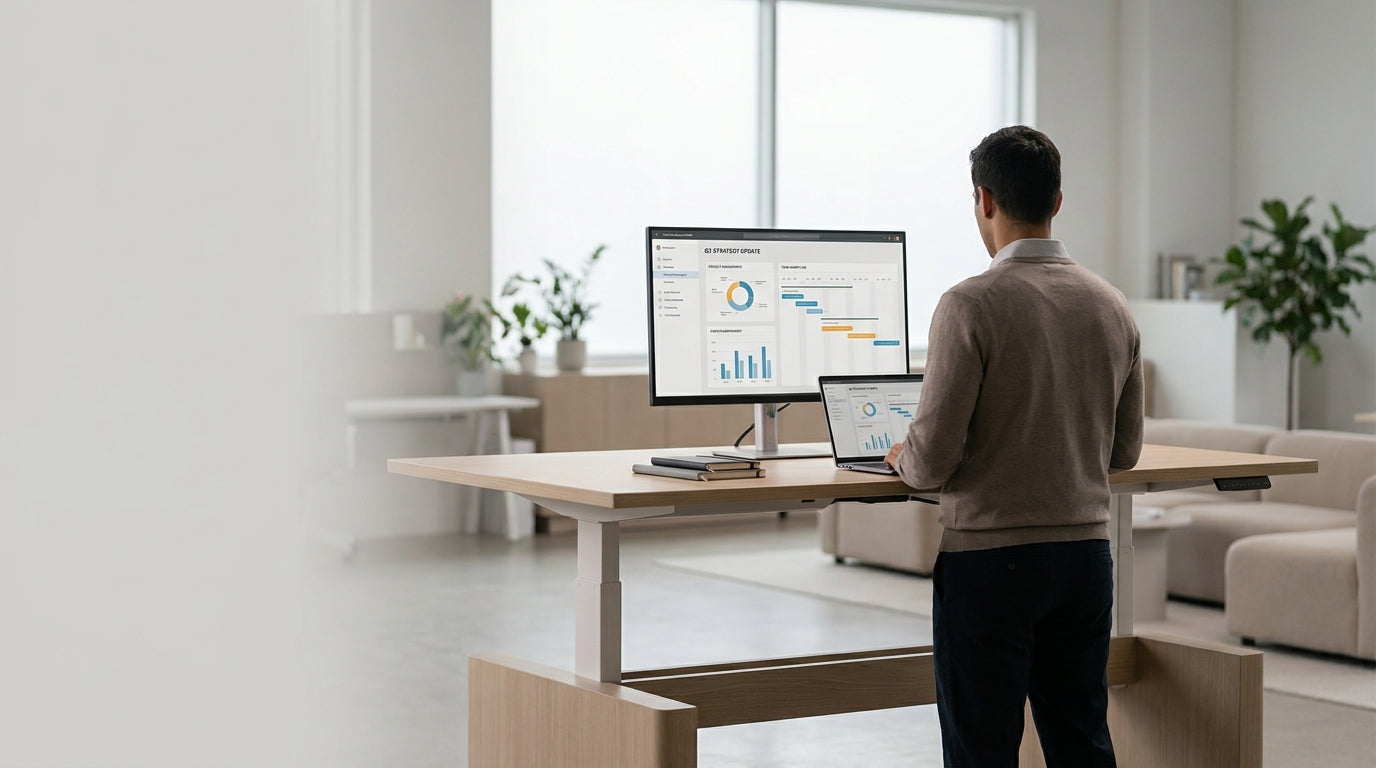
From a wellbeing perspective, standing for part of the day helps break up long periods of sitting, which can reduce stiffness and boost alertness. Paired with ergonomic setups like Height Adjustable Workstations, staff can easily switch between solo focused work and group collaboration without compromising comfort. The right furniture simply makes it easier to move, interact, and stay engaged.
Thoughtful standing collaboration areas can also reduce reliance on large formal boardrooms. Instead of booking a room for every quick chat, teams can gather around a dedicated high table or mobile surface, supported by tools like Mobile Whiteboards for on-the-spot planning. This flexibility is particularly useful in open-plan offices where space is at a premium.
Key Features to Look For in Standing Collaboration Furniture
Choosing furniture for standing teamwork is about more than just picking a tall table. You need pieces that are stable, flexible, and comfortable to use for short bursts.
Height is the first consideration. Surfaces should be comfortable for most people to lean on or work at without hunching their shoulders. That’s where Height Adjustable Workstations and sit-stand tables shine, allowing you to dial in the ideal level for different teams or activities. For shared spaces, look for designs with simple, intuitive adjustment mechanisms so staff can change heights quickly.
Mobility is another crucial feature. Lightweight or wheeled options, such as Mobile Tables, make it easy to reconfigure a space for stand-ups, workshops, or project layouts. Paired with flip mechanisms like those on Flip Top Tables, you can pack furniture away when it’s not needed, opening up floor space for other activities.
Durability and cable management shouldn’t be overlooked. Office-grade surfaces are designed to handle daily use, laptops, and hot drinks without warping or staining. Many modern Office & Meeting Tables include options for inbuilt power and data, allowing staff to plug in devices at standing height. This prevents cluttered cables on the floor and keeps collaboration zones tidy and safe.
Best Table Shapes and Styles for Stand-Up Meetings
The shape of your collaboration table has a big impact on how people interact. Different layouts suit different types of conversations.
For quick stand-ups and project check-ins, compact Bar Tables are a strong choice. Their smaller footprint fits easily into corners or along circulation routes, creating informal touchdown points around the office. When combined with a few Bar Stools, they also give team members the option to perch during longer discussions while still keeping the overall feel active and upright.
If your team often works in groups of three to six, circular and rounded shapes promote better eye contact and equal participation. Dedicated Round Tables make it easier for everyone to see shared documents or a central screen, which is particularly useful for design reviews or brainstorming sessions. These can be paired with Meeting Tables elsewhere in the office to offer both standing and seated options depending on the task.
For larger workshops and training sessions, rectangular or modular tables deliver the most flexibility. You can combine several Meeting Tables or reconfigurable Mobile Tables to build U-shapes, classroom layouts, or shared project benches at standing height. When paired with nearby Mobile Whiteboards, these setups create a highly interactive environment where teams can move around, sketch, and present ideas without being restricted to a single seated position.
Supporting Furniture: Stools, Whiteboards and Flexible Add‑Ons
The best standing collaboration zones include a few smart accessories. These extras keep people comfortable and make sessions more productive.
Height-matched seating is essential for accessibility and comfort. Not everyone can or wants to stand for long periods, so providing quality Bar Stools gives staff the option to perch or rest as needed. Look for footrests, sturdy frames, and supportive seats so people can stay focused on the discussion rather than their posture. When these stools are paired with suitable Bar Tables, you get a cohesive, practical setting that works for mixed seated-standing groups.
Visual collaboration tools are just as important as the table itself. Freestanding Mobile Whiteboards allow you to move your brainstorming surface wherever the team gathers. Because they’re double-sided and easy to reposition, you can capture ideas on one side while keeping key project information visible on the other. This is particularly useful in agile environments where tasks and priorities change quickly.
For teams that need maximum flexibility, pairing Mobile Tables with Flip Top Tables helps you scale collaboration spaces up or down. You can roll in extra surfaces for a cross-functional workshop, then flip and nest them away to restore open floor space. Combining these with fixed Office & Meeting Tables and individual Height Adjustable Workstations gives your workplace a broad mix of settings tailored to different tasks.
Planning Your Standing Collaboration Zones
Successful standing collaboration areas don’t happen by accident. They require thoughtful planning around workflows, team size, and available space.
Start by mapping where conversations naturally occur: near project teams, along circulation paths, or beside key resources like print stations. Then decide which style of furniture best supports each activity. For quick huddles, a couple of high Bar Tables with matching Bar Stools might be enough. For project-heavy teams, consider a dedicated area with modular Meeting Tables or Mobile Tables that can be reconfigured as work evolves.
Next, think about how technology and visual tools will be used. Ensure there is space for one or more Mobile Whiteboards and easy access to power for laptops and screens. In some cases, a central hub of Office & Meeting Tables at standing height may double as a charging and collaboration point. Complementing these shared zones with nearby Height Adjustable Workstations allows staff to move smoothly between focused solo work and group problem-solving.
Finally, leave enough room for movement. Standing collaboration only works if people can comfortably gather, walk around tables, and interact with surfaces without feeling cramped. Consider rounded corners on Round Tables or compact Flip Top Tables where space is tight. By combining the right mix of tables, stools, and whiteboards, you can create standing collaboration zones that genuinely support faster decisions, better communication, and a more dynamic Australian workplace.


