

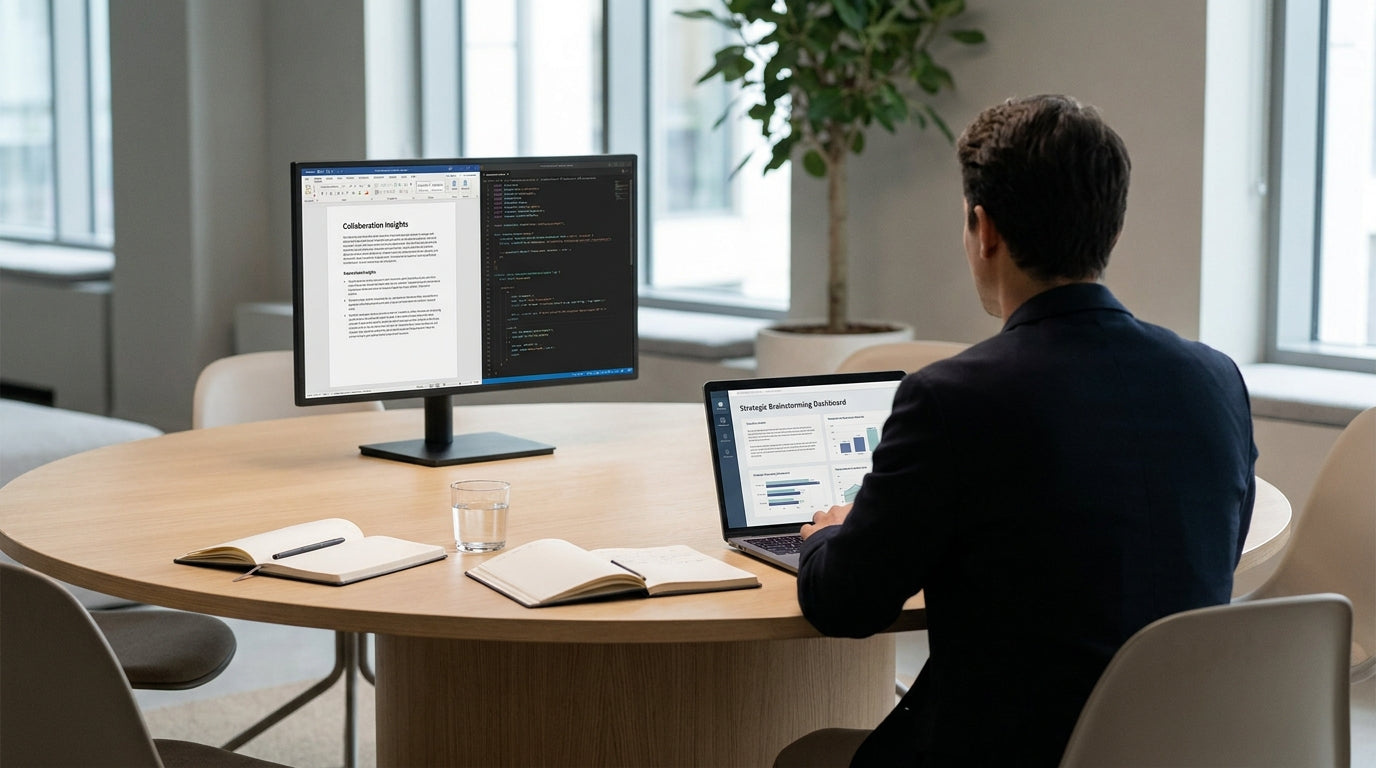
Why Table Shape Matters for Creative Collaboration
The shape of a meeting table has a direct impact on how people interact, share ideas, and stay engaged. Choosing the right design can make brainstorming sessions more inclusive, energetic, and productive.
When teams gather around a table, the geometry of that surface subtly controls sightlines, body language, and who dominates the conversation. A long rectangular table, for example, can create a “front” and a “back” of the room, encouraging hierarchy instead of open discussion. In contrast, more balanced shapes support equal participation and make it easier to read cues, jump into the conversation, and build on each other’s ideas.
In modern workplaces, it’s rare that one single table has to do everything. Many organisations now mix permanent Office & Meeting Tables with flexible pieces that can be rearranged to suit different styles of workshops, strategy days, and quick stand‑ups. Thinking about table shape as part of your collaboration toolkit, rather than just a furniture purchase, helps you get much more value from your space.
Good brainstorming relies on psychological safety and a sense of shared ownership. The right table shape supports this by reducing physical barriers, minimising “head of the table” status, and keeping everyone within easy eye contact and speaking distance. Before choosing a size or finish, it’s worth stepping back and asking how you want people to behave in that room.
Round Tables: Encouraging Equal Voices
Round tables are often the first choice for teams that want open, democratic discussion. With no defined “head”, everyone has a similar presence in the room.
The circular layout naturally improves eye contact and makes it harder for one or two people to dominate the session. Because everyone faces the centre equally, it’s easier to hear quieter team members and invite contributions from across the group. This makes round shapes ideal for creative workshops, problem‑solving sessions, and cross‑functional catch‑ups where every perspective matters.
From a practical perspective, sizing matters. A small round table can be perfect for three to five people, but once you move beyond six participants the diameter increases, and people may struggle to reach shared materials in the middle. Choosing the right diameter and pairing it with comfortable, mobile seating helps you keep the benefits of the shape without creating awkward reach or crowding.
For offices that host frequent creative sessions, dedicated Round Tables can anchor collaboration zones, while alternate shapes can serve more formal or task‑focused areas. Combining a round meeting space with nearby whiteboards and pin‑boards gives teams a natural “hub” for ideas, stand‑ups, and quick huddles without booking a formal boardroom.
Rectangular and Oval Tables: Balancing Focus and Flexibility
Rectangular and oval tables are common in boardrooms and formal meeting spaces. With a few simple choices, they can also work well for brainstorming.
A standard rectangular table supports structure: it’s excellent for presentations, training, and sessions where someone needs to lead the discussion. For creative work, though, that same structure can feel a bit rigid or hierarchical. One solution is to choose shorter, wider rectangles so everyone sits closer together and side conversations are easier. Another is to use moveable seating and technology, such as mobile screens, so you’re not locked into a single “front of room”.
Oval tables soften some of the hierarchy of straight‑edged designs. The curved ends and absence of sharp corners improve sightlines, allowing more people to see each other clearly, which is valuable during longer ideation sessions. This shape can be a smart compromise for organisations that need a professional boardroom look but still want the energy of open group discussion.
When specifying a formal space, it’s worth exploring dedicated Boardroom Tables that offer cable management, durable finishes, and proportions suited to your room. Complement these with smaller Meeting Tables nearby, allowing teams to move between structured sessions and looser break‑outs without losing momentum or access to tools.
Modular, Mobile and Folding Options for Agile Teams
Many Australian workplaces now need brainstorming spaces that can change from hour to hour. Modular, mobile, and folding tables give you that flexibility without sacrificing comfort.
Modular layouts use several smaller tables that can be pushed together into different shapes: clusters, U‑shapes, or long runs. This approach lets you test what works best for your team rather than committing to one permanent form. For example, you might group tables in a horseshoe for design sprints, then separate them into pods for project work. Purpose‑built Training Tables are often designed with this style of reconfiguration in mind, featuring lighter frames and linking mechanisms.
If your brainstorming area has to double as an event space, classroom, or hot‑desking zone, consider investing in Mobile Tables. Lockable castors make it easy to roll tables into new arrangements or up against the wall when you need open floor space for activities or team‑building exercises. Mobile pieces pair particularly well with whiteboards on wheels and portable screens.
Space‑constrained offices or shared spaces can benefit from Flip Top Tables, Folding Tables, and Trestle Tables. These designs can be packed away quickly after a workshop, freeing the room for other uses. Used together with more permanent Office & Meeting Tables, they allow you to scale up or down for large brainstorming events, project kick‑offs, or cross‑team strategy days without compromising on comfort or accessibility.
Choosing the Right Shape for Your Space and Team
The best configuration for idea‑generation depends on your room, team size, and style of collaboration. It’s often a mix of shapes rather than a single “perfect” table.
Start by mapping how you actually work. Do you run structured workshops with a facilitator at the front, or are your meetings more free‑flowing and conversational? For predominantly peer‑to‑peer discussion, circular or more compact rectangular Meeting Tables will likely serve you well. If you present frequently to clients or senior stakeholders, a larger oval or rectangular Boardroom Table paired with nearby breakout tables can bridge both needs.
Room dimensions also matter. In narrow spaces, long rectangles might be unavoidable, but you can still support brainstorming by choosing slightly rounded corners, avoiding oversized widths, and ensuring generous circulation so people can stand, move, and gather around shared content. In more generous rooms, mixing one or two central Round Tables with flexible Mobile Tables or reconfigurable Training Tables gives you multiple “zones” for different phases of an ideation session.
Finally, think about change over time. As teams grow or adopt new ways of working, the furniture that once suited them can start to slow them down. Choosing a combination of fixed Office & Meeting Tables with adaptable options like Flip Top Tables, Folding Tables, or Trestle Tables ensures your brainstorming spaces can evolve as quickly as your ideas.


