

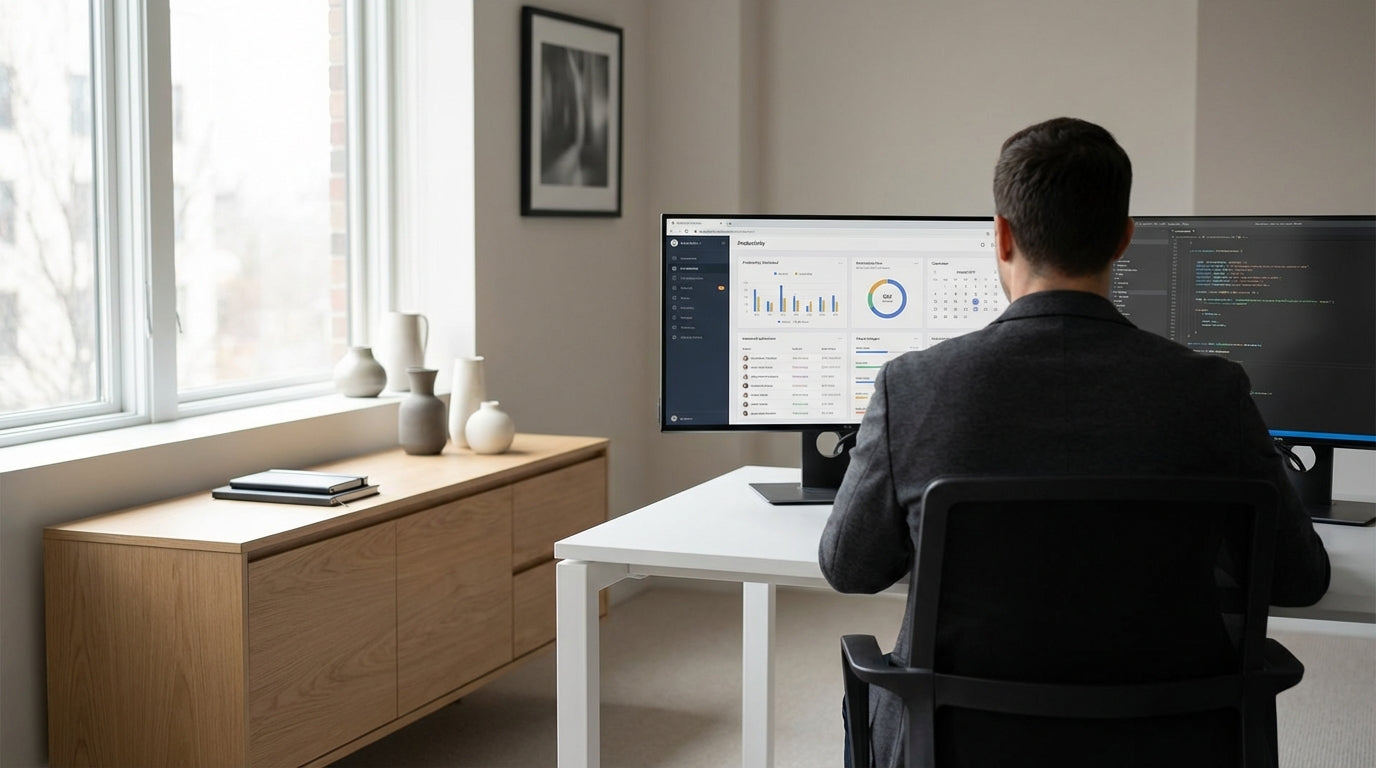
Getting the proportions right under a window
Choosing a credenza for under a window is mostly about proportion, not just style. When the height, width and depth are balanced, the room feels calm, practical and well planned.
In most Australian homes and offices, window sills sit between 850–1050 mm from the floor. As a rule of thumb, aim for storage that finishes 50–150 mm below the sill so it doesn’t block light or make the window feel cramped. Many credenzas / buffets are designed around standard desk heights, which makes them an easy match for typical window frames.
Depth is just as important. A unit that’s too deep can eat into circulation space or clash with nearby chairs and side tables. For most spaces, 400–500 mm deep works well, giving you enough room for files, printers or décor without overwhelming the floor area. If you need slimmer options in the same zone, consider combining a low credenza with narrow side tables to extend storage without adding bulk.
Length should relate to both the window and the wall. Many people like the credenza to finish slightly inside the window’s width so it feels intentional, not wedged in. On longer walls, it can also look great to centre the unit under the window and leave equal breathing room at each end, then balance it with vertical pieces like bookcases or tall plants.
Recommended heights for home and office spaces
Height is the first measurement to lock in, because it determines comfort, line of sight and how much natural light you keep. Get this right and everything else tends to fall into place.
For home offices and living rooms, a height of 700–800 mm usually sits comfortably under most sills while still feeling substantial. This range pairs neatly with items like office shelving or framed artwork above, without crowding the window. If your sill is especially low, look for compact storage from ranges such as Luxe Storage, where sleeker lines can stop the room feeling heavy.
In corporate offices with higher windows, you can push closer to 850–900 mm, especially when you want the top to double as a serving station or printer hub. Just keep the top edge below the sill, so blinds and curtains can move freely. Matching your credenza height to existing office cupboards or sliding door cabinets also creates a clean, built-in look across the room.
If you’re unsure, measure from the floor to the underside of the window frame, then subtract at least 50 mm. That number becomes your maximum credenza height. Remember to allow for any window winders, handles or skirting boards that might steal a little extra clearance.
Choosing the right width and depth under your window
Once you know your maximum height, the next decision is how long and deep the unit should be. These dimensions affect how functional the piece is day to day.
For width, you have three common approaches. You can align the credenza exactly with the width of the window for a neat, built-in feel; choose a slightly shorter unit so the window visually “floats” above; or span a longer length of wall so the window sits within a wider storage zone. Longer configurations can be created by pairing a central credenza with matching modules like Athens Storage units or additional bookcases to extend capacity without raising the height.
Depth should reflect how you’ll use the space in front of the window. Where traffic is heavy, stay around 400–450 mm to leave clear walkways. In quieter corners or behind desks, 450–500 mm gives you deeper storage for lever-arch files and larger items, aligning nicely with most office cupboards and tambour cupboards. This consistency makes it easier to line pieces up along one wall without awkward steps in or out.
If the window is in a compact room, consider using shallower units and relying more on vertical storage elsewhere. Slim office shelving or taller sliding door cabinets on the adjacent wall can absorb bulkier items, while the lower, narrower credenza under the window keeps the room feeling light and open.
Storage types that work well under windows
Not every storage piece suits a low position, especially if it needs doors to swing or frequent access. Some designs naturally perform better under windows than others.
Units with sliding or tambour (roll-up) doors are ideal because they don’t intrude into the walkway when open. A compact sliding door cabinet or tambour cupboard under a window lets you access files and equipment without clashing with chairs or bumping into open doors. They also tend to have clean, horizontal lines that visually align with the window frame above.
Traditional credenzas / buffets with hinged doors still work well when there’s enough clearance in front for the door swing. They’re especially handy in meeting rooms and executive offices, where the top can be used for catering, décor or printers. To avoid visual clutter, you can pair them with more refined pieces from collections such as Luxe Storage, which use simple finishes and integrated handles.
In reading nooks or breakout zones, you might use a low combination of cabinets and open bookcases under the window. The cabinet sections keep mess out of sight, while open shelves display books or décor. If you need extra surfaces for plants or personal items close by, mixing in compact side tables can give you more flexibility without blocking the window line.
Practical planning tips before you buy
A bit of planning before you order will save frustration later. Measure carefully and think about how the space needs to work across the day.
Start by mapping out the window area: note sill height, overall width, any radiators, power points or vents underneath, and how your curtains or blinds fall. Make sure the storage won’t block access to windows that need to open for ventilation. If the piece will sit near existing items like office shelving or tall office cupboards, check that the heights and depths will look cohesive when viewed from the doorway.
Consider what you’ll store inside and on top. For files, equipment and stationery, look for units from ranges such as Athens Storage that offer a mix of shelves and lockable compartments. For more design-led spaces, options from Luxe Storage can give you both function and a polished aesthetic. If you expect heavy use, materials and hardware matter—solid construction is especially important where the top will support printers, copiers or regular catering.
Finally, tape out the footprint on the floor to check circulation space, chair clearance and how it interacts with nearby furniture such as side tables or other credenzas. If you discover you need extra capacity but can’t go higher under the window, plan to add vertical elements like office shelving or taller bookcases on an adjacent wall. This layered approach keeps the window area light while still meeting your storage needs.


