

Understanding Architectural Filing Needs
Architects manage a huge range of documents, from concept sketches to signed contracts. The best filing approach blends physical storage with digital systems so nothing falls through the cracks.
On any live project, you might juggle drawings, specifications, product schedules, fee proposals, RFIs, site photos and compliance records. Each has different retention periods and access requirements, which is why a single “one size fits all” solution rarely works. Instead, studios benefit from a structured mix of labelled drawers, secure cupboards and cloud-based folders aligned to project stages.
For printed plans, tender sets and archived jobs, purpose-built storage such as Filing Cabinets and plan drawers keeps paper protected and easy to retrieve. Active files that several team members access every day are better stored in shared units like Office Cupboards or Office Shelving, with clear labels by client, project code and status.
A strong filing framework also supports quality assurance, especially for ISO or PQC-accredited practices. When auditors ask for a specific revision or approval, being able to locate it within seconds shows that your practice is in control of its documentation and risk management.
Key Filing System Options for Design Studios
Most architecture practices find that a hybrid storage system works best. The right mix depends on office size, project volume and how often you reference older work.
Traditional vertical Filing Cabinets remain popular for contracts, client correspondence and financial records that must be locked away yet accessed reasonably often. For larger items like samples, catalogues and model-making materials, robust Office Cupboards and dedicated Stationery Cupboards keep everything tidy and out of sight, which is especially important in client-facing studios.
Open Office Shelving and Bookcases work well for reference material such as building codes, standards, product manuals and inspiration books. Because these are accessed frequently, open shelves reduce friction and keep your team from abandoning the system. Mobile storage like Compactus units can dramatically increase capacity in smaller offices by compressing aisles, which is ideal for large archives of past projects or long-term record storage.
For workstations, personal Pedestal Drawer Units keep current sketches, notebooks and samples close to hand without cluttering the desktop. Shared spaces such as print rooms benefit from space-saving options like Sliding Door Cabinets and Tambour Cupboards, which avoid swinging doors intruding into circulation paths.
Choosing Between Open and Closed Storage
Open and closed storage each have distinct advantages in an architectural office. The ideal layout usually combines both.
Open systems, including Office Shelving and Bookcases, encourage visibility. Team members can quickly scan spines and project labels, which is ideal for shared resources and active project binders. This visibility can also support a studio’s culture, showcasing models, key publications and awards in communal areas alongside day-to-day reference folders.
Closed storage options such as lockable Office Cupboards, Sliding Door Cabinets and vertically rolling Tambour Cupboards protect documents from dust, light and accidental damage. They’re particularly suited to signed contracts, HR files, financial records and confidential client information. Sliding and tambour doors also minimise obstruction in narrow corridors and around collaboration zones.
For practices storing large volumes of archived drawings and specifications, a compact high-density system such as Compactus offers significant space savings while keeping materials secure behind closed panels. Paired with personal Pedestal Drawer Units at each workstation, this approach allows you to keep bulk items out of the way while maintaining fast access to daily essentials.
Designing a Logical, Project-Based Structure
The smartest storage hardware will fail without a clear filing structure. Architects benefit most from a project-based system that mirrors their workflows.
Start by assigning each project a unique job number and consistently using it on digital folders, physical labels and drawing title blocks. Group active project folders together on shared Office Shelving or in clearly labelled sections of your Filing Cabinets. Inside each project, sub-divide content into standard categories such as Contracts, Correspondence, Approvals, Drawings, Specifications and Site Records so staff can file documents instinctively.
For older or completed projects, shift whole sets into archive zones using high-capacity solutions like a Compactus system or deep Office Cupboards. Label rows and shelves with both job numbers and client names, and maintain a simple index so anyone in the practice can locate a file without guessing. Supporting material such as product catalogues and standards should live in central Bookcases or Stationery Cupboards, separated from project-specific content to keep records lean.
At desk level, give team members small-scale storage via Pedestal Drawer Units so they can keep temporary printouts and sketches organised during intense design phases. A regular schedule for reviewing and culling paperwork, combined with clear rules about what gets digitised, ensures the physical filing system stays accurate and uncluttered over time.
Balancing Physical Storage with Digital Workflow
Modern practices need both physical and digital filing working in harmony. The aim is to reduce double handling while staying compliant with Australian record-keeping obligations.
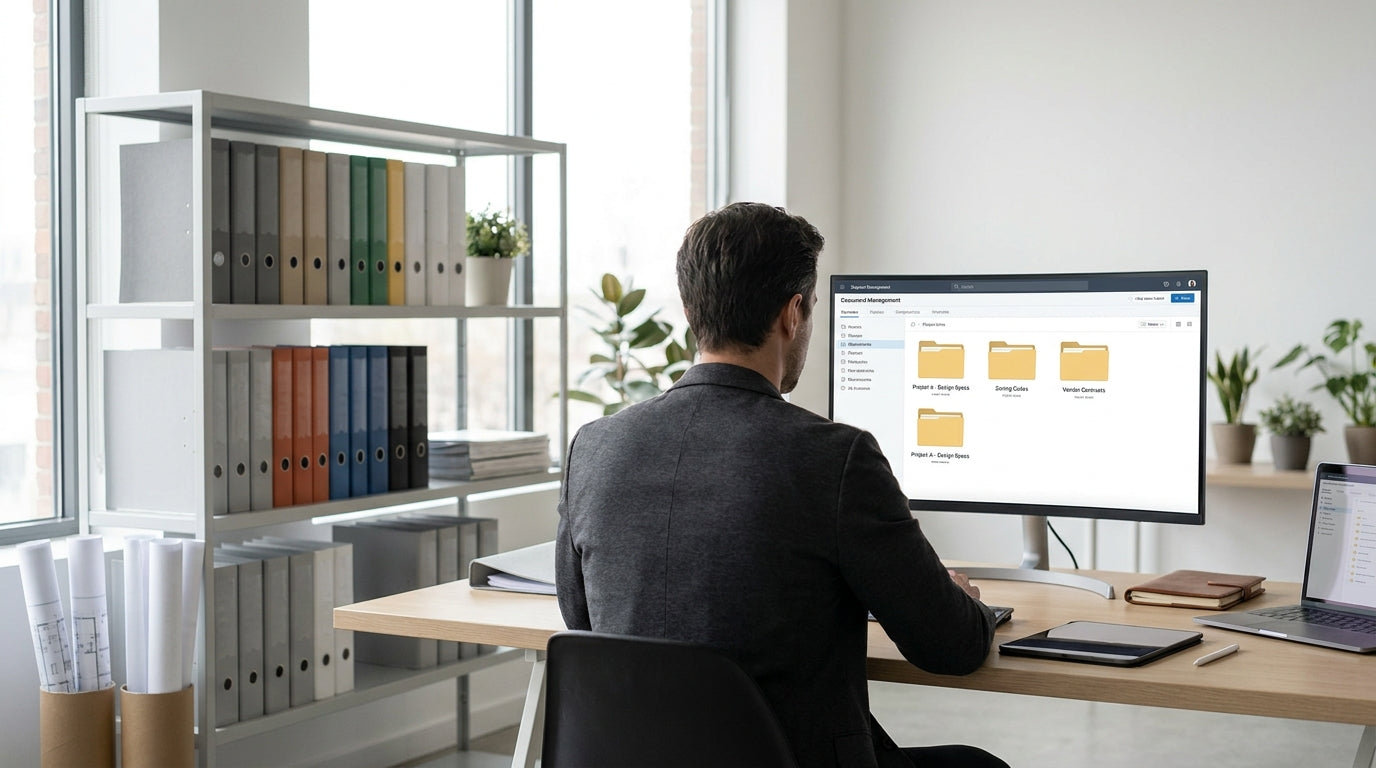
Most studios now treat the digital project folder as the “single source of truth” for drawings, BIM models and correspondence. Physical storage then supports this by holding signed originals, mark-ups, certificates and any documents that authorities or insurers may require in hard copy. Vertical Filing Cabinets and secure Office Cupboards are ideal for this role, with clear labelling that matches your server structure so staff can move between formats without confusion.
Shared resources such as code volumes, material samples and manufacturer catalogues are still easier to use in print, so keep them highly visible in Bookcases or on open Office Shelving. To save floor space in compact studios, you can centralise long-term records in a Compactus unit while reserving fast-access areas for active projects stored in Sliding Door Cabinets or Tambour Cupboards. Combined with disciplined naming conventions and scanning of key documents, this approach gives architects a robust, scalable filing system that supports both day-to-day practice and long-term risk management.


