

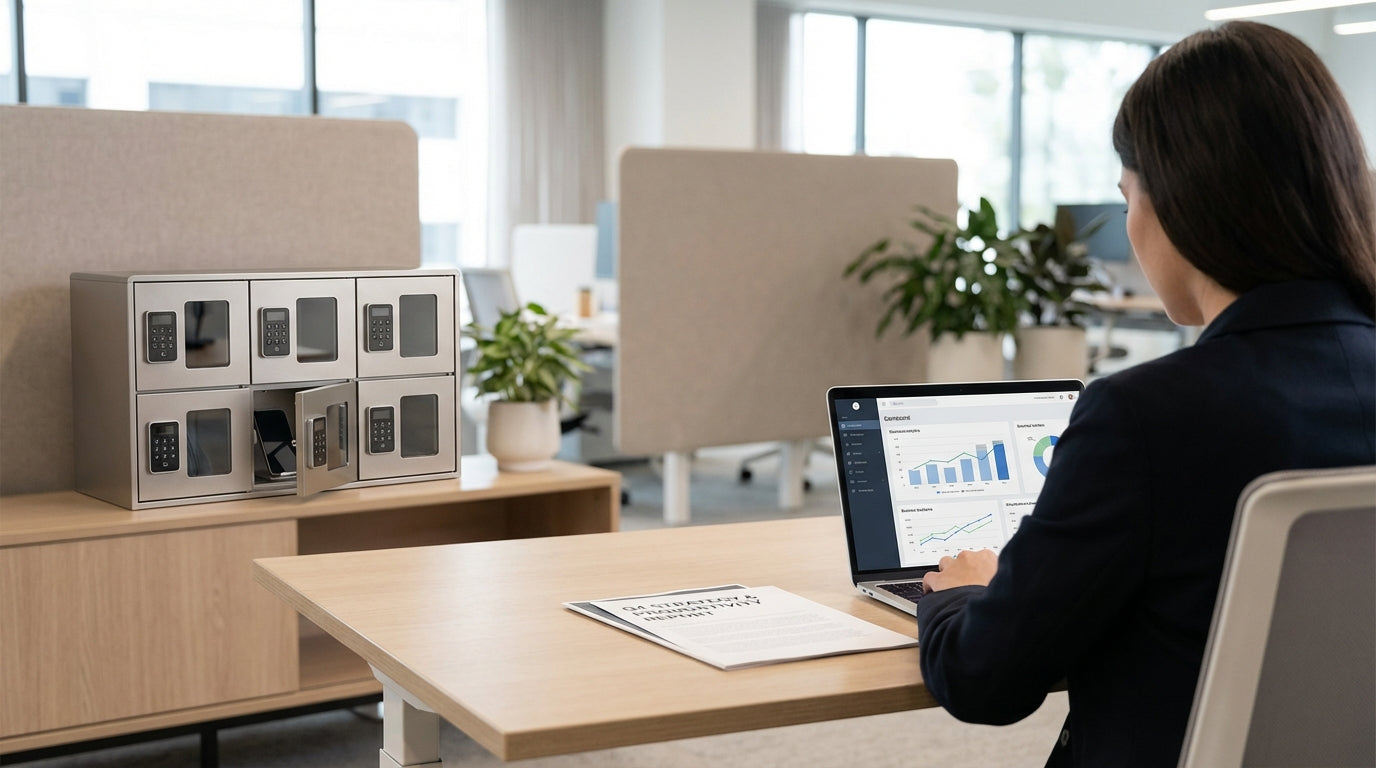
Understanding Modern Phone Storage Security
Choosing secure storage for mobiles is now essential in schools, workplaces and gyms across Australia. The right unit protects privacy, prevents theft and supports clear device-use policies.
Security for handheld devices isn’t just about the lock on the door. It includes the locker material, how it’s anchored, the locking mechanism, ventilation and how easy it is to manage large numbers of devices. Modern Phone Lockers are designed specifically for small electronics, with compartments sized for phones, tablets and sometimes wallets or keys. That purpose-built design makes them safer than ad‑hoc solutions like desk drawers or shared cupboards.
It also pays to look beyond the unit itself and consider the surrounding storage environment. In busy offices, combining device units with secure filing in ranges like GO Steel Storage or Steelco Modular Cabinets helps keep confidential paperwork and electronics protected in the same area. This reduces the risk of staff carrying phones and files between unsecured spaces, where loss and damage are more likely.
Thinking upfront about how many devices you need to store, whether you require shared or individual access, and when users will access their phones (for example, only at breaks) will guide which configuration is actually the most secure in real-world use. A highly secure unit that’s inconvenient to use often ends up propped open or bypassed altogether, undermining your policy.
Comparing Locking Mechanisms: Keys, Combinations and Digital
The locking system is usually the first thing people consider. Each option has pros and cons for security, cost and ease of use.
Traditional key locks are common because they’re simple and inexpensive. On quality metal units like many Steel Lockers, cam locks with mastered keys can be robust and reliable. However, keys can be lost, copied or shared, and managing a large set of them quickly becomes a security headache. For environments with frequent user turnover, such as schools and shared offices, key management can become the main source of risk.
Combination locks remove the need for keys but introduce a different issue: people forget codes or write them down. Mechanical combinations are harder to tamper with than cheap padlocks, yet they still rely on the user protecting their PIN. Digital locks, whether keypad or RFID (card or fob), offer the strongest mix of security and convenience when used correctly. Many purpose-built Phone Lockers now offer digital options that allow quick code changes between users, ideal for hot-desking offices and exam rooms.
For higher-risk environments, you might combine digital locking with heavier construction. For example, selecting small-compartment units built to the same standard as Heavy Duty Lockers gives both a tamper-resistant body and a tamper-aware lock. The most secure setup is usually one where the lock type matches user behaviour: shared codes for managed staff areas, personal codes or cards for student use, and admin override access for supervisors.
Materials and Build: Why Construction Quality Matters
The strongest lock won’t help if the body of the unit can be pried open. Material choice and build quality are critical to long-term protection.
Steel is generally the safest choice for device storage because it resists impact, cutting and leverage better than timber or plastic. Units designed with similar gauge steel and reinforcement to commercial Heavy Duty Lockers are far harder to force open than lightweight cabinets. Door stiffness, internal bracing and the way hinges are protected from attack all contribute to the overall security rating, especially in unsupervised areas like corridors or staff break rooms.
Well-engineered Steel Lockers for phones usually include anti-pry features such as recessed doors and concealed hinge pins. These details make it difficult to slip tools into gaps or simply bend the door around the lock. Ventilation slots are designed to allow airflow and heat dissipation for charging devices without creating weak points large enough for tampering. In contrast, improvised solutions using standard Office Cupboards may be roomy but are rarely optimised for the unique risks of small valuables.
Storage systems that combine secure compartments and robust frames, like modular units in the Premier Storage and Steelco Modular Cabinets ranges, also help maintain structural integrity as your needs grow. Instead of a patchwork of mismatched cupboards and small lockers, a cohesive steel system can be securely fixed to walls or floors, making it much harder to move or tip over in an attempt to break in.
Best Options for Schools, Offices and Public Spaces
The safest unit for devices depends heavily on where it will be used and who will access it. Different settings face different risks and policy requirements.
In schools, security must balance control with ease of supervision. Purpose-built School Lockers with smaller compartments, or dedicated Phone Lockers near classrooms and exam halls, help staff enforce “no phone” policies without creating unnecessary conflict. Individual compartments with student-assigned codes reduce sharing and minimise the chance of theft between students. Lockers placed in visible, well-lit locations are safer than units tucked away in unsupervised corners.
In office environments, secure device storage often supports confidentiality obligations and productivity policies. Units near reception or meeting rooms allow visitors and staff to store their phones before entering secure zones, protecting both intellectual property and client privacy. Combining compact phone storage with more extensive file and equipment systems, such as GO Steel Storage and Office Cupboards, ensures a consistent security standard across the entire workplace. For higher-security industries, anchoring units and choosing heavy-gauge steel with digital locks is strongly recommended.
Public spaces such as gyms, courts, libraries and shared coworking hubs require highly durable construction due to heavy, often unsupervised use. Lockers built to the same toughness as Heavy Duty Lockers are more likely to withstand rough handling, attempted forced entry and everyday wear. When users change frequently, multi-user lock options or managed access at a service desk may be more secure than relying on users to supply their own padlocks, which vary wildly in quality.
Maximising Security with Accessories and Good Practice
Even the best unit can be undermined by poor setup and use. Thoughtful accessories and clear procedures are essential.
Simple additions like numbered plates, label holders, and master-keyed lock sets can transform basic device storage into a manageable, auditable system. Purpose-designed Locker Accessories also include hasp fittings for padlocks, additional shelves and internal hooks, allowing you to configure small compartments for phones, wallets and access cards together. In shared workplaces, clear numbering that aligns with staff IDs or visitor passes helps avoid confusion and makes it easier to track who has been assigned which compartment at any time.
For maximum protection, install phone units in well-lit, monitored locations, and attach them securely to walls or floors just as you would with larger Premier Storage cupboards or Steel Lockers. Conduct regular inspections for signs of tampering, damaged locks or missing hardware, and schedule preventative maintenance. In high-use sites like schools, pairing device units with robust School Lockers and heavy-duty storage ensures you’re not relying on a single point of security for all valuables.
Policies matter just as much as hardware. Limit who can reset codes or hold master keys, and document those responsibilities. Educate users on how to set strong PINs, keep cards or keys safe, and report any issues immediately. When your chosen units, whether compact Phone Lockers or larger steel systems, are supported by sensible procedures, they deliver the level of security Australians increasingly expect for their personal devices at work, at school and in shared community spaces.


