

Understanding Whiteboard Surface Materials
Choosing a durable whiteboard starts with understanding the surface material. Different finishes handle ink, cleaning and daily wear very differently.
The three main surface types you’ll see in Australian offices, classrooms and home workspaces are melamine, porcelain (also called ceramic steel) and glass. Melamine is usually the budget option, porcelain is the long‑wearing workhorse, and glass is the premium, design‑focused choice. There are also combinations used in specialised products like Magnetic Whiteboards and Mobile Whiteboards that add flexibility without changing the core surface.
When people ask which surface lasts longest, they’re usually concerned about ghosting (faint stains left behind), scratches and how often the board needs replacing. These issues all come down to how hard the surface is and whether it’s porous. Hard, non‑porous surfaces resist scratching and don’t absorb ink, so they keep looking clean and bright for years.
Your choice of surface should match how intensively the board will be used. A casual home office user might be satisfied with a simpler surface, while a busy training room or classroom will quickly expose the weaknesses of any low‑grade board. Understanding these trade‑offs helps you avoid false savings on cheap boards that wear out or look shabby within a year.
Porcelain, Glass and Melamine: How They Compare Over Time
Not all whiteboards age the same way. Some will look almost new after a decade, while others stain within months.
Porcelain Whiteboards are widely considered the longest‑lasting option for heavy use. The steel backing is fused with a ceramic layer at very high temperatures, creating a tough, non‑porous surface that resists scratching and chemical damage. With proper care, porcelain boards can easily last 10–20 years in a busy office or school, making their higher upfront cost good value over the long term.
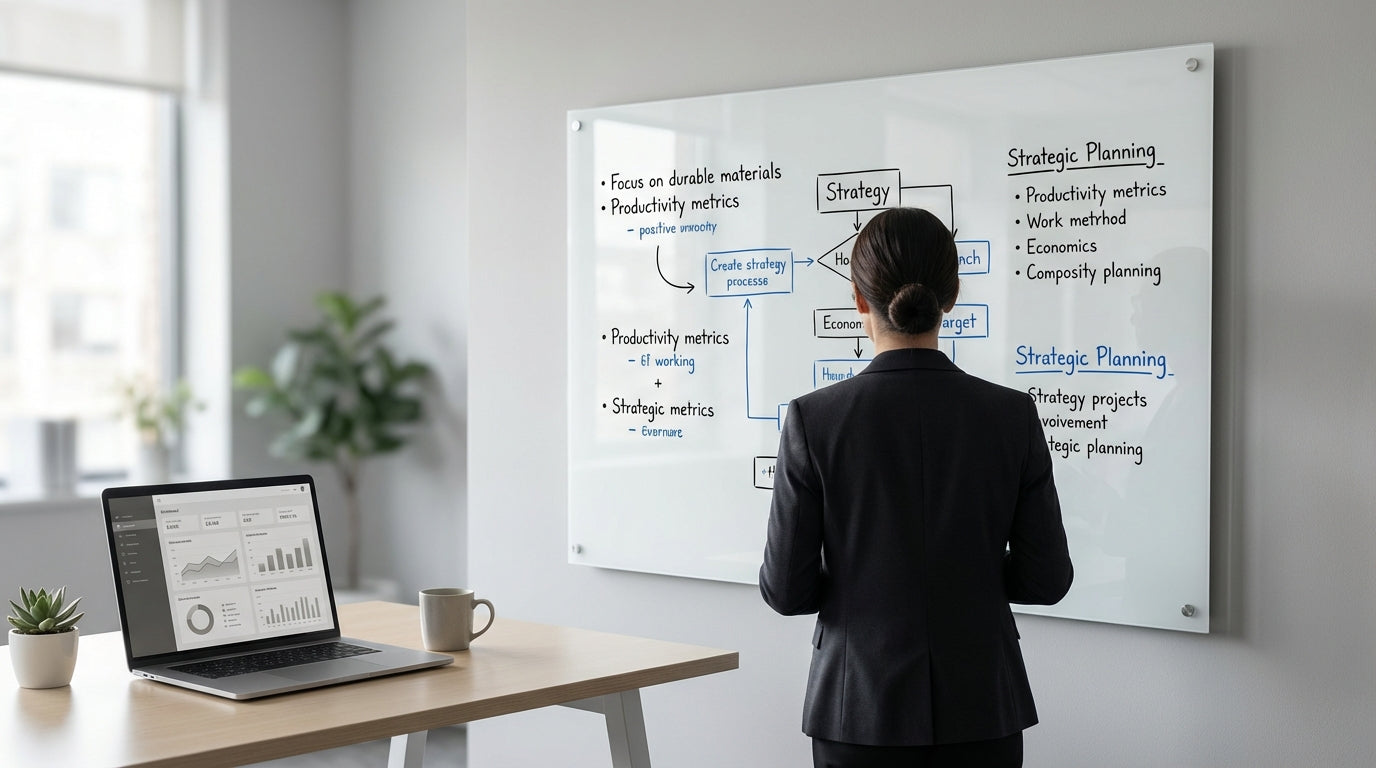
Glass Whiteboards also offer excellent durability, with tempered glass that won’t absorb ink and is almost impossible to stain. They’re particularly popular in modern offices where a sleek, frameless look is important. Compared to porcelain, glass can be slightly more reflective and heavier, but it’s extremely resistant to ghosting and simple to clean. Many teams choose glass for meeting rooms and collaboration spaces where aesthetics matter as much as performance.
Melamine, often used in entry‑level and some Flipcharts or lightweight boards, tends to wear faster. Because the surface is more porous and softer, it can pick up permanent marker stains, ghosting and scratches over time, especially under daily use. For occasional notes in a home office or a temporary project area, melamine can still make sense, but for schools, training centres and shared offices, porcelain or glass will generally last far longer and look better.
Matching Surface Durability to How You Use Your Board
The longest‑lasting surface is only worthwhile if it matches how you actually work. Think about how often your board is used, who’s using it, and in what environment.
In high‑traffic spaces like classrooms, staff rooms and project hubs, a robust ceramic steel surface is hard to beat. A quality porcelain whiteboard can handle constant writing, rubbing out and accidental bumps from bags or trolleys without losing its finish. If you also need to pin up notes with magnets or use magnetic accessories, look for models that combine long‑wearing porcelain with a steel backing, similar to many Magnetic Whiteboards.
For flexible spaces, Mobile Whiteboards are worth a close look. Many mobile units use durable surfaces, including porcelain or glass, so you don’t have to trade longevity for portability. They’re particularly useful in open‑plan offices where teams reconfigure spaces for workshops or agile stand‑ups. Being able to roll a high‑quality board where it’s needed extends its usefulness across the whole workplace.
In more specialised settings, your use case might push you towards niche surfaces and formats. Teachers and managers who rely on schedules and task overviews often prefer Planner & Specialty Whiteboards, which typically use durable coatings to withstand constant updating. If your focus is presenting, collaborating and annotating slides, boards designed for projection and digital tools—like Projection Boards & Presentation Accessories or Electric Interactive Whiteboards—combine surface longevity with technology, making them a smart investment in active meeting rooms.
Care, Cleaning and Accessories That Extend Lifespan
Even the best surface won’t last if it’s treated badly. Simple cleaning habits and the right accessories make a big difference.
Using quality markers, erasers and cleaning sprays designed for whiteboards significantly reduces ghosting and surface wear. Harsh cleaners, abrasive pads and permanent markers are the quickest way to ruin a board, especially softer melamine surfaces. Investing in the right Whiteboard Accessories—such as microfibre cloths, dedicated cleaning solutions and proper erasers—protects the finish and keeps lines crisp and easy to read.
Routine maintenance is especially important in shared spaces where many people use the board. Encourage users to wipe the surface at the end of each session rather than leaving ink on for days, as dried‑on ink is harder to remove and more likely to leave faint marks. For boards used in conjunction with projectors or video calls, combining standard boards with tools from the Projection Boards & Presentation Accessories range can also reduce wear on your main writing area by spreading use across multiple surfaces.
If you regularly run workshops or training sessions that generate lots of content, alternating between a fixed wall board and portable options like mobile units or Flipcharts helps share the load. This approach prevents any single surface from being overused and gives you more flexibility in how you capture and present information.
Choosing the Best Long-Term Whiteboard for Your Space
Longevity is about more than the surface alone. Frame quality, mounting, mobility and technology all influence how well a board stands up to years of use.
For a permanent wall installation in a busy office or school, a high‑quality porcelain board or glass whiteboard is usually the most durable and cost‑effective choice. If you also need to attach documents, timelines or visual aids with magnets, a surface that doubles as a magnetic whiteboard adds long‑term versatility. For multipurpose rooms, blending fixed boards with Mobile Whiteboards gives you both stability and the option to reorganise layouts as teams and projects change.
Teams that rely heavily on digital content may benefit from upgrading to Electric Interactive Whiteboards, which combine a durable surface with touch‑enabled technology. While the initial investment is higher, the ability to save, share and reuse content often means the board earns its keep over many years of active use. In planning‑heavy environments, pairing interactive boards with Planner & Specialty Whiteboards creates a durable ecosystem for both digital and analogue work.
Ultimately, the longest‑lasting solution is the one that suits your space, your people and your budget. By matching surface type to usage, maintaining the board with appropriate accessories, and choosing formats—from wall‑mounted to mobile and interactive—that fit your workflow, you’ll end up with a writing surface that looks good and performs reliably for many years.


