

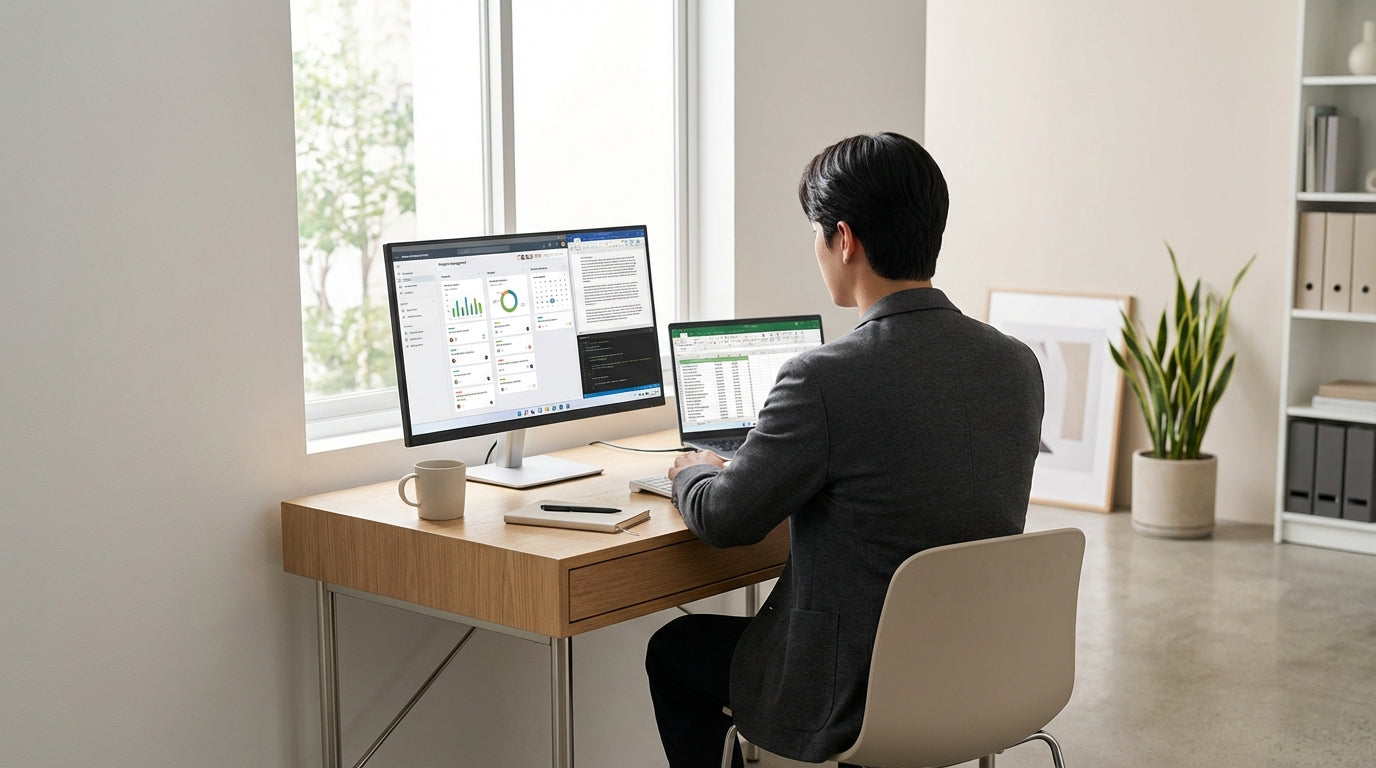
Smart ways to measure and plan your small workspace
Getting a compact home office right starts with a tape measure, not a shopping cart. A few minutes planning can save months of frustration.
Begin by measuring the exact floor area you can dedicate to work, including any awkward nooks or alcoves. Note window positions, power points, and door swing so your desk doesn’t block walkways or natural light. Sketch a simple floor plan and mark out potential desk footprints with painter’s tape on the floor. This lets you “test drive” different layouts before you buy.
Think about how you work day‑to‑day. If you mainly use a laptop, you can get away with a shallower desk, but dual monitors and paperwork need more depth. Compact home office desks often come in slimline widths that still allow enough space for a keyboard, mouse, and notebook. Prioritise leg room and a clear surface over bulky built‑in shelves that will make the area feel cramped.
Also consider where you’ll store essentials you need to access quickly. If there’s no built‑in storage nearby, leave room beside or under the desk for a mobile unit, such as pedestal drawer units. Planning these details upfront helps you choose a desk that fits both the room and your workflow, not just the dimensions on paper.
Choosing the right desk style for tight home offices
The style of desk you choose has a big impact on how spacious your room feels. Some shapes naturally suit small or awkward layouts better than others.
Simple rectangular designs, like many straight desks, are ideal when you’re working along a wall or under a window. They provide a clean, uninterrupted surface and are easy to pair with extra storage or a filing cabinet. For renters, a lightweight straight desk can be moved or re‑configured as your living situation changes, without needing to dismantle complex frames.
If you’re working in the corner of a bedroom or living room, a compact corner model can make the most of every centimetre. Purpose‑built corner office desks and corner workstations tuck neatly into unused space and give you a defined work zone. This can help mentally separate “home” and “office” even when they share the same room.
Where you need extra surface without increasing your overall footprint too much, smaller L-shaped desks or compact single person workstations are worth a look. The return (the shorter side of the L) can hold a printer, in‑tray, or second screen, keeping your primary work area clear. Always check both length and depth carefully; in a small home office, shaving just 10–15 cm off the depth can make a surprisingly big difference to how open the room feels.
Ergonomics and comfort in a compact setup
A smaller office doesn’t have to mean compromised comfort. Good ergonomics protects your back, neck, and eyes, even in tight quarters.
Ergonomics is simply the science of fitting the workspace to the person, rather than forcing your body to adapt. Aim to keep your elbows at roughly a 90‑degree angle when typing, with your wrists straight and shoulders relaxed. Your screen should sit at, or just below, eye level to avoid hunching. Even with a petite desk, using a slim monitor arm or riser will free up space while placing the screen at the right height.
Height‑adjustable desks are no longer reserved for big corporate offices. Compact height adjustable workstations fit well into small spaces and allow you to alternate between sitting and standing through the day. This movement reduces stiffness and can improve focus, especially if your “commute” is just a few steps from the kitchen.
Finally, keep leg room clear. Avoid stacking boxes or bulky equipment under your desk, as cramped legs quickly lead to poor posture. If you need extra storage nearby, opt for a narrow mobile pedestal or under‑desk unit on wheels so you can reposition it when needed. A compact, supportive chair that can slide fully under the desk when not in use will also help your workspace feel less intrusive in a small room.
Space-saving storage and organisation ideas
Smart storage keeps a compact office functional rather than cluttered. The aim is to keep essentials close without crowding your desk surface.
If you handle paperwork or stationery, consider pairing your desk with pedestal drawer units that slide neatly underneath. Many units come with a mix of shallow and deep drawers so you can separate documents, cables, and bulkier items. Because they’re mobile, you can wheel them aside when you need extra leg room or pull them closer when you’re working on admin.
Vertical space matters just as much as floor space in a small office. Wall‑mounted shelves, pegboards, or slim bookcases above or beside compact student desks or standard home office desks keep reference material within reach without dominating the room. Use simple containers or labelled boxes so everything has a defined home, which makes packing up at the end of the day much faster.
Cable management is another easy win. Small desks quickly feel messy when chargers and leads spill everywhere. Use cable clips, a desk grommet (a small hole for cables), or an under‑desk tray to keep cords tidy and off the floor. In multi‑purpose rooms, being able to visually “shrink” your office by clearing surfaces and hiding cables goes a long way to making the space relaxing again after work hours.
Fitting your compact desk into everyday Australian homes
Every home is different, so your desk needs to suit both your floor plan and your lifestyle. The right choice will blend in rather than take over.
In apartments and townhouses, it’s common to carve out a workspace in the living room or bedroom. Slim straight desks or refined home office desks can double as console tables when not in use, especially if you keep equipment minimal. For students or anyone working part‑time from home, compact student desks are built with smaller footprints in mind while still providing a stable surface for a laptop and study materials.
If you’re lucky enough to have a spare room, you might lean towards more structured setups like corner workstations or modest single person workstations. These create a defined work hub with room for a second monitor or printer, without overflowing into the rest of the house. Matching your desk finish to existing furniture – for example, choosing light timber in coastal homes or white in modern apartments – helps the office feel intentional rather than temporary.
Also consider noise, natural light, and how you share the space. If your desk sits near a busy hallway or the TV, a corner placement with a compact corner office desk or small L-shaped desk can give you a bit of acoustic and visual separation. Think about where the sun falls during the day so you avoid harsh glare on your screen; sometimes rotating a desk 90 degrees is all it takes to turn an underused corner into a comfortable, productive home office.


