

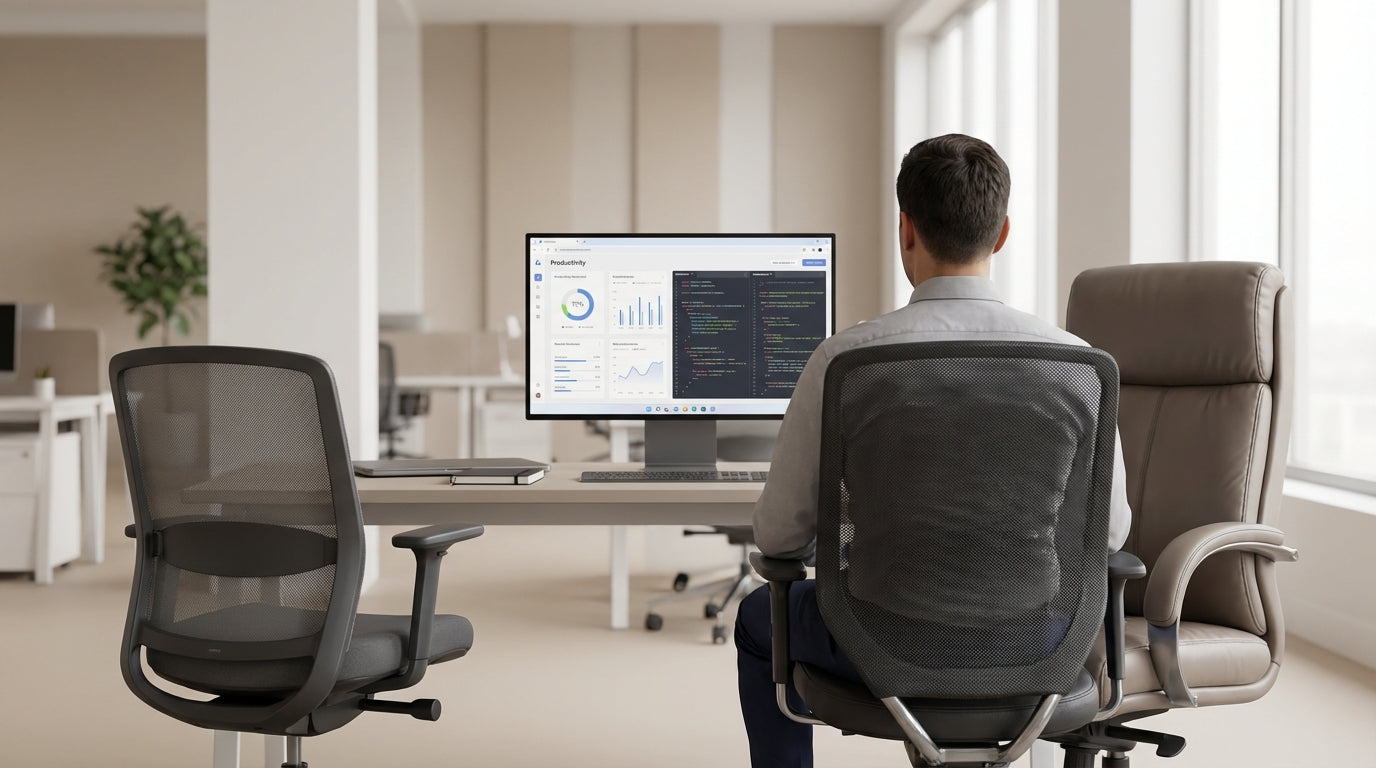
Understanding Task and Executive Chairs in the Modern Office
Choosing the right office chair affects comfort, posture, and productivity every day. The two most common options in Australian workplaces are task chairs and executive chairs, each designed for different ways of working.
A task chair is built for active, all-day use at a computer or workstation. It usually has multiple adjustments, breathable materials, and a smaller footprint, making it ideal for open-plan offices and single person workstations. In contrast, an executive chair focuses more on presence and plush comfort, often featuring high backs, thicker cushioning, and premium finishes that suit private offices and boardrooms.
When you understand how these two chair types differ in ergonomics, design, and function, it becomes easier to match them with the right desk and workspace layout. For example, a highly adjustable task chair pairs perfectly with height-adjustable setups and performance-focused home office desks, while an executive chair may be better aligned with statement manager desks and formal meeting spaces.
The decision is not just about aesthetics; it directly impacts how your body feels after long stretches of work. Considering how much time Australians now spend seated, investing in the right seating style is as important as choosing your computer or phone.
Ergonomics, Adjustability, and Everyday Comfort
Ergonomics is about designing furniture to support your body’s natural posture and movement. This is where task chairs often stand out.
Most quality task chairs offer seat height, seat depth, lumbar support, tilt tension, and armrest adjustments. This flexibility helps you align your hips, knees, and elbows at comfortable angles, reducing strain on your back, neck, and shoulders during long periods of typing or video calls. Many models also use mesh backs for extra airflow, giving similar benefits to dedicated mesh office chairs.
Executive chairs, while often padded and supportive, may not always provide the same level of fine-tuned adjustability. They tend to prioritise cushioning and a high backrest to support a more relaxed, reclined posture, which can feel luxurious in shorter bursts or for meeting-heavy roles. However, if your day is dominated by intensive screen work, a more agile, ergonomic design is usually better for spinal health over time.
Comfort also depends on your body type and the demands of your role. For larger users or those sitting well beyond the standard 8-hour day, specialist heavy duty chairs can offer reinforced frames, higher weight ratings, and more durable padding. Whether you lean towards a task or executive style, looking for chairs tested for extended use will help ensure they stay supportive rather than saggy.
Design, Materials, and Professional Appearance
Beyond comfort, the look and feel of your chair contribute to the overall style of your workspace. Task and executive chairs send very different visual signals.
Task chairs usually have a slim, modern profile. They often feature fabric or mesh upholstery, open backs, and minimalist frames that blend neatly into contemporary offices. This makes them a good visual match with modular office & meeting tables and compact home office desks, where you want a clean, uncluttered look without dominating the room.
Executive chairs are designed to be noticed. Many are finished in faux or genuine leather, with stitched detailing, chrome or timber accents, and a high back that adds a sense of authority. If you’re fitting out a leadership office with a substantial manager desk or upgrading a boardroom to impress clients, premium leather chairs and executive seating can elevate the overall impression instantly.
Material choice also affects maintenance and climate comfort. Leather and vinyl are easy to wipe clean and look polished, but may feel warmer in non-air-conditioned spaces. Mesh and breathable textiles are better suited to Australia’s hotter months, especially in bustling open-plan areas where heat builds up quickly. Balancing style with practical cleaning and temperature considerations will help your chair stay both good-looking and comfortable day to day.
Best Use Cases: Who Should Choose Which Chair?
The right chair depends on how you work, how long you sit, and where the chair will live. Different roles and spaces benefit from different features.
Task chairs are ideal for staff who spend most of the day at a computer, moving between tasks, or sharing workstations. In flexible offices with hot-desking or single person workstations, their broad adjustability suits multiple users and encourages healthier posture. They’re also a smart choice for home offices where space is limited and you need something agile that fits neatly under compact home office desks.
Executive chairs suit managers, directors, and client-facing professionals who want their seating to reflect seniority or brand image. They work particularly well in private offices, executive suites, and formal boardrooms, especially when coordinated with substantial manager desks and matching meeting chairs. If your day is filled with strategic planning, phone calls, and shorter bursts of computer work, the plush cushioning and high back support can feel more relaxed and luxurious.
For shared spaces like conference rooms and collaboration hubs, you may not need fully-featured task or executive seating for every spot. Purpose-designed meeting chairs paired with versatile office & meeting tables can provide the right balance of comfort, stackability, and style. This lets you reserve more adjustable or premium chairs for the people who spend the most hours seated.
How to Choose the Right Chair for Your Workspace
Before you buy, think about ergonomics, aesthetics, and how the chair will integrate with your existing furniture. A considered approach will help you avoid costly mistakes.
Start by listing your priorities: Do you need maximum adjustability for long computer sessions, or a more executive look for client meetings? Measure your desk height and available floor space so you can check that armrests tuck under your home office desks or manager desks without bumping. If you already have open-back mesh office chairs or other ergonomic seating in the space, matching or complementing those materials will keep the office looking cohesive.
Next, consider the users. Taller, shorter, or heavier team members may benefit from specific models or heavy duty chairs that provide the right support and weight rating. If multiple people use the same chair, prioritise easy-to-reach levers and clearly marked adjustments so everyone can quickly set up their seat correctly. For collaborative areas, choose simpler meeting chairs that encourage movement around shared office & meeting tables.
Finally, think about long-term value rather than just the upfront price. A well-built task chair that keeps you comfortable and focused for years often costs less in the long run than replacing a cheaper, poorly designed option. Likewise, premium leather chairs in an executive office can reinforce your brand image every time a client visits. By aligning your chair choice with how and where you work, you’ll create a workspace that supports both productivity and professionalism.


