

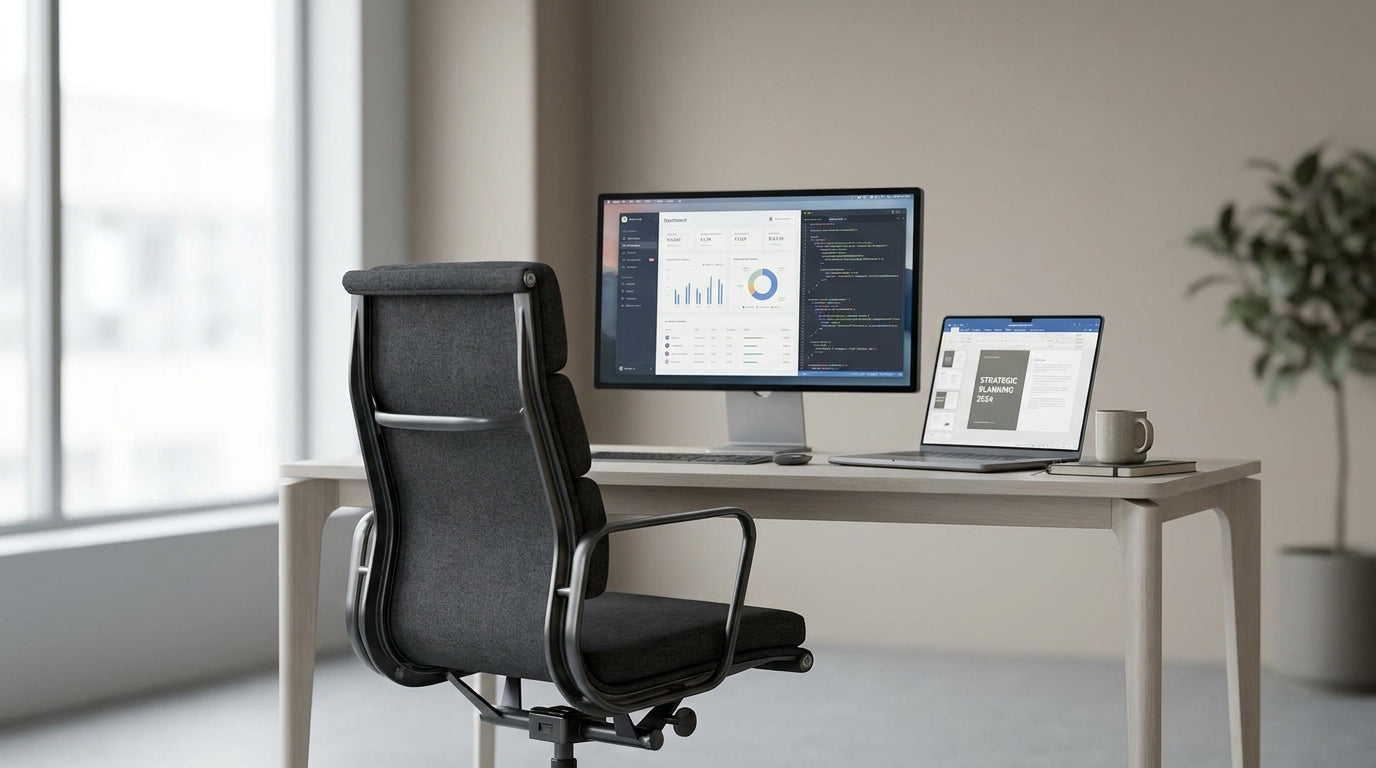
Why heavy-duty metal office chairs matter
For many Australian workplaces, standard seating simply doesn’t cut it. Metal-framed heavy-duty options provide the strength, support, and stability needed for long days at the desk.
Unlike lightweight plastic models, a well‑engineered steel or aluminium frame is designed to cope with higher weight capacities and constant use. This makes them ideal for shared workstations, call centres, government departments, and home offices where reliability is a priority. If you need even more robust options, dedicated Heavy Duty Chairs add upgraded components, reinforced bases, and commercial‑grade mechanisms that stand up to years of daily sitting.
Metal framing also improves safety. A rigid structure reduces wobbling, frame flex, and the risk of sudden failure under load. For facilities managers, this can mean fewer WHS incidents and a lower chance of injury from chair collapse. Paired with quality castors and a stable five‑star base, these chairs give staff a solid foundation that promotes better posture and comfort across long shifts.
Comfort doesn’t have to be sacrificed for strength. Many heavy‑duty models now incorporate ergonomic features similar to high‑end Task Chairs, including adjustable lumbar support, tilting mechanisms, and shaped foam that supports natural spinal curves. This blend of durability and ergonomics is crucial for workers with back concerns or those who spend most of their week seated.
Key features to look for in a durable metal-frame chair
Choosing the right chair starts with understanding what makes a model genuinely heavy‑duty. A bigger seat alone doesn’t equal long‑term resilience.
First, check the weight rating and testing standards. Look for models that specify a higher user capacity and reference independent testing to Australian or international standards. Reinforced welds, thicker gauge steel, and robust under‑seat plates are signs the frame is built for commercial environments. For high‑use zones like labs, healthcare facilities, and technical workspaces, pairing a strong metal frame with purpose‑built Lab Chairs & Stools can deliver better hygiene and easier cleaning without compromising structural integrity.
Next, consider adjustability and ergonomics. Heavy‑duty should not mean rigid or uncomfortable. Aim for a chair with seat‑height adjustment, tilt or synchro‑tilt (where the seat and back move together), and ideally adjustable armrests. These features help align your hips, knees, and elbows, reducing strain over extended periods. For users moving between computer work and collaborative tasks, an alternative such as height‑adjustable Drafting Chairs can provide extra flexibility while still offering strong metal components.
Upholstery and padding matter as well. High‑density foam holds its shape better and avoids “bottoming out” under heavier loads. If you’re after a premium look for executive offices or boardrooms, consider models with upholstered or padded steel frames in the style of Leather Chairs, which combine supportive cushioning with a professional finish. For users who run hot or work in warmer climates, a hybrid solution using strong frames with ventilated backs—similar to Mesh Office Chairs—can help manage heat build‑up and perspiration during long sessions.
Matching chair types to different Australian workplaces
The best heavy‑duty chair for a construction firm won’t be the same as for a legal practice. It’s important to match chair design to how and where it will be used.
In open‑plan offices and home workstations, versatile ergonomic models that resemble quality Task Chairs usually work best. These chairs are designed for computer work, with fine‑tuned settings to support typing, video calls, and general admin tasks. Look for metal‑framed versions with adjustable backs and arms so different users can personalise their setup quickly. In coworking spaces or hot‑desk environments, a clear weight rating and sturdy frame help ensure the chair performs consistently across a wide range of body types.
For design studios, architects, and light industrial settings that use sit‑stand benches, heavy‑duty Drafting Chairs come into their own. These chairs usually offer extra seat height and a foot ring so users can maintain proper leg support, even when working at higher surfaces. Metal frames are particularly valuable here, as the increased height demands superior stability. Similarly, technical and medical environments benefit from robust Lab Chairs & Stools, which prioritise easy‑clean surfaces, chemical resistance, and firm support over plush padding.
Shared spaces such as conference rooms and reception areas have different needs. Here, you need chairs that are welcoming, tidy, and tough enough to handle constant traffic. Fixed‑leg or sled‑base models in the style of Meeting Chairs and Visitor Chairs often use steel frames that stack or link together for neat storage. They may not offer the same level of individual adjustability, but their simple, rigid structure is ideal where people sit for shorter periods—like client meetings, waiting rooms, or training sessions.
For aged care settings, home offices for older Australians, and disability support environments, heavy‑duty seating can also cross over with Power Lift Chairs. These chairs incorporate electric lift mechanisms that help users stand and sit with less strain, while still relying on reinforced metal frames to support both the occupant and the moving components. Ensuring there is adequate clearance, cable management, and stable flooring will maximise safety when using powered bases in everyday spaces.
Benefits of Australian-made and specialty seating
Local manufacturing brings important advantages for buyers seeking robust metal-frame seating. Beyond supporting Australian jobs, it can mean better quality control and easier access to spare parts.
Chairs built in Australia are often designed around local body types, work habits, and standards. Many Australian Made Chairs include options for higher weight capacities, deeper seats, or wider bases, making them more suitable for a broad range of users. When combined with metal under‑structures and commercial‑grade components, these features translate into extended warranties and better long‑term value. If a gas lift or armrest eventually needs replacing, having local support can get a chair back into service quickly rather than sending it to landfill.
Specialty ranges can further fine‑tune comfort and performance. For example, premium executive models draw on the luxurious feel of Leather Chairs while retaining a sturdy steel or aluminium skeleton beneath the upholstery. In rooms where airflow matters, hybrid designs borrow from Mesh Office Chairs, pairing breathable fabrics or mesh panels with a solid metal frame. This allows businesses to accommodate workers with different temperature preferences or skin sensitivities while maintaining a cohesive visual style.
Australian‑made options are also well‑suited to compliance‑driven sectors such as government, healthcare, and education. Documentation on testing, weight ratings, and materials is generally easier to source, which simplifies procurement and audit processes. When chairs are used around the clock—such as in control rooms, call centres, or nursing stations—a combination of local manufacture, rigorous testing, and metal framing can significantly reduce the risk of early failure.
How to choose the right model for your office
Selecting the ideal heavy‑duty chair is about more than just price. Think about who will use it, how long they’ll sit, and the type of work they’ll perform.
Start with user needs. Consider height, weight, and any existing back or hip conditions. A user who spends eight hours a day at a computer will benefit from ergonomics similar to high‑quality Task Chairs, with precise lumbar contours, seat‑depth adjustment, and finely tuned recline tension. Someone who frequently moves between workstations may prefer a simpler, more compact design that’s easy to roll and turn. In lobbies and breakout spaces, fixed‑base options such as Meeting Chairs or Visitor Chairs are often a better fit than full ergonomic task seating.
Next, assess the environment. For hot, humid offices or rooms with limited air‑conditioning, consider strong metal frames combined with breathable backs or seats inspired by Mesh Office Chairs. For executive suites and client‑facing spaces, you might lean towards premium finishes akin to Leather Chairs, which project a polished look while still relying on heavy‑duty internal structures. Facilities with bar‑height counters or drafting tables should evaluate Drafting Chairs to ensure staff maintain proper leg support at higher working levels.
Finally, look at your broader seating mix. Most organisations benefit from combining robust metal‑frame models with other purpose‑built solutions, such as Heavy Duty Chairs for intensive daily use, Lab Chairs & Stools in wet or clinical areas, and Power Lift Chairs where mobility support is required. Building a consistent collection around these categories helps create a safer, more comfortable workplace that supports staff wellbeing while controlling long‑term furniture costs.


