

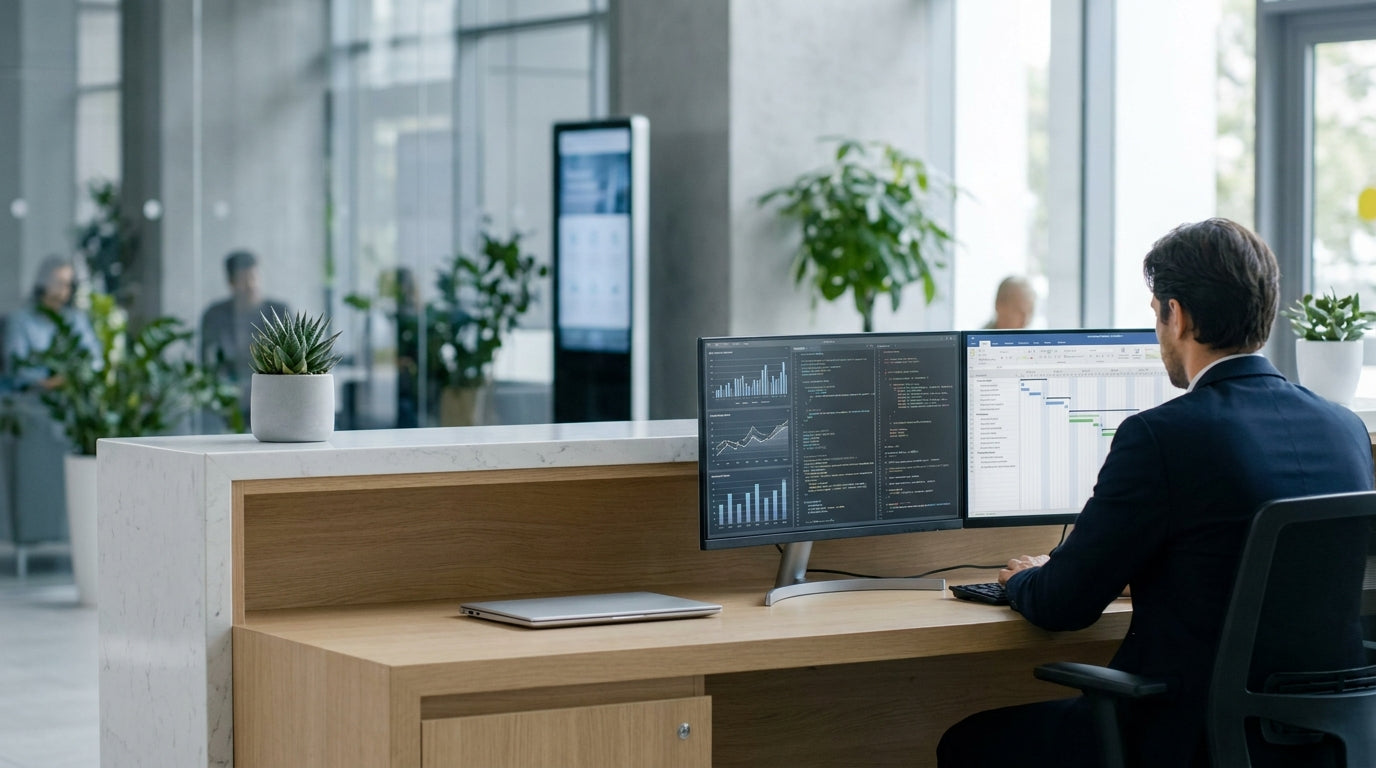
Balancing First Impressions and Functionality
The reception counter is often the first physical touchpoint a visitor has with your company. It needs to balance aesthetics, practicality, and the way your team actually works.
Modern workplaces in Australia are leaning towards warm, approachable spaces that still look professional. A well-chosen reception layout directs foot traffic, provides privacy for staff, and sets the tone for your brand within a few seconds. Whether you run a busy medical practice, a creative studio, or a corporate head office, your choice of reception counters should support both customer experience and daily workflows. Consider how staff will move between the entry, back office and any nearby office & meeting tables so that the area feels organised rather than chaotic.
Functionality also includes simple but critical details such as cable management, storage, document privacy and accessibility for people using wheelchairs or mobility aids. Building these in from the start is far easier than retrofitting solutions later. By mapping out the tasks occurring at the front desk—sign-ins, payments, parcel handling, visitor badges—you can better determine the size, shape and configuration your reception area actually needs.
When to Choose an L-Shaped Layout
For busy offices, a corner-style counter often solves several problems at once. The angled design creates a natural barrier while still feeling open and welcoming.
L-shaped reception counters are especially useful in workplaces that handle multiple visitors at a time, such as health clinics, coworking spaces and education facilities. The longer run of bench space gives receptionists room for computers, phones and paperwork without appearing cluttered from the visitor’s side. It also allows one side to be used for higher privacy tasks—such as processing payments or viewing records—while the other accommodates quick enquiries and casual greetings.
This style can help define the reception zone in large, open-plan lobbies where walls are minimal. The two sides of the desk subtly guide people to a logical entry point, reducing confusion and preventing visitors from approaching staff from behind. Pairing an L-shaped counter with clearly arranged reception seating, including well-placed visitor chairs, helps create a waiting area that feels intuitive to navigate.
From a staff perspective, corner configurations support collaboration between front-of-house and back-of-house teams. One leg of the L can face the entrance while the other aligns with internal work areas, keeping lines of sight open. If your reception team juggles phones, walk-ins and deliveries, this layout often delivers the best mix of visibility and control.
Straight Counters for Streamlined Spaces
Linear desks suit offices that prioritise clean lines and straightforward circulation. They’re ideal when floor space is limited or the lobby is narrow.
Straight reception counters tend to work well in contemporary fit-outs where minimalism and symmetry matter. Placed directly opposite the entry, they create a clear focal point, making it obvious where visitors should go. This is particularly useful in smaller tenancies, serviced offices or professional suites where the reception area may share space with a corridor or breakout zone.
Because the footprint is simpler, straight counters can be easier to integrate with existing coffee tables, side tables and seating clusters without blocking access routes. They also suit fit-outs that rely on modular furniture, enabling you to reconfigure the layout over time as staff numbers or workflows change. For example, a long straight counter can be shortened or repositioned more easily than a built-in corner design.
For teams that don’t require a full-time receptionist, a straight counter can double as a touchdown point for staff greeting occasional visitors. Combined with digital sign-in systems and clear directional signage using noticeboards & display cases, this arrangement supports a self-guided visitor journey while still presenting a polished front-of-house.
Design Details That Matter in Australian Workplaces
Beyond shape, the materials, finishes and ergonomics of your counter influence how modern your reception feels. These details affect comfort, durability and brand perception.
Australian offices often deal with strong sunlight, high foot traffic and diverse visitor needs. Hard-wearing laminates, timber accents and easy-to-clean surfaces help your reception counter stay presentable in this environment. Consider contrasting textures—such as a timber front with a stone-look worktop—to add visual interest without compromising professionalism. Subtle branding, like logo panels or colour-matched kickboards, can reinforce identity without overpowering the space.
Ergonomics is just as important. Desk height should support both seated and standing work, and where possible, include a lower section for accessibility. Cable ports, lockable storage and discreet bins keep the front-of-house free of clutter. If your reception doubles as an informal meeting point, ensure there is space nearby for short discussions at adjacent office & meeting tables so conversations don’t spill into the main walkway.
The waiting area should echo the design quality of the counter. Coordinated reception seating, a mix of individual visitor chairs and small lounges, plus appropriately scaled coffee tables and side tables, help visitors feel considered and comfortable. Finishing touches like curated reading material and clear displays in noticeboards & display cases further elevate the experience.
Matching Counter Choice to Your Workplace Type
The best front desk design depends heavily on what your organisation does each day. Matching form and function avoids costly redesigns later.
Professional services firms—such as legal, accounting and consulting practices—often benefit from understated, straight counters that communicate reliability and privacy. A simple linear design paired with structured reception seating and quiet visitor chairs suits clients who expect a calm, efficient environment. In contrast, creative agencies and tech companies may lean towards bold finishes, integrated lighting and more open, L-shaped layouts that encourage conversation and collaboration.
Healthcare, government and education settings usually face higher foot traffic and more complex visitor flows. Here, larger L-shaped reception counters can segment tasks, separating check-in, payments and information queries. Clear pathways, supported by directional messages in noticeboards & display cases, keep crowds moving smoothly. Durable surfaces and easily sanitised furniture, including robust coffee tables, are essential.
For smaller businesses and serviced offices, flexibility is usually the priority. Modular straight reception counters and compact reception counters can adapt as you grow, relocate or rebrand. When space is tight, choosing multi-purpose pieces—like side tables that double as brochure stands, or office & meeting tables that sit just beyond the waiting area—helps you get more value from every square metre while still maintaining a professional, welcoming entry point.


