

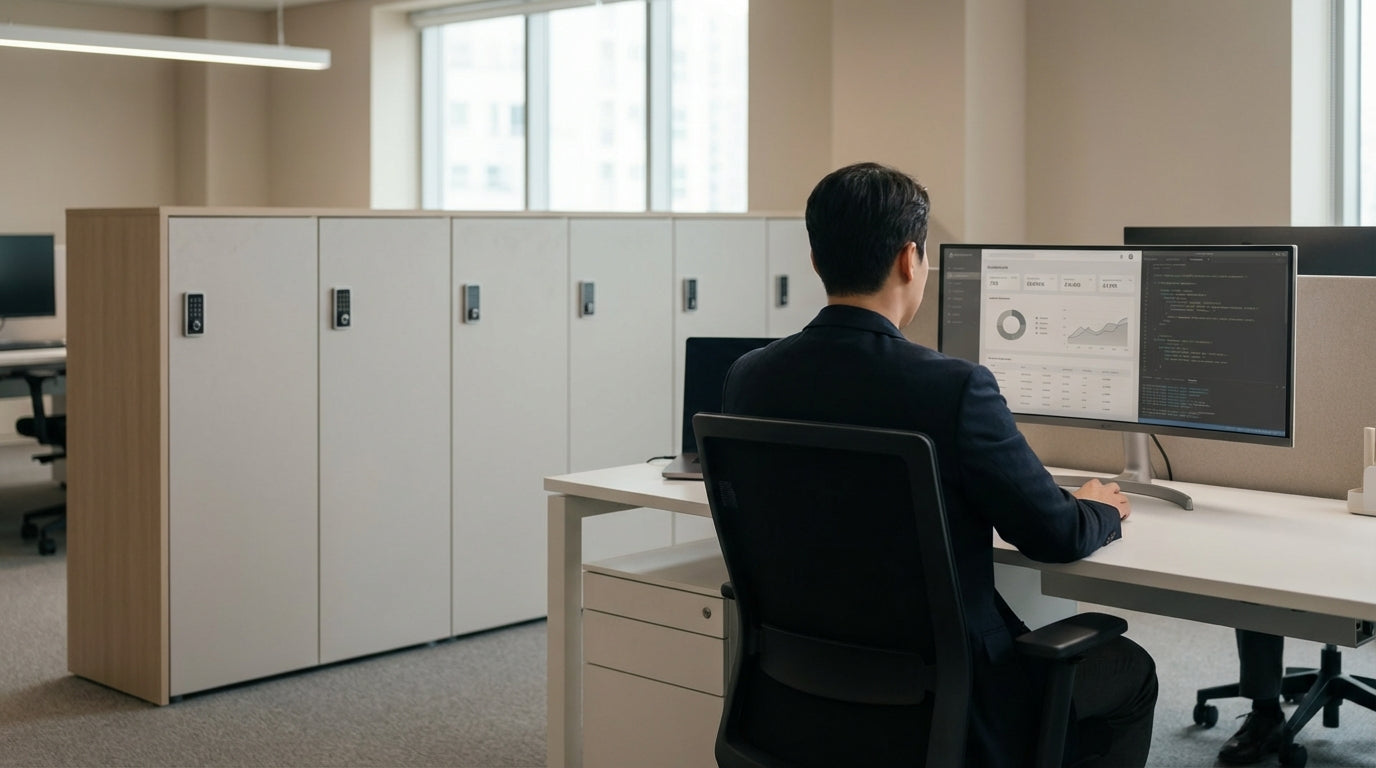
Why Melamine Lockers Make Sense for Australian Workplaces
Melamine lockers are a smart option when you need secure storage without blowing the fit-out budget. They offer a clean, modern look that suits most offices, education spaces and community facilities.
At their core, melamine lockers are built from particleboard or MDF with a tough melamine coating. This outer layer is scratch-resistant, easy to wipe down and available in a wide range of finishes, from classic white to modern woodgrains. Compared with solid timber joinery, melamine delivers a similar aesthetic at a fraction of the price, making it well suited to growing businesses and cost-conscious refurbishments.
Because they’re lighter than many metal units, melamine models are easier to install in multi-storey offices, coworking hubs and shared facilities. They integrate neatly alongside office cupboards and stationery cupboards, giving you consistent styling across work areas, locker rooms and corridors. Many units are modular, so you can start with a small bank and expand as your team grows.
For workplaces worried about noise, melamine can also be quieter in daily use than some all-metal options. Doors tend to close with a softer sound, which is ideal near open-plan workstations or learning spaces where constant clanging would be distracting.
Balancing Budget, Durability and Security
Value in lockers isn’t just about the lowest ticket price. It’s about striking the right balance between cost, longevity and security for your staff and visitors.
Melamine finishes are designed to handle everyday wear: bags, laptops, gym gear and personal items going in and out multiple times a day. When paired with quality hinges and edging, they can stand up well in typical office and education environments. However, in harsher conditions—such as workshops, warehouses or change rooms with heavy boots and equipment—you may want to compare them with heavy duty lockers or robust steel lockers for the highest impact resistance.
Security-wise, melamine units can be fitted with a wide range of locking options. Traditional key locks, combination locks, padlock hasps and digital locks are all common choices, and you can further tailor them with specialised locker accessories such as master key systems or number plates. Because you’re not paying a premium for the carcass itself, it’s often easier to justify investing a bit more in higher-spec locks without breaking the budget.
From a whole-of-life cost perspective, the easy-clean surfaces also help keep maintenance costs under control. A simple wipe-down is usually enough to keep lockers presentation-ready for staff, visitors and clients, reducing the need for professional cleaning or refinishing over time.
Design Options That Maximise Space and Function
Storage needs vary widely between workplaces, so flexibility in layout and configuration is crucial. Melamine units can be tailored to suit everything from hot-desking offices to education campuses.
For open-plan offices and coworking environments, compact personal units with multiple doors stacked vertically can make the most of narrow corridors or breakout spaces. Pairing these with open office shelving nearby gives staff both secure and open storage where they need it. In contrast, larger compartments are better suited to team members who commute with laptops, gym bags and bulky items.
In schools and training centres, you can combine melamine products with dedicated school lockers to support different year levels and storage needs. Taller units suit secondary students with sports gear and musical instruments, while smaller cube or half-height units can work well for primary settings or shared learning areas. Melamine surfaces are also ideal for colour-coding by house, year level or department, helping students and staff locate their section quickly.
Workplaces with strict device policies can integrate small, secure compartments dedicated to phones and tablets. Where higher security or all-metal construction is required for tech, dedicated phone lockers can be installed alongside your melamine banks, creating a central zone for device drop-off and collection without cluttering desks.
When to Choose Melamine, Steel or Heavy-Duty Alternatives
Not every environment is the same, so it’s worth matching locker materials to how they’ll actually be used. Thinking this through early helps avoid over-spending or under-specifying.
Melamine is usually ideal for standard office use, reception areas, call centres and administrative spaces where lockers mainly hold personal items, laptops and small bags. It also suits light-to-moderate traffic staff rooms and community facilities where the emphasis is on neat appearance and practical security rather than industrial-level toughness. For these spaces, combining melamine units with coordinated melamine & laminate lockers across different sizes can give a cohesive, cost-effective fit-out.
When you’re dealing with higher impact, more moisture or harsher treatment—such as in factories, transport depots, emergency services or sports clubs—metal options are often the safer choice. Steel lockers deliver superior impact resistance and are well suited to gear, tools and workwear. For the toughest environments, purpose-built heavy duty lockers are engineered to handle frequent use, heavier loads and occasional rough handling without deforming or failing prematurely.
Education settings may benefit from a mix. Melamine units can provide a warmer, furniture-like feel inside libraries and staff areas, while more rugged school lockers in steel can be placed in corridors and outdoor walkways that see higher traffic and occasional knocks. This blended approach lets you tune the specification to each area while keeping the overall project within budget.
Planning Your Locker Fit-Out for Long-Term Value
A bit of planning upfront will help your locker investment go further and support your workplace as it grows. Consider user needs, future headcount and how different storage types will work together.
Start by mapping out who needs a dedicated compartment and who can share. Hot-desking staff, casuals and visitors may be fine using shared banks, while permanent employees often prefer their own space. Think about where lockers will sit in relation to workstations, amenities and existing storage like office cupboards and stationery cupboards so that circulation paths remain clear and accessible.
Next, decide whether you’ll manage access with physical keys, combination locks or digital systems. If you expect frequent staff changes, reconfigurable locking options and add-on locker accessories can reduce admin over time. Device-heavy environments might benefit from integrating a dedicated bank of phone lockers near entry points, helping enforce no-phone policies in secure zones or meeting rooms.
Finally, look at how lockers tie into your broader storage strategy. Banks of melamine units can complement open office shelving for files and archives, while heavier-use areas might rely on separate steel lockers for PPE and tools. By matching materials and configurations to each zone, you get a practical, future-ready layout that stays within budget while still looking professional and cohesive.


