

Why Mobile Whiteboards Transform Modern Collaboration
Flexible workspaces need tools that move with the team, not against it. Rolling whiteboards make it simple to share ideas wherever people are gathered.
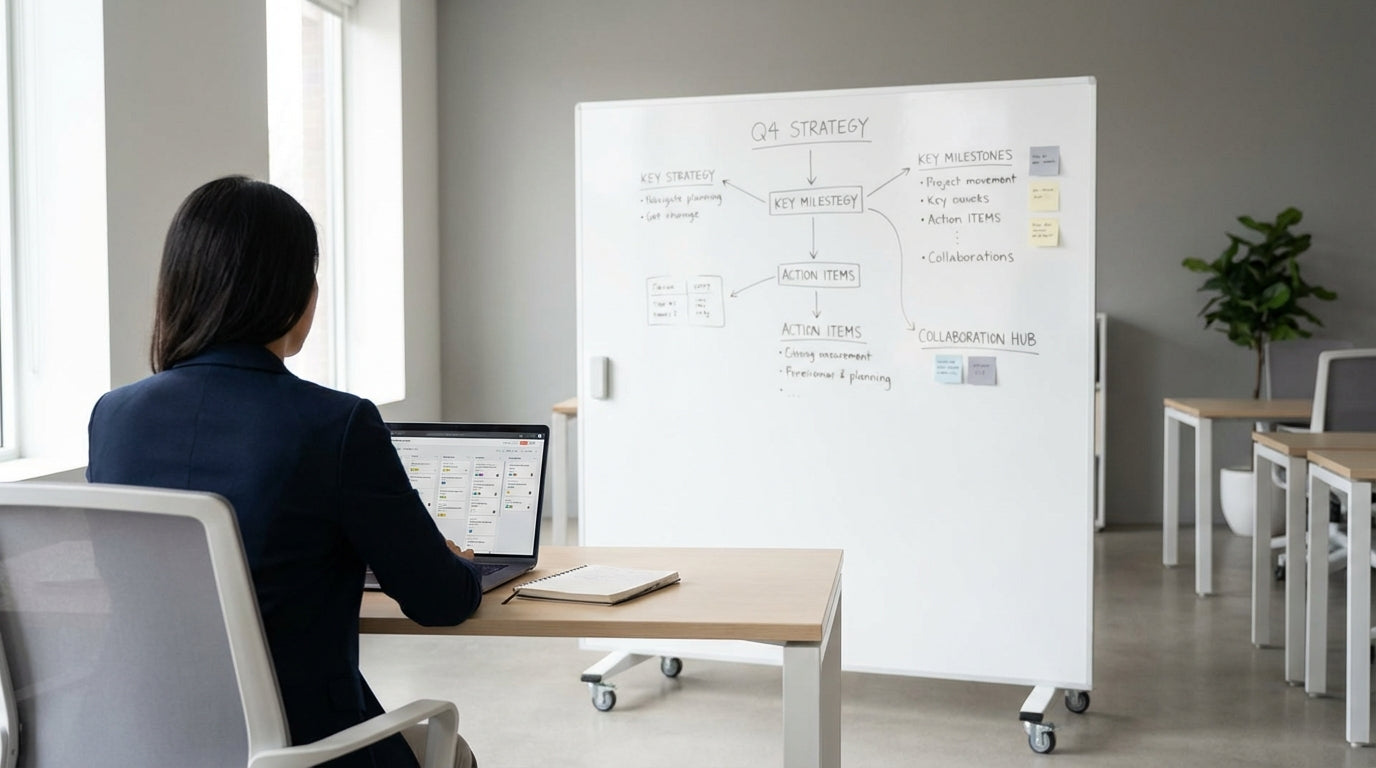
In Australian offices, classrooms and training rooms, portable boards are replacing fixed wall units because they support agile ways of working. Teams can wheel a board into a meeting nook, a project stand-up or a client presentation and start capturing ideas immediately. This mobility reduces dead space in the office and lets one board serve multiple rooms instead of buying separate units for each space.
Mobility also supports hybrid work. When you pair a moveable board with video conferencing, remote staff can see brainstorming, planning and problem-solving in real time. Many workplaces combine classic boards with Electric Interactive Whiteboards to bridge the gap between physical and digital collaboration, so nothing gets lost once the meeting wraps up.
There’s also a clear productivity benefit. Visual notes and diagrams stay intact between sessions because the frame locks in place and can be parked near a project team’s desks. Instead of wiping the board at the end of every meeting, people can keep work-in-progress visible, which improves accountability and speeds up decision-making.
Key Features to Look For in a Rolling Whiteboard
Not all mobile boards are built the same. Focusing on a few core features will help you choose a unit that lasts.
First, check the writing surface material. Entry-level units often use painted steel, but you’ll get better durability and easier cleaning from Porcelain Whiteboards or tempered Glass Whiteboards. Porcelain is baked onto steel, making it harder to scratch and far more resistant to “ghosting” – the faint marker residue that stays behind after erasing.
Next, consider magnet-friendliness and accessories. A Magnetic Whiteboard lets you pin up printed documents, project timelines and colour-coded labels without tape, which keeps the surface clean and professional. Pairing the board with quality Whiteboard Accessories such as low-odour markers, microfibre erasers and magnetic pen trays will extend the life of the surface and keep everything organised.
The frame and castors matter just as much as the surface. Look for a strong steel frame with cross-bracing for stability, lockable wheels, and – if you want maximum value – a double-sided rotating panel. That way, you effectively double your writing area, and can keep one side for planning (using Planner & Specialty Whiteboards layouts) and the other for free-form brainstorming or training notes.
Choosing the Right Board for Different Workspaces
The best option depends on how and where your team works. Think about room size, audience and how often the board will move.
In open-plan offices with hot-desking, compact units from the Mobile Whiteboards range work well for quick huddles and Kanban-style task boards. When space is tight, slim frames with a small footprint are easier to manoeuvre between desks and can tuck away behind storage when not in use. Pairing them with height-adjustable Mobile Tables creates instant collaboration zones that can appear or disappear as needed.
Training rooms, lecture spaces and conference venues usually need something larger and more robust. Porcelain or glass surfaces are ideal here because they’re built for heavy daily use and frequent cleaning. Many education and corporate training teams supplement their main board with Flipcharts, which are perfect for breakout groups and capturing ideas that need to travel between rooms or offsite workshops.
For project-based environments such as construction offices, healthcare hubs or logistics teams, it’s worth considering dedicated planning formats. Pre-ruled options in the Planner & Specialty Whiteboards category offer grids, schedules and workflow layouts that save time drawing up the same structure every week. Mounted on mobile frames, they can live close to the team’s work area, keeping shift plans, rosters and project milestones front and centre.
Digital vs Traditional: When to Go Interactive
Teams now often mix classic boards with digital solutions. The right balance depends on your collaboration style and tech stack.
Electric Interactive Whiteboards are ideal when you run frequent remote workshops or need to save and share everything written on the board. They act like giant touchscreens, allowing you to annotate documents, run presentations and integrate with video-conferencing tools. For distributed teams across Australia, this makes it much easier to keep everyone aligned, even when they’re dialling in from home or a regional office.
Traditional Mobile Whiteboards still shine when you want low-friction, quick-fire collaboration. There’s no software, no logins and no learning curve – anyone can walk up, pick up a marker and start sketching a process or capturing ideas. Many workplaces keep analogue boards for spontaneous use and interactive models for scheduled sessions where digital records are essential.
You don’t have to choose one or the other. Combining a magnetic surface with companion Whiteboard Accessories such as magnetic holders for tablets or phones lets you mirror digital content while keeping handwritten notes in view. Likewise, portable Flipcharts can complement interactive screens in strategy sessions, giving every breakout group its own writing surface that later feeds into the digital record.
Practical Tips for Setup, Care and Longevity
A bit of planning and maintenance will keep your boards looking fresh and working smoothly for years. Simple habits make the biggest difference.
Start with placement. Position mobile units where they won’t block exits, air-conditioning vents or walkways, and make sure there’s enough space for people to stand back and view the content. In multipurpose rooms, consider storing boards alongside Mobile Tables so the whole setup can be rolled in or out quickly when you change room layouts.
For cleaning, use products designed for the specific surface. Glass and Porcelain Whiteboards tolerate regular cleaning sprays, but cheaper painted-steel panels can stain if harsh chemicals are used. Invest in good-quality erasers, cleaning fluid and microfibre cloths from the Whiteboard Accessories range, and schedule a quick weekly deep clean to prevent ghosting, especially on heavily used boards.
Finally, look after the hardware. Check castors regularly to ensure they lock properly and roll smoothly, and tighten any frame bolts that may loosen over time. If you’re using magnets on a Magnetic Whiteboard, choose flat, board-safe magnets to avoid scratching. With these basics in place – and a mix of mobile boards, Planner & Specialty Whiteboards and supporting tools like Flipcharts – your collaborative spaces will stay functional, flexible and ready for whatever your team needs next.


