

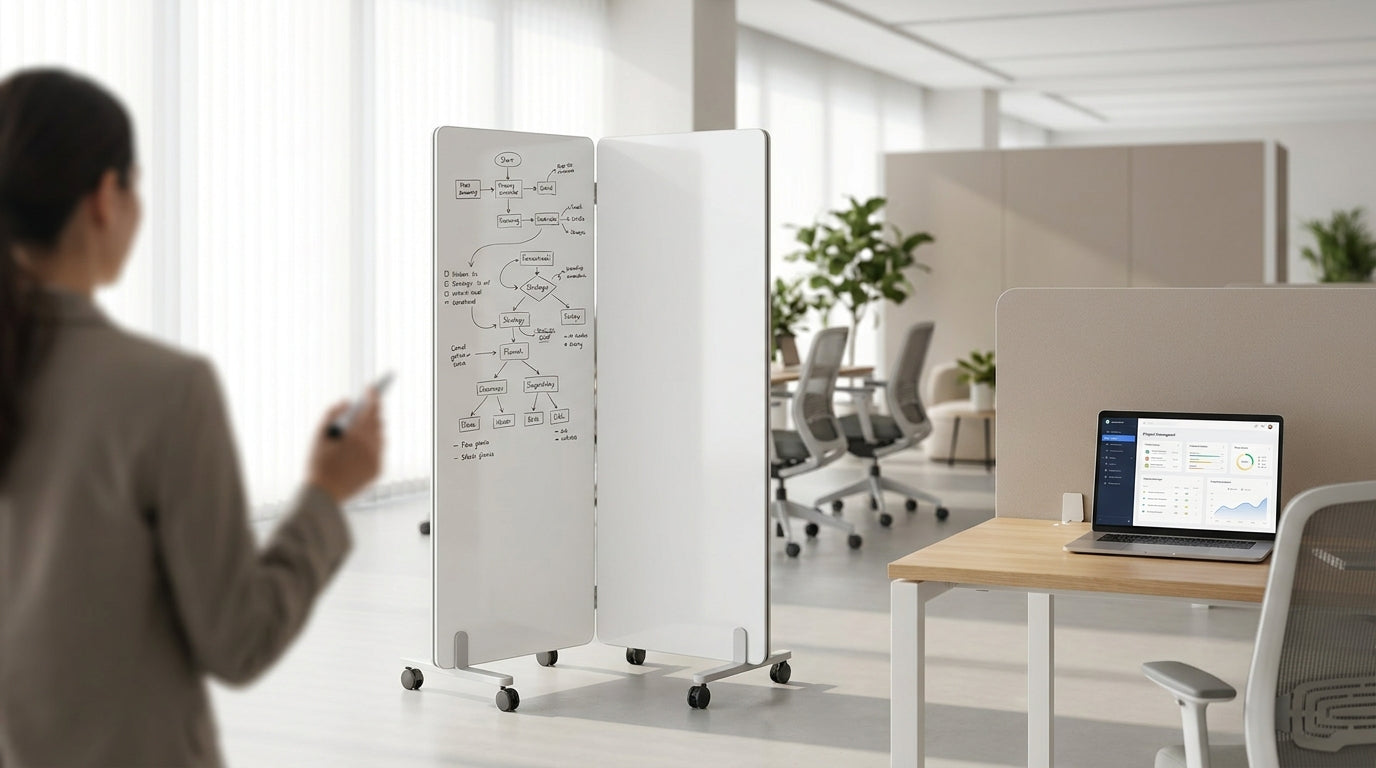
Why double-sided mobile whiteboards are a smart upgrade
Portable whiteboards on wheels give you more flexibility than fixed boards on the wall. When the surface is double-sided, you effectively double your writing space without taking up extra room.
For busy Australian offices, schools and training rooms, this combination of mobility and extra surface area is a major productivity boost. You can keep long-running notes, diagrams or workflows on one side while using the other for day‑to‑day discussions. Many teams also dedicate one face to permanent information, like team KPIs or timetables, and keep the reverse free for brainstorming sessions.
If you’re fitting out a collaborative space, start by looking at purpose-built Mobile Whiteboards. These frames are engineered for stability while still rolling smoothly between rooms or work zones. When you add double-sided functionality into the mix, you reduce the number of boards you need overall, helping keep floors clear and meeting areas less cluttered.
Unlike traditional wall-mounted panels, mobile units can also act as temporary partitions. In open-plan offices they’re often used to carve out quick breakout zones or create privacy for client calls. Teachers and facilitators like them for the same reason: you can wheel the board to wherever the action is, rather than rearranging the whole room.
Key features to look for in a double-sided mobile board
Not all rolling whiteboards are built the same, so it pays to compare a few details before buying. Focus on durability, ease of use and the writing surface itself.
First, check the frame. A solid steel or aluminium frame with lockable castors (wheels) will stay steady while people write. If multiple users will flip the board during fast-paced workshops, look for a pivot mechanism that locks securely into place, so the panel doesn’t wobble or drift mid-session. Height-adjustable designs can be helpful in classrooms where students of different ages will be using the board.
The surface material makes a big difference to how it feels to write and erase. Entry-level options usually have a standard laminate finish, which is fine for occasional use. For heavier traffic, consider premium finishes such as Porcelain Whiteboards, which are harder wearing, more stain-resistant and usually backed by longer warranties. If you regularly work with magnets, make sure you choose a board that’s compatible with Magnetic Whiteboards accessories, so you can pin up documents, printed charts and reference material.
It’s also worth checking how the unit integrates with the rest of your presentation setup. Some models pair neatly with Flipcharts, letting you switch between paper-based and erasable surfaces in seconds. Others are designed to sit alongside AV gear or Projection Boards & Presentation Accessories, so your notes and slides live in the same zone, making workshops run more smoothly.
Best uses in offices, classrooms, and training rooms
Rolling, reversible boards suit almost any shared space where ideas need to flow. Their strength is supporting different styles of communication in the same room.
In corporate offices, teams often use one side for structured content and the other for free-form work. For example, a sales team might keep a running pipeline tracker on one face and use the reverse for weekly stand-up notes or customer journey mapping. Paired with agile tools from Planner & Specialty Whiteboards, you can quickly build a visual project hub that moves with the team between meeting rooms and hot-desking areas.
In education and training settings, the movable format makes lesson transitions faster. Facilitators can prepare content in advance on one side, wheel the board into the room, and then flip to a blank surface for group problem-solving. This is especially handy when paired with modular Training Tables, allowing you to reconfigure both seating and presentation tools for different activities throughout the day.
Creative studios and coworking spaces also get strong value from double-sided boards. Designers might reserve one side for project timelines and use the other for sketches, mood boards and feedback. When the day’s done, key notes can be transferred to more permanent Glass Whiteboards or digital tools, while the mobile unit is rolled to the next team that needs it.
Choosing the right surface and accessories
The “write-on, wipe-off” surface is the heart of any board, so it’s important to match it to how you actually work. Different coatings offer different levels of durability and clarity.
If you’re outfitting a high-use meeting room or classroom, ceramic or vitreous enamel options from the Porcelain Whiteboards range generally provide the best long-term value. They resist ghosting (the faint marks that remain after erasing) and handle frequent cleaning better than basic melamine finishes. For premium spaces where design matters as much as function, consider pairing mobile units with fixed Glass Whiteboards, which offer a crisp modern look and very smooth writing experience.
Accessories make a big difference to day-to-day usability. At a minimum, plan to add quality markers, erasers and cleaning sprays from Whiteboard Accessories. If your board is magnet-compatible, magnetic document holders, grids and coloured indicators can turn each side into a flexible planning dashboard. For teams that run frequent workshops, having spare marker caddies and magnetic rulers on hand keeps sessions flowing and reduces setup time between meetings.
Some organisations also combine mobile units with wall-mounted Magnetic Whiteboards or more specialised layouts from the Planner & Specialty Whiteboards collection. This mix of permanent and movable surfaces allows you to separate long-term reference information from temporary project work, while keeping everything visible and easy to update.
Practical tips for setup, care, and getting more value
Setting up reversible boards correctly from day one helps them last longer and perform better. A little care and planning also makes them easier and safer to use.
When assembling your unit, follow the manufacturer’s instructions closely, paying particular attention to the locking mechanism and castors. Position the board so there’s enough space on both sides to flip it safely without bumping into walls, desks or Training Tables. In shared spaces, it’s a good idea to nominate a “home” position for each mobile unit, so people know where to return it after meetings.
For ongoing care, use only approved whiteboard cleaners and soft cloths or purpose-made erasers from Whiteboard Accessories. This helps prevent scratching and reduces ghosting over time. If your board is used heavily each day, a quick clean at the end of every session, plus a deeper clean weekly, will keep the surface looking sharp. Avoid permanent markers; if they’re used by mistake, treat the marks promptly using appropriate cleaning products.
To get more value from each unit, think about how both sides can support different workflows. For instance, pair one face with a printed schedule or project roadmap held in place on a Magnetic Whiteboards-compatible surface, while leaving the other for ad-hoc notes. In training environments, one side can hold key concepts and the other can be reserved for participant exercises. By planning this usage intentionally, you turn a simple writing surface into a flexible, multi-purpose communication hub that supports how your team really works.


