

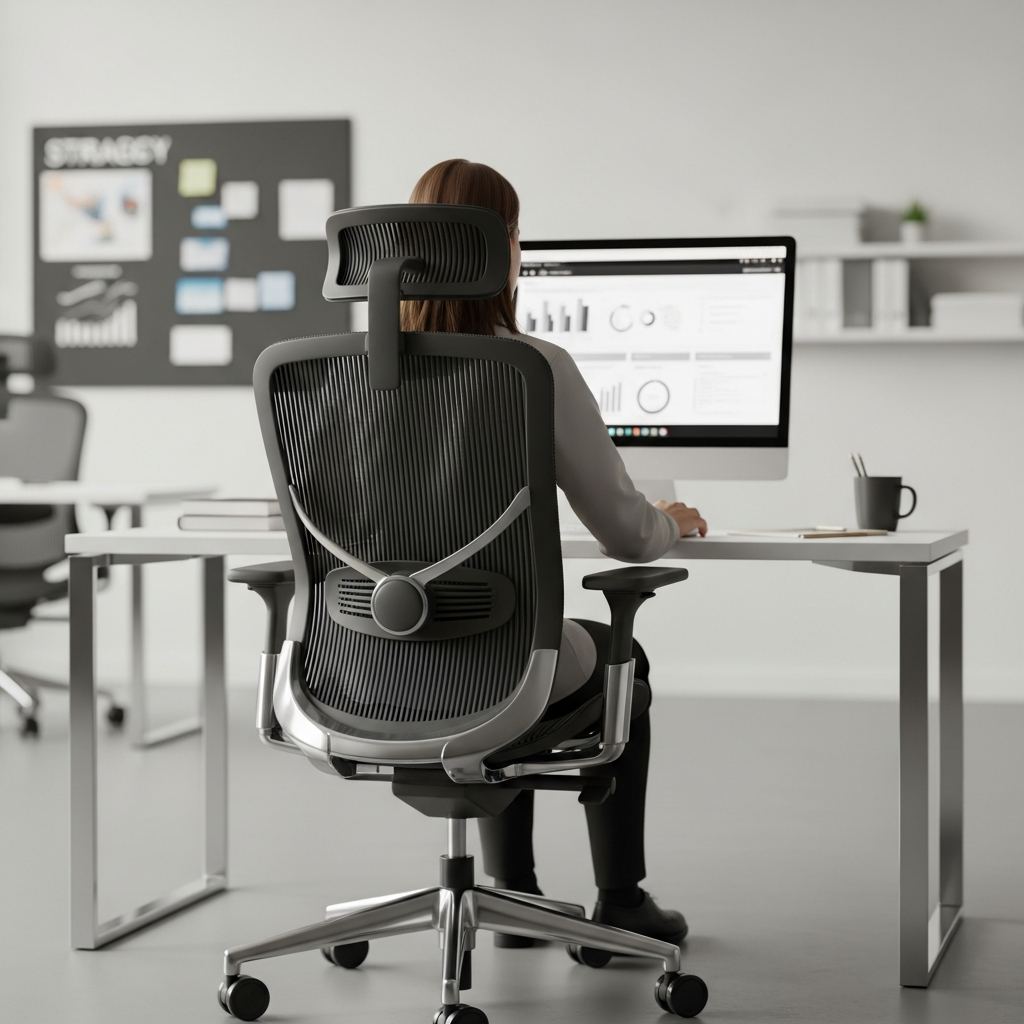
Understanding Back Pain and Your Office Chair
Spending hours at a desk can easily trigger or worsen back pain. The right seating and workstation setup can dramatically reduce strain on your spine.
Low back pain is often caused by poor posture, weak core muscles, and static sitting. When your chair doesn’t support the natural S-shape of your spine, your body compensates by slumping, twisting, or perching on the edge of the seat. Over time, this can lead to persistent discomfort, tight hip flexors, and even headaches from neck strain.
A supportive office chair should help you maintain a neutral posture: feet flat on the floor, knees at about 90 degrees, hips slightly higher than your knees, and your back supported from the pelvis up to the shoulders. When combined with a suitable setup – such as an appropriately sized desk or Single Person Workstations that fit your space – this kind of alignment can ease tension and improve focus throughout the workday.
Australians are increasingly turning to specialist seating designed for long hours of computer work. That includes breathable Mesh Office Chairs, ergonomic Task Chairs, and premium Leather Chairs that blend comfort with professional style. Knowing the strengths of each option makes it easier to choose the right model for your back.
Key Ergonomic Features to Look For
An ergonomic chair is more than just a cushioned seat. It’s a collection of adjustable features working together to support your body.
Start with lumbar support, which is the contour or pad that fits into the curve of your lower back. Adjustable lumbar depth and height let you place this support exactly where you need it, helping to prevent slouching and disc pressure. Seat height adjustment is just as important; your thighs should be roughly parallel to the floor with your feet planted firmly, or on a footrest if you’re shorter.
Next, check the seat pan. A waterfall edge (a gently sloping front) avoids cutting into the backs of your legs and keeps blood flowing. Adequate seat depth lets you sit back into the chair while keeping two to three fingers’ space between the seat edge and the crease of your knees. Many modern Task Chairs offer sliding seat pans to suit a wide range of body types, which is ideal for shared offices or hybrid work setups.
For back pain specifically, look for a reclining mechanism with tilt tension control, so you can lean back slightly instead of sitting bolt upright all day. This reclined posture reduces pressure on spinal discs. Pairing your ergonomic chair with Height Adjustable Workstations lets you switch between sitting and standing, distributing load through different muscle groups and further reducing the risk of pain.
Best Chair Types for Different Back Issues
Not all back pain is the same, so different chair styles suit different needs. Matching the chair to your body and tasks is crucial.
If you struggle with general lower-back ache and get hot easily, a breathable option like Mesh Office Chairs can help. Their ventilated backs promote airflow while still providing firm, adjustable lumbar support. For people who need to move frequently between tasks, adjustable Task Chairs with smooth casters and multi-directional armrests can reduce strain on the shoulders and mid-back.
For users on the taller or heavier side, standard seating often isn’t enough. Purpose-built Heavy Duty Chairs offer higher weight ratings, reinforced frames, and wider seat pans to support larger bodies safely, which can make a major difference to spinal comfort and long-term durability. Those recovering from injury or with reduced mobility might benefit from Power Lift Chairs, which use a motorised mechanism to help you stand up and sit down with minimal strain on your back and knees.
Specialist seating includes Drafting Chairs for higher benches or sit-stand setups and premium Leather Chairs for executive offices where support must be paired with a polished look. If local manufacturing and custom options matter to you, consider Australian Made Chairs, which often provide a mix of ergonomic adjustability and fabrics suitable for the Australian climate.
Setting Up Your Workstation for a Healthier Back
Even the best chair can’t fix a poorly arranged workstation. Your desk, screen, and accessories must also support a healthy posture.
Begin by adjusting your chair height so your elbows are just above the desk surface when your shoulders are relaxed. Your keyboard and mouse should be close, so you’re not reaching forward or shrugging your shoulders. A well-designed Single Person Workstations setup helps you organise equipment and paperwork so you can maintain a neutral posture rather than twisting or leaning.
Next, position your monitor so the top of the screen is at or slightly below eye level, and roughly an arm’s length away. If you’re using a laptop, consider a stand and external keyboard so you’re not looking down all day. Pairing your seating with Height Adjustable Workstations encourages you to alternate between sitting and standing, which can reduce stiffness and improve circulation throughout long shifts.
Finally, build movement into your day. Stand up every 30–60 minutes, roll your shoulders, and gently stretch your hip flexors and hamstrings. Your ergonomic chair and workstation provide the foundation, but it’s the combination of equipment, posture awareness, and regular movement that delivers lasting relief from back pain.
How to Choose the Right Chair for You in Australia
Selecting a supportive chair is a personal decision. Your body shape, work habits, and medical history all play a role.
Before purchasing, note any specific issues you experience: lower-back tightness, neck strain, or discomfort after a certain number of hours. Use this list to prioritise features such as lumbar depth adjustment, headrests, or wider seats. If your work is highly varied, consider versatile Task Chairs that offer multiple points of adjustment and easy movement between zones in your office.
Material also matters in the Australian climate. If you work in a warmer environment without constant air conditioning, breathable Mesh Office Chairs or fabric-covered Australian Made Chairs can keep you cooler than solid upholstery. In executive or client-facing spaces, Leather Chairs provide a premium look with carefully designed padding and back support.
Where budget allows, test different models and pair your chosen seat with a suitable desk or Height Adjustable Workstations for maximum flexibility. Remember that an ergonomic chair is an investment in your health; choosing the right combination of support, adjustability, and quality can reduce pain, improve productivity, and make your workday far more comfortable for years to come.


