

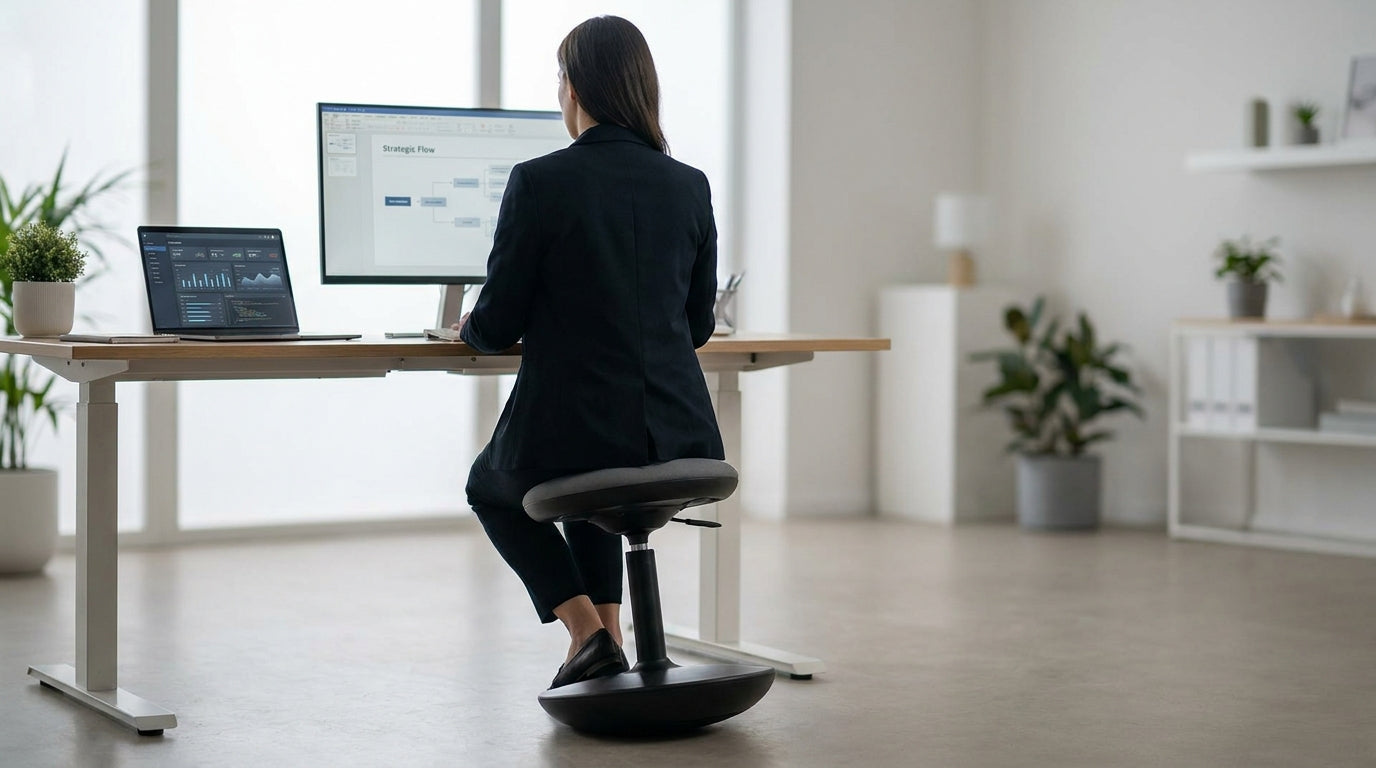
Why Active Sitting Matters in Modern Workspaces
Most office workers spend hours seated, which can lead to stiffness, fatigue, and back pain. Active sitting aims to counter this by encouraging small, frequent movements while you work.
Instead of locking your body into one static posture, dynamic chairs and stools allow subtle shifts in weight, micro-adjustments in your spine, and regular engagement of your core muscles. Over a full workday, these tiny movements add up, supporting better circulation and reducing pressure on your lower back. Many ergonomic specialists now recommend movement-friendly seating as a key part of a healthy workstation, alongside standing desks and regular breaks.
Active sitting is not about constantly fidgeting or balancing awkwardly. The goal is controlled, comfortable motion that supports good spinal alignment while avoiding the slump that often comes with traditional, rigid office chairs. Features such as flexible backrests, tilt mechanisms, and responsive seat pans help you stay supported while still moving naturally. This approach fits well with hybrid work setups, where you might switch between focused computer tasks, meetings, and collaborative sessions throughout the day.
In Australian workplaces, where long commutes and extended desk time are common, choosing movement-oriented seating can be a straightforward way to cut down on musculoskeletal issues. When combined with height-adjustable desks, quality mesh office chairs, and carefully planned breakout areas, active sitting contributes to a more energised, productive office culture.
Key Features to Look For in Movement-Friendly Office Seating
To get the benefits of active sitting, you need more than just a comfortable cushion. Specific design elements help encourage natural, safe movement throughout your workday.
Start with adjustability. A good task chair should let you fine-tune seat height, backrest angle, and tilt tension to match your body and desk setup. The best task chairs provide synchronous tilt (where the back and seat move together) so your hips and spine stay in a healthy relationship while you lean back or shift forwards. Look for a seat edge that’s gently rounded to reduce pressure under the thighs, especially if you sit for long periods.
Breathable materials also make a difference when you’re moving more. High-quality mesh office chairs promote airflow along your back, helping regulate temperature as you change postures. A contoured backrest with lumbar support encourages your spine to keep its natural S-curve, even when you’re leaning or twisting slightly to reach different parts of your workstation.
For roles that involve frequent repositioning or collaborative work, you may want chairs with lightweight frames and smooth casters for easy mobility. In training rooms, stackable or nestable training chairs can offer flexible support while still allowing participants to shift position and engage actively. Whatever style you choose, make sure the base is sturdy and stable enough to support movement without feeling wobbly or unsafe.
Different Chair Types That Encourage an Active Posture
There is no single chair that suits everyone, so it helps to understand which styles are best for your body, tasks, and workspace. Various seating categories offer different ways to stay active while seated.
For general desk work, ergonomic task chairs are often the most versatile option. Many models include multi-directional tilt, adjustable arms, and responsive backrests that move with you as you reach, type, or turn between screens. These features support micro-movements without sacrificing stability, making them suitable for both home offices and corporate fit-outs.
Roles that demand a higher working position, such as design benches or reception counters, can benefit from specialised drafting chairs. These chairs are taller and usually include a foot ring, allowing you to shift between perching and full sitting. Pairing them with sit-stand desks encourages regular changes in height and posture, which is ideal for long shifts.
For laboratory, healthcare, and technical environments, lab chairs & stools are designed for easy cleaning, robust support, and frequent movement. Many have 360-degree swivels and stable bases, so you can turn and reach equipment without straining. Likewise, heavy duty chairs provide extra strength and broader seats for users who need higher weight ratings, ensuring that movement-friendly features are available to everyone, regardless of body type.
In casual zones, adjustable bar stools and flexible breakout seating let people change position quickly during informal catch-ups or short laptop sessions. These pieces are excellent for encouraging staff to step away from their primary desk and adopt new postures during the day, which helps reduce the strain of prolonged static sitting.
Designing a Workspace That Supports Movement All Day
The right chair is only one part of an active workstation. How you arrange your office and choose complementary furniture can either limit or encourage movement.
Begin by matching chair types to specific zones. In focus areas, pair height-adjustable desks with ergonomic task chairs or breathable mesh office chairs so staff can alternate between sitting and standing. Collaboration spaces benefit from lightweight meeting chairs or mobile training chairs that are easy to reconfigure, making it simple for people to shift posture as the room layout changes.
Break areas and project hubs offer another chance to integrate movement. Mix soft lounges with higher bar stools and modular breakout seating to encourage staff to sit, lean, or perch in different ways throughout the day. This variety helps workers avoid spending every hour in the same posture, even if they are still technically “sitting”.
Where staff work in specialist roles, select seating that fits both the tasks and the environment. For example, pairing drafting chairs with high workbenches in design studios, or specifying durable lab chairs & stools in clinical spaces, ensures that movement-supporting features are available where they are most needed. Consistent chair quality across the office also reduces the temptation to drag a “favourite” chair between areas, which can disrupt workflow and clutter walkways.
Don’t overlook practicalities like floor surfaces and clear pathways. Smooth, level flooring allows casters on meeting chairs and heavy duty chairs to roll freely, helping people move closer to tables or pivot between tasks without strain. Combined with clear ergonomic guidelines and regular reminders to change posture, a well-planned workspace makes active sitting feel natural rather than forced.
Choosing the Right Chair for Your Body and Work Style
Everyone’s body, job, and work habits are different, so your ideal chair may not be the same as your colleague’s. A short trial and some basic checks can help you pick wisely.
First, match the chair to your primary tasks. If you spend most of your day at a computer, prioritise adjustable task chairs or supportive mesh office chairs with good lumbar support. For roles involving frequent movement between stations, consider more compact options such as lab chairs & stools or drafting chairs, which make it easier to pivot and reposition quickly.
Next, check fit and support. When you sit, your feet should rest flat on the floor (or on a foot ring for taller chairs), with your knees roughly at hip height. The backrest should follow the curve of your lower back without forcing you into an exaggerated arch. If you need extra strength or a wider seat, look for certified heavy duty chairs that maintain ergonomic features while supporting higher weight ratings.
If your day includes regular meetings, presentations, or workshops, look at the comfort and flexibility of your shared seating as well. Quality meeting chairs and stackable training chairs can still promote subtle movement through contoured seats and responsive backs. In informal zones, a mix of lounges, bar stools, and adaptable breakout seating gives you options to change posture between tasks, making active sitting part of your everyday routine rather than an occasional effort.


