

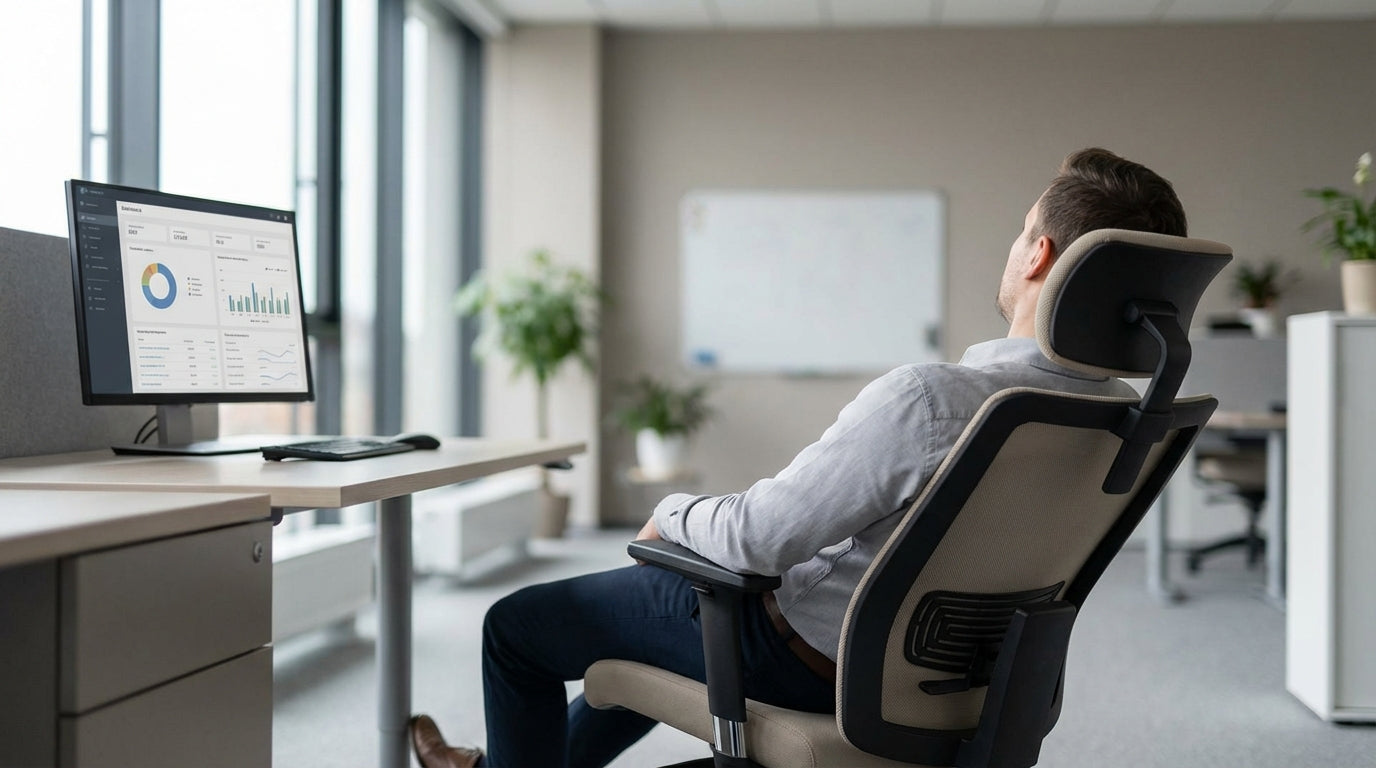
Why a Reclining Office Chair Matters for Your Workday
Modern workdays are long, and sitting upright for hours can take a toll on your body. A supportive chair that lets you lean back safely can make a big difference to comfort and focus.
A quality reclining office chair supports your spine while allowing you to shift positions throughout the day. Instead of hunching over a keyboard, you can change the angle of your backrest, tilt your seat, and even rest your head and feet for short breaks. This reduces pressure on your lower back and hips, helping prevent those familiar end-of-day aches.
Recline functions are often bundled with ergonomic features like lumbar support, adjustable armrests and seat-depth control. If you already use posture-friendly options such as mesh office chairs or dedicated task chairs, adding a recline with lockable positions gives you the flexibility to move from focused typing to relaxed reading without changing seats.
Taking short, deliberate breaks in a supportive recline helps with circulation and can even reduce eye strain, especially when paired with a quick stretch or a moment away from your monitor. Instead of slumping in your chair when you’re tired, you’re better off using a controlled recline that keeps your body aligned while you reset.
Key Features to Look For in a Reclining Work Chair
Not all reclining chairs are built the same. Pay attention to the adjustment range, support, and materials before you buy.
Look for a synchro-tilt or multi-tilt mechanism that allows the back and seat to move in a coordinated way, rather than the backrest just falling backwards. A tilt tension control lets you adjust how easily the chair leans back based on your body weight, while a tilt lock lets you set specific angles for working, reading, or resting. These functions might sound technical, but they simply determine how smoothly and safely you can move between positions.
Breathable upholstery can make long reclining sessions far more comfortable, especially in warmer Australian climates. Options such as mesh office chairs promote airflow and help keep you cool, while premium leather chairs give a more executive look and are easy to wipe clean. Whichever material you choose, ensure the padding is firm enough to support you without bottoming out after a few months.
If you’re heavier or simply want something extra robust, consider options designed for durability such as heavy duty chairs. These are engineered with stronger frames, higher weight ratings and sturdier bases, so the recline mechanism stays stable and safe over time. Also check for a headrest, extendable footrest or at least a waterfall seat edge (a gently sloped front) to relieve pressure behind the knees when leaning back.
Matching Your Chair to Your Workspace and Routine
The right reclining chair should fit your space, your body, and the way you work. Think about your daily tasks and how much time you spend at the desk.
If you’re often moving between a computer, phone, and paperwork, a more compact ergonomic model, similar in footprint to many task chairs, can be ideal. These chairs usually pair a supportive recline with easy manoeuvrability, so you can swivel and roll between different work zones. A full-length leg rest might not be necessary here; a good tilt and high back are often enough for quick breaks.
For home offices, you might prefer something that looks less “corporate” while still offering proper back support. Blending your desk area with living space can work well if you complement your main chair with occasional seating like armchairs or compact single lounges for deeper relaxation away from the screen. Using a dedicated lounge for longer breaks prevents you from spending every off-minute in the same seated posture.
In shared or client-facing spaces, consider how the chair looks from all angles and whether it matches existing reception seating. A cohesive style across your workspace helps create a professional impression while still allowing staff to enjoy comfortable recline features at their desks. If you want to support local manufacturing and shorter lead times, it’s worth exploring Australian made chairs, which often offer custom fabrics and configurations to suit your décor.
How to Use Recline for Short, Effective Breaks
Reclining is most beneficial when used intentionally. Short, regular pauses help more than the occasional long slump.
Try scheduling micro-breaks every 30–60 minutes. During these, lean back to a comfortable angle, place your feet flat on the floor or a footrest, and let your shoulders drop away from your ears. Take a few slow breaths, look at a distant point to rest your eyes, and gently roll your neck and wrists. Two or three minutes like this can reduce stiffness without disrupting your workflow.
Be mindful of your posture even when you’re relaxing. Your reclining chair should still support the natural curve of your spine, especially in the lower back. If your model didn’t come with built-in lumbar support, consider a small cushion or adjustable add-on to maintain alignment while you lean back. Over time, this can help you avoid the habit of sliding forward in the seat and rounding your back.
If you have mobility challenges or find it hard to stand after sitting for a while, pairing your desk setup with specialised seating such as power lift chairs in your break area can make transitions easier. These seats gently lift you to a standing position at the touch of a button, reducing strain on knees and hips while still offering a supportive recline when you’re resting.
Choosing Long-Lasting Seating for Work and Rest
A reclining chair is an investment in your health, so it’s worth choosing carefully. Look beyond looks to build quality, warranty, and after-sales support.
Check the chair’s weight rating, frame material and base construction to make sure it will hold up to daily use. Products in the heavy duty chairs category can be a smart choice in busier environments or for larger users, as they’re designed for higher loads and more frequent movement. A solid metal base and quality casters help keep the recline stable and smooth over time.
Local manufacturing often means better access to replacement parts and custom options. With Australian made chairs, you can usually choose fabrics, foams and finishes that suit both your workspace and your climate. Whether you favour breathable meshes, hard-wearing textiles, or premium leather chairs, selecting materials that are easy to clean and resistant to wear will keep your setup looking professional for longer.
Finally, think about how your reclining chair fits into your wider office layout. Complementing it with coordinated pieces such as single lounges, visitor armchairs, or matching reception seating can create a cohesive, comfortable environment for staff and visitors alike. When your seating supports both focused work and restorative breaks, you’re more likely to stay productive, reduce discomfort, and actually enjoy time at your desk.


