

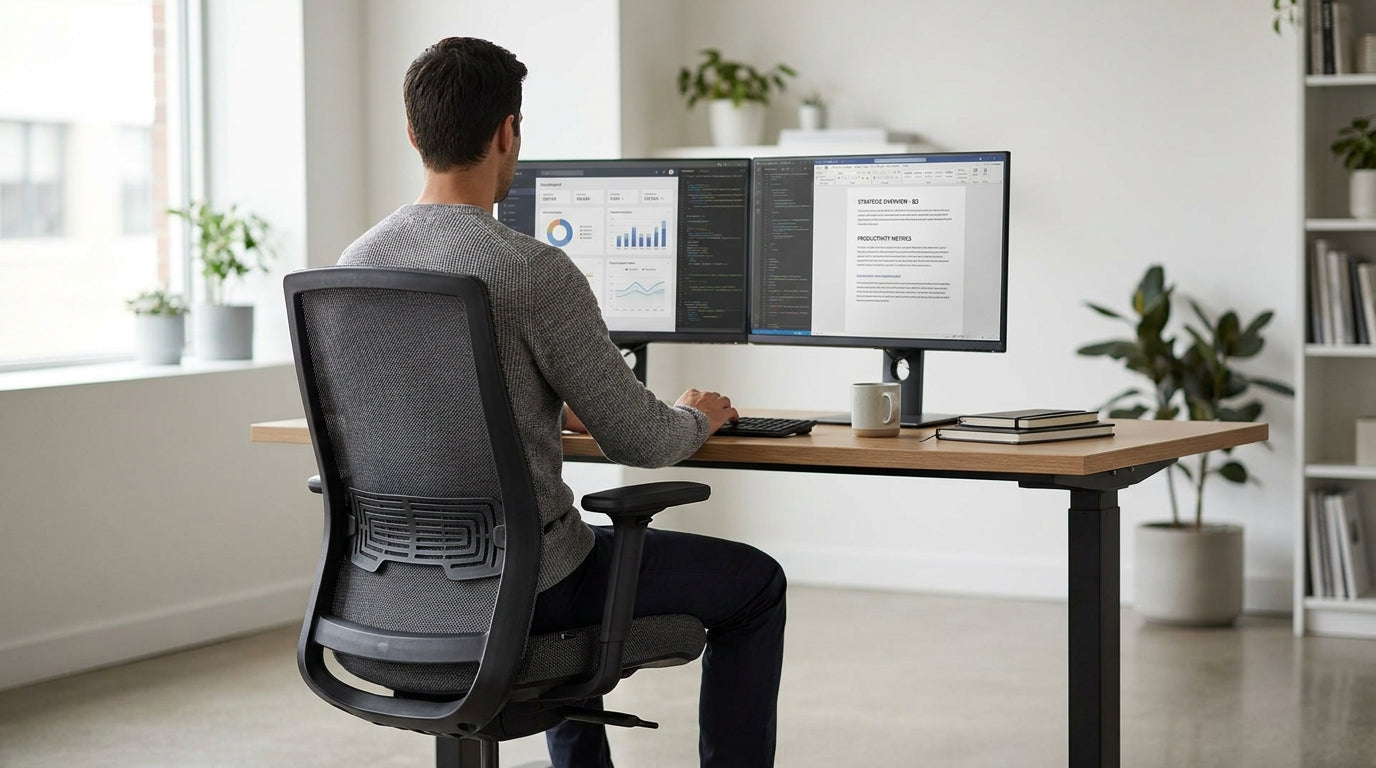
Why breathable fabric matters in your home office
Choosing the right seat material can make the difference between a comfortable day’s work and a sweaty, distracted struggle. Breathable fabrics help regulate temperature and reduce moisture build-up, especially in warm Australian climates.
Unlike vinyl or low‑grade leather alternatives, woven textiles and mesh-style fabrics allow air to circulate around your legs and lower back. This airflow minimises heat spots and pressure points, which can otherwise lead to irritation and fatigue. For anyone working long hours at a desk, that extra comfort often translates directly into better focus and productivity.
Breathable materials also tend to handle everyday wear and tear better than many people expect. Modern upholstery fabrics are engineered to be both open-weave and durable, resisting pilling and sagging while still feeling soft to the touch. When paired with a supportive frame and quality cushioning, they provide a cooler, more ergonomic sitting experience than solid, non‑ventilated seats.
If you prefer full back ventilation rather than just a breathable seat, it’s worth looking at dedicated Mesh Office Chairs. These combine mesh backs with fabric or mesh seats to deliver airflow across your entire spine and shoulders, which is ideal for hot offices or sunnier home workspaces.
Key features to look for in a cooling office chair
Not all breathable chairs are created equal. A few design details make a big difference to comfort and longevity.
Start with the fabric itself. Look for tightly woven, high‑quality polyester or blended textiles that are labelled as breathable or moisture-wicking. These materials disperse heat and moisture without stretching out of shape. Open-cell foam under the fabric also helps ventilation, letting air move through the cushion rather than trapping warmth against your body.
Next, pay attention to ergonomic adjustability. A good chair should offer seat height adjustment at a minimum, but ideally also include seat tilt, backrest angle, and lumbar (lower back) support. These settings let you fine‑tune the fit so your hips, knees, and spine are properly aligned, which reduces strain over long sessions. Many modern Task Chairs are designed with these features as standard, making them a great starting point for most home offices.
Finally, consider the base and frame. A strong, five‑star base with smooth‑rolling castors helps you move easily without putting stress on your joints. For users who are taller, heavier, or seated for more than eight hours a day, it’s worth exploring specialised Heavy Duty Chairs with reinforced components. These models usually pair tough breathable fabrics with higher weight ratings and more robust mechanisms, extending the life of your investment.
Ergonomic benefits for Australian workplaces
Comfort is only part of the story; proper seating also supports long‑term health. A well‑designed breathable chair encourages better posture and reduces heat-related discomfort across the working day.
When you sit on a ventilated fabric seat, you’re less likely to constantly shift around trying to cool down. That stability helps you keep both feet flat on the floor, your hips slightly above your knees, and your shoulders relaxed. Over time, this posture can ease common issues like lower back tension, tight hip flexors, and neck strain from hunching forward.
Australian workplaces, from corporate offices to labs and training rooms, are increasingly prioritising ergonomic seating as part of their WHS (Work Health and Safety) strategies. For height‑adjustable benches or standing desks, breathable Drafting Chairs provide a raised seating option that still supports good posture. In more specialised environments such as clinics and research facilities, Lab Chairs & Stools use wipeable yet ventilated materials, giving staff a balance between hygiene and comfort.
Collaboration spaces benefit from ergonomic seating too. Meeting rooms, project hubs, and breakout zones often use lighter, stackable designs, but that doesn’t mean comfort should be ignored. Choosing breathable Meeting Chairs and supportive Training Chairs helps participants stay alert during workshops, briefings, and longer strategy sessions without overheating or fidgeting.
Choosing the right chair for different settings
The best chair for you depends on where and how it will be used. Different environments demand different levels of support, mobility, and durability.
For traditional desks at home or in the office, breathable Task Chairs are a solid all‑round solution. They usually offer height and tilt control, comfortable fabric seats, and often mesh backs. If your day involves switching between your computer, side tables, and storage areas, smooth-rolling castors and a swivel base will help reduce twisting and awkward reaching.
Shared or high‑traffic areas call for robust fabrics that look smart while standing up to frequent use. Reception zones and waiting rooms benefit from supportive Visitor Chairs with breathable upholstery that still feels welcoming. In classrooms, libraries, and training spaces, lightweight School Chairs and stackable Training Chairs keep students and attendees comfortable without overheating, even in longer sessions.
For Australian organisations wanting to support local manufacturing, there are also high‑quality Australian Made Chairs upholstered in breathable fabrics suitable for a wide range of roles. These options often provide better lead times, custom fabrics, and the peace of mind that comes from local warranties and parts availability. They can be matched across executive offices, open‑plan workstations, and staff areas to create a consistent look and feel.
Maintenance tips to keep breathable chairs fresh
Looking after your chair properly helps it stay cool, clean, and supportive for years. A simple maintenance routine is usually enough.
Start by vacuuming the seat and backrest regularly with a soft brush attachment to remove dust and debris from the fabric weave. This stops particles from grinding into the upholstery and helps maintain airflow. For spills, blot (don’t rub) the area with a clean cloth, then follow the manufacturer’s cleaning guide using mild detergents where appropriate.
Check your adjustments and moving parts every few months. Tighten any loose bolts, confirm that the gas lift and tilt functions operate smoothly, and inspect castors for hair or lint that can slow them down. If your chair is part of a larger fit‑out that also includes Mesh Office Chairs or specialised pieces like Drafting Chairs, it’s worth scheduling a quick annual inspection to keep everything in good working order.
Finally, be mindful of how and where the chair is used. Avoid placing fabric seating in direct, harsh sunlight all day, which can fade colours over time. Rotate chairs between workstations or meeting rooms if possible, so wear is spread evenly across your fleet. With these straightforward steps, your breathable seating will stay comfortable, presentable, and ready for daily use in any Australian workspace.


