

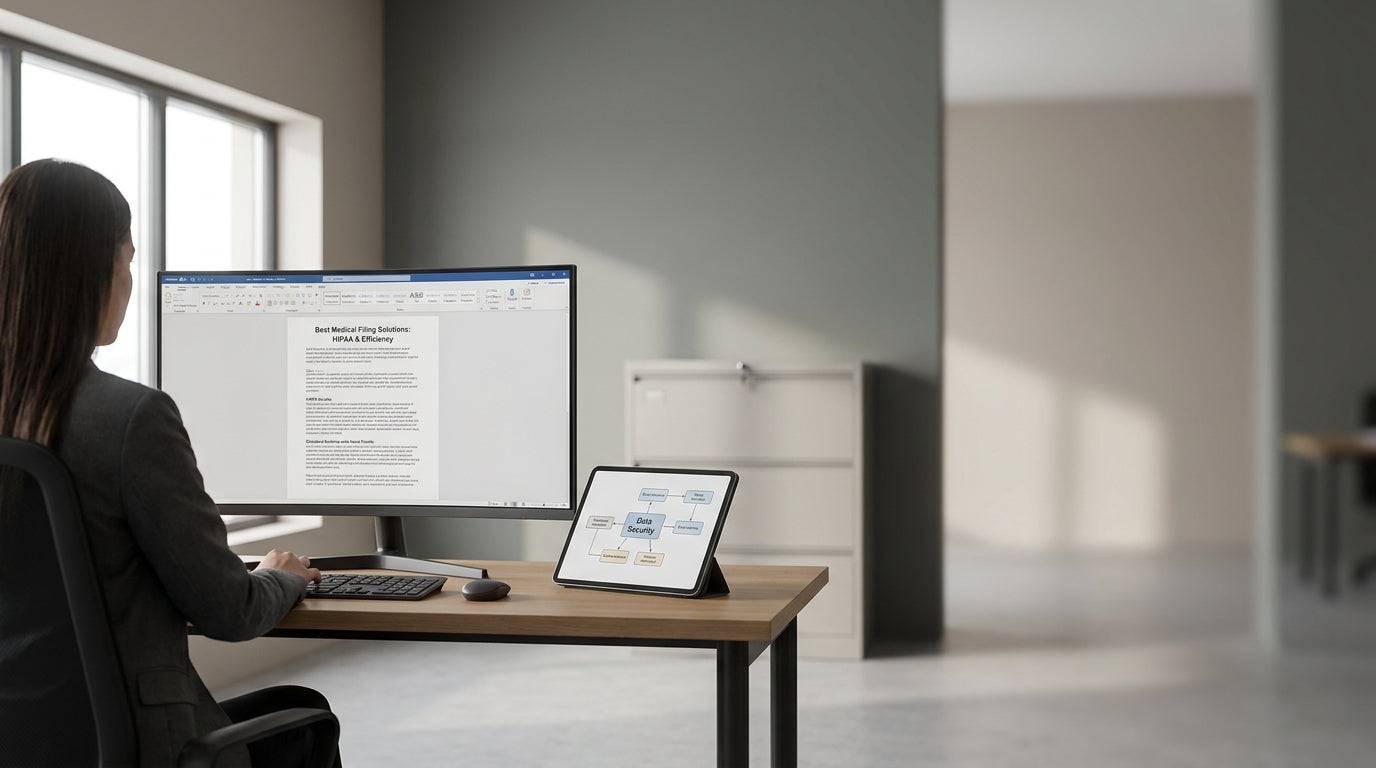
Understanding medical records storage requirements in Australian practices
Storing patient files isn’t just about keeping paperwork tidy. In Australia, medical practices must balance confidentiality, accessibility, and compliance with strict privacy rules.
Medical records usually need to be retained for many years, which means the storage solution has to be durable, secure, and easy to expand. Whether you operate a GP clinic, allied health practice, or specialist rooms, your filing system needs to support fast retrieval while limiting access to authorised staff only. Cabinets and cupboards must also cope with daily use, regular cleaning, and potential future digitisation of paper files.
Another key factor is space. Many practices operate in compact premises, so vertical capacity, mobile units, or high-density options like Compactus systems can make a big difference. Deciding between drawers, shelves, or sliding doors often comes down to how often you access files, how much floor space you have, and whether your team relies on manila folders, lever arch files, or a mix of formats.
Finally, any storage chosen for medical records must support good record management practices. That includes clear labelling, logical grouping of patients or services, and the ability to segregate inactive or archived records. The right mix of Filing Cabinets, cupboards, and shelving helps standardise how information is stored across consulting rooms, reception, and back-office areas.
Key factors to consider before choosing a filing solution
Before investing in new storage, it pays to assess how your practice actually works. A quick audit of your current records can highlight what kind of cabinet or cupboard will genuinely improve efficiency.
Security comes first. Lockable steel units, such as those in the GO Steel Storage range, provide a solid barrier against unauthorised access, helping you meet Privacy Act and RACGP standards. Look for cabinets with quality locks, reinforced doors or drawers, and an option to separate sensitive documents such as medico-legal files or controlled drug registers from routine clinical notes.
Capacity and layout are just as important. Vertical Filing Cabinets work well where floor space is tight, while lateral drawer units or Office Shelving can suit bulk storage and shared file access. Think about whether you need to store A4 suspension files, archive boxes, or a combination of files, forms, and reference materials. Choosing a modular system, like Steelco Modular Cabinets, allows you to add units as your practice grows without redesigning your entire storage layout.
Workflow and accessibility should guide the final decision. Reception staff may need quick, frequent access to current patient records, while long-term archives can be located in a less central spot. In high-traffic areas, sliding or tambour doors minimise obstruction, making Sliding Door Cabinets and Tambour Cupboards ideal for narrow corridors or shared workspaces. Matching your storage style to your daily routines reduces search time, misfiling, and clutter.
Comparing popular storage options for healthcare environments
Different medical practices benefit from different storage combinations. Understanding the strengths of each option helps you match products to your space, budget, and record-keeping style.
Traditional steel Filing Cabinets remain a reliable choice for clinics using suspension files. They protect documents from dust and light, can be fully lockable, and are available in multiple drawer heights. Lateral cabinets offer wider drawers that are convenient for organising files by doctor, specialty, or alphabetised ranges, while vertical cabinets suit smaller rooms where footprint is a concern.
For practices managing large volumes of paper charts, space-saving systems such as Compactus units can dramatically increase capacity per square metre. These mobile shelving systems run on tracks and are moved by handles or wheels, allowing aisles to be opened only where needed. This high-density arrangement is well suited to multi-doctor clinics, imaging centres, or hospitals where archives need to stay onsite but out of patient-facing areas.
Cupboards and cabinets also play a key role. Lockable Office Cupboards can store ring binders, reference manuals, and administrative records, keeping them separate from clinical files. Tambour Cupboards, with doors that roll back into the unit, are ideal for tight spots like treatment rooms or nurses’ stations, with adjustable shelves for both files and equipment. For broader storage needs, ranges such as Premier Storage and GO Steel Storage offer coordinated units that maintain a professional, consistent look across the practice.
Balancing security, accessibility, and compliance
Medical records storage needs to protect patient privacy while still supporting fast, accurate care. The furniture you choose can either help or hinder that balance.
Locking mechanisms are a starting point, but layout also affects confidentiality. Positioning Sliding Door Cabinets or Office Cupboards away from public waiting areas reduces the risk of casual viewing of patient names or labels. Within staff-only spaces, separating current from archived files keeps day-to-day drawers lean, so staff spend less time searching and are less likely to pull out the wrong chart.
Compliance with Australian privacy and health records legislation also means planning for access control. Steel units such as those in Steelco Modular Cabinets and Premier Storage collections typically offer robust construction and key-controlled access, supporting clinic policies on who can retrieve, add, or archive records. Some practices designate separate cabinets for billing, clinical notes, and HR files to simplify permission levels and internal audits.
Accessibility is about more than speed. Cabinets should open smoothly, allow clear visibility of labels, and be safe for repeated use throughout the day. For example, combining Office Shelving for frequently used reference folders with secure Filing Cabinets for patient charts can reduce strain on staff and create a more organised workspace. When everything has a defined, secure place, it becomes easier to demonstrate compliance during accreditation visits or audits.
Planning a future-proof storage layout for your clinic
Medical records management is evolving, with many practices moving toward hybrid paper–digital systems. Choosing flexible storage now can save you from expensive redesigns later.
A future-proof layout often combines different unit types tailored to specific tasks. High-density Compactus systems or tall Office Shelving can handle inactive paper records that must still be retained, while slimline Tambour Cupboards near workstations hold forms, stationery, and clinical documentation used daily. As more patient data shifts to electronic medical records, you can gradually repurpose shelving for consumables, educational resources, or device storage.
Modularity is particularly useful in growing practices. With products like Steelco Modular Cabinets and the coordinated pieces in GO Steel Storage, you can start with a core set of cabinets and add extra units, drawers, or shelves as new clinicians join the team. This avoids mismatched furniture and helps maintain clear filing standards across consulting rooms and admin areas.
Finally, think ergonomically and practically when mapping out your storage. Place Filing Cabinets so drawers can be fully extended without blocking walkways, and use Sliding Door Cabinets where swing doors would interfere with foot traffic. By investing in a well-planned mix of Office Cupboards, high-density systems, and standard cabinets, your medical practice can handle today’s paper records while staying ready for tomorrow’s digital workflow.


