

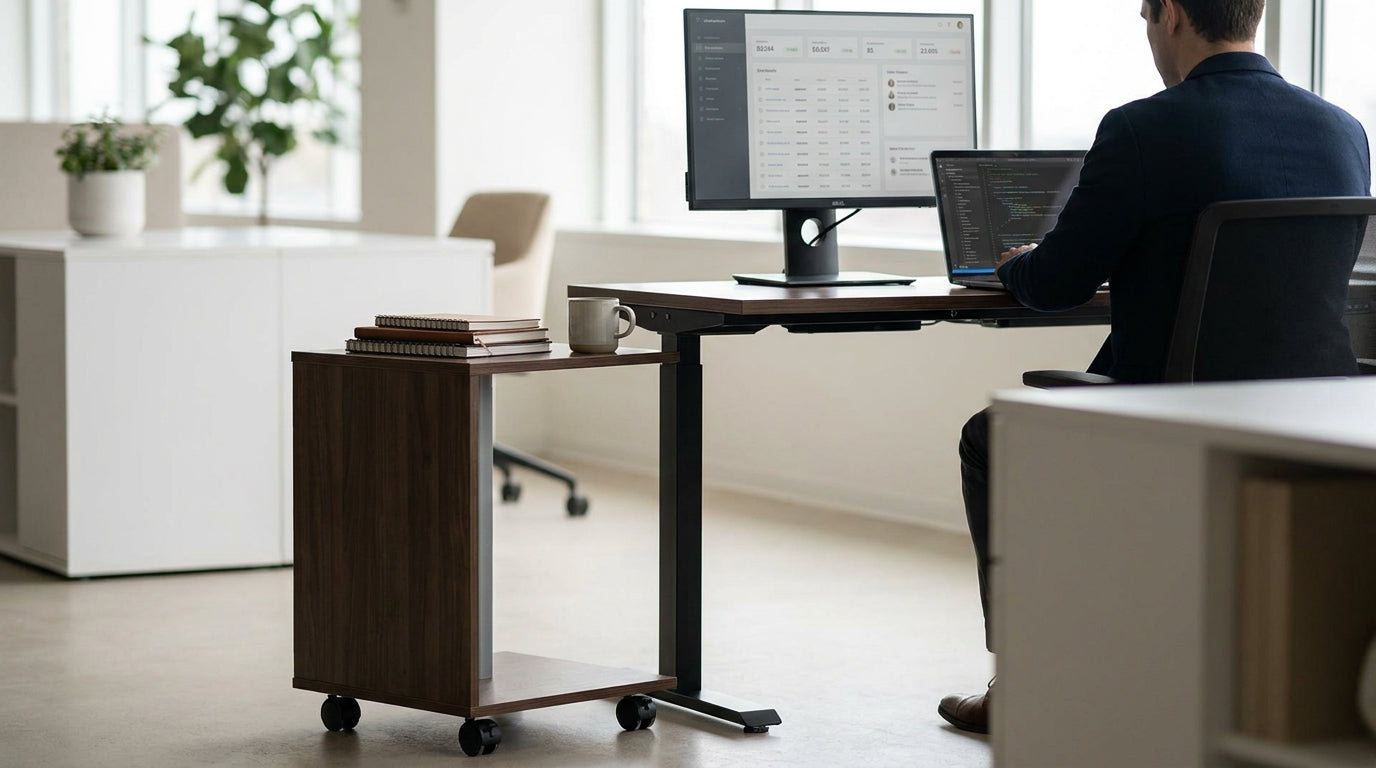
Why Mobile Side Tables on Castors Are a Game Changer
Rolling side tables make it easy to adapt your space on the fly. Whether you’re in a home office, classroom or commercial workplace, they give you extra surface where and when you need it.
Unlike fixed furniture, mobile side tables let you respond to how people actually use a room throughout the day. You can slide one next to a chair for an impromptu laptop station, reposition it for a quick client meeting, then push it aside to open up the floor. This level of flexibility is especially useful in agile offices and multi‑purpose rooms, where layouts shift between focused work, collaboration and presentations.
Castors (lockable wheels designed for furniture) are the key to this versatility. Quality castors roll smoothly over carpet and hard floors, and the locking mechanism keeps the table steady once it’s in place. You’ll find similar mobility benefits in larger pieces like dedicated Mobile Tables and reconfigurable Training Tables, but compact side units are ideal when you just need a small, movable surface rather than a full workstation.
For workplaces that regularly host meetings or workshops, mobile side tables pair well with flexible Office & Meeting Tables. Use the main table for group work, while side units hold AV equipment, catering, handouts or personal devices. When the session is over, the side tables can be rolled against a wall or into storage, restoring open space for day‑to‑day activity.
Key Features to Look For in a Rolling Side Table
A good mobile side table balances stability, manoeuvrability and durability. A few design details make the difference between a handy helper and a daily frustration.
Start with the castors themselves. Look for smooth‑rolling wheels with at least two brakes, so you can lock the table firmly when it’s in position. Larger castors tend to handle uneven transitions between carpet and hard floors better. If you’re using the table near seating, inward‑set or low‑profile wheels reduce tripping hazards and help keep the base out of foot traffic.
The frame and top should be sturdy enough for everyday commercial use. Steel or high‑quality aluminium frames with a powder‑coat finish resist knocks and scuffs, while commercial‑grade melamine or laminate tops handle hot drinks, paperwork and tech without warping. If you’re pairing your side table with other furniture, it’s worth checking out coordinating options in broader ranges such as Side Tables, Coffee Tables and general Office & Meeting Tables to keep your fit‑out consistent.
Height and shape also matter. Fixed‑height models work well beside standard lounge chairs and sofas, whereas adjustable designs can double as laptop stands or over‑chair tables for task work. Narrow, rectangular tops fit neatly beside armchairs or in corridors, while round or square versions are handy in reception and café‑style areas. If you need the option to clear a room completely, consider slimmer designs that can complement or be stored alongside Folding Tables and compact Flip Top Tables.
Best Uses in Offices, Classrooms and Commercial Spaces
Mobile side tables earn their keep in high‑traffic, multi‑use areas. They support everything from hot‑desking to client hospitality.
In open‑plan offices, these tables are ideal for parking laptops, notebooks and phones during quick stand‑ups or “touchdown” work between meetings. They can serve as personal hubs beside sit‑stand desks, offering an extra surface for files or devices without crowding the primary workstation. Paired with wheeled task chairs and flexible Mobile Tables, they help create truly modular work zones that can shift from solo focus to team collaboration in minutes.
Training and education environments benefit as well. In classrooms, training rooms and seminar spaces, mobile side tables can hold projectors, handouts, sanitising stations or participant materials. When combined with purpose‑built Training Tables, presenters can keep essential items close at hand and reconfigure the room quickly between sessions. For venues that need to clear floors for events, side tables can be rolled away just as easily as Flip Top Tables and Folding Tables.
Client‑facing spaces like reception areas, breakout zones and staff lounges also gain flexibility. A movable side table can act as a compact refreshment station alongside fixed Coffee Tables or as extra surface area during busy times. In café‑style breakout areas, they complement larger Cafe Tables, making it easier to mix solo work, casual meetings and meal breaks within the same footprint.
Choosing the Right Mobile Table Style for Your Space
Matching the table style to how the space is used will maximise value. Think about how often it needs to move, what it carries and how it should look.
For formal meeting rooms and executive offices, a clean, minimal design in neutral finishes will blend with existing Office & Meeting Tables. Slimline mobile side tables can sit discreetly against a wall until required for AV equipment, catering or additional documents. When not in use, their small footprint keeps the room streamlined and professional. Choosing finishes that echo your main conference or Side Tables helps maintain a unified look.
In more relaxed interiors, such as breakout areas and staff kitchens, you have room to be bolder. Combining a mix of mobile units and fixed Coffee Tables or Cafe Tables creates a layered, casual feel where people can choose how and where they sit. Durable tops and easy‑clean finishes are important here, as these pieces will likely host drinks, snacks and shared devices. If your workplace extends outdoors, consider pairing indoor units with dedicated Outdoor Tables so the same flexible approach continues onto terraces or balconies.
Multi‑purpose venues, community centres and training hubs may prioritise stackability and storage alignment. While side tables are often smaller than Folding Tables or Flip Top Tables, choosing models that nest or tuck neatly under larger Mobile Tables reduces storage demands. This is particularly helpful where furniture needs to be moved in and out frequently for different events, saving both time and floor space.
Practical Tips for Setup, Safety and Maintenance
Getting the most from mobile side tables comes down to smart placement and simple care. A few habits will keep them safe, tidy and ready to roll.
When setting up, position tables where they’re easy to reach but not blocking traffic paths. In busy offices and classrooms, keep at least one clear route between desks, larger Training Tables or Office & Meeting Tables so people aren’t dodging furniture. Always lock the castors when the table is in use, especially if it’s supporting laptops, hot drinks or AV gear. If cords are involved, run them safely to power points and avoid stretching cables across walkways.
Maintenance is straightforward but important. Wipe down surfaces regularly with a mild cleaner suited to laminate or timber to prevent staining, particularly if you’re using the tables alongside Cafe Tables or Coffee Tables where food and drinks are common. Periodically check the castors and frame fixings; tighten any loose screws and clear debris from wheels to maintain smooth movement. If a table sees outdoor use, pair it with weather‑ready Outdoor Tables and bring it back inside after use to avoid premature wear.
Finally, review how your team actually uses the furniture every few months. You may find that one area would work better with an additional mobile side table, while another can manage with fewer thanks to efficient Mobile Tables, Folding Tables or Flip Top Tables. Adjusting your layout based on real‑world use ensures your investment continues to support productivity, comfort and a professional presentation across your workspace.


