

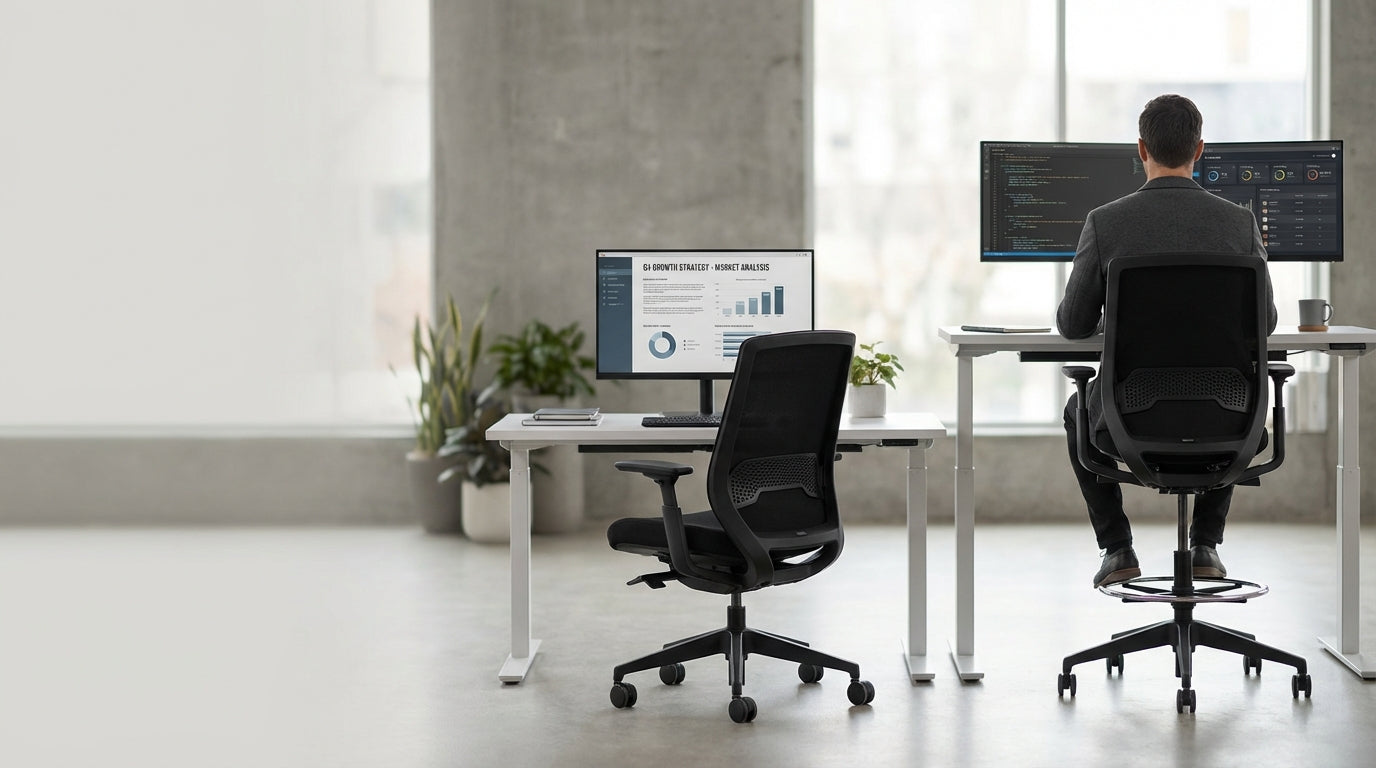
Understanding the Key Design Differences
At a glance, high drafting models and standard office seats might look similar, but they’re built for very different ways of working. The main differences come down to seat height, foot support, and how they pair with your desk or workstation.
A drafting-style chair is designed to work with higher surfaces such as drafting tables, counters, and sit-stand benches. It usually features an extended gas lift (the cylinder that raises and lowers the seat) and a foot ring so your legs aren’t left dangling. These taller chairs let designers, architects, and lab staff move easily between sitting and perched standing positions, supporting more active postures throughout the day.
By contrast, a traditional office or task chair is designed for standard desk height, usually around 720–750 mm. They focus on ergonomic back support, seat comfort and adjustability at a lower range, making them ideal for typing, emails, and general computer work. Because they’re meant to keep your feet flat on the floor, they don’t need a foot ring or extremely long gas lift.
Another design difference is the base and mobility. Many drafting chairs offer stable, wide bases and sometimes glides (fixed feet) instead of castors to prevent unwanted rolling when used at high benches. Standard office seating tends to prioritise mobility with smooth castors for moving around a workstation or between single person workstations in an open-plan office.
Ergonomics, Comfort, and Health Considerations
Comfort isn’t just about a soft seat; it’s about supporting your body in a neutral, stress-free posture. The right chair type depends on how high you sit, how long you sit, and what kind of tasks you’re doing.
Good ergonomic design keeps your spine in a natural S-curve, supports your lower back, and allows your feet or legs to be properly supported. Standard ergonomic and mesh office chairs often include adjustable lumbar support, tilt mechanisms, and breathable backs that suit long hours at a computer. Because these chairs are typically used at normal desk height, it’s easier to follow basic ergonomic guidelines: feet flat on the floor, knees at roughly 90 degrees, and eyes level with the top of your monitor.
When you sit much higher, as you do on a drafting model, that neutral posture can be harder to maintain without the right features. A quality option will include a sturdy foot ring to replace the floor as your leg support, along with height and backrest adjustments to keep your hips, knees and shoulders aligned. If the foot ring is missing or not set at the right height, pressure can build in your thighs and lower back, increasing fatigue over a long shift.
For users who are heavier or spending extended periods seated, it’s worth looking at heavy duty chairs that are engineered with stronger components and higher weight ratings. In laboratories and technical environments, specialised lab chairs & stools combine higher seating with wipe-clean materials and ergonomic shaping tailored to precision work. Matching the chair’s design to your tasks and body type is one of the simplest ways to reduce strain and support long-term musculoskeletal health.
Where Each Chair Works Best
The best seating choice depends heavily on your workspace layout and daily activities. Consider the height of your desk, bench, or counter before committing to one style over the other.
Drafting-style seating shines in studios, technical spaces, and any area where work surfaces sit above standard desk height. Architects, engineers and creatives working at drafting tables often alternate between sketching, reviewing large plans, and brief computer tasks, all at an elevated surface. These taller chairs also work well at reception counters, retail POS stations, and lab benches where you frequently shift between sitting and standing while staying at the same high worktop.
Conventional office and task chairs are a better match for traditional corporate offices, home study setups, and focus pods. They’re suitable for use with standard desks, including compact home office desks where comfort and space-saving are priorities. In open-plan environments, pairing these seats with single person workstations gives each team member an ergonomically sound base they can personalise.
If you’re using height adjustable workstations, you may need to think more flexibly. Some workers prefer a slightly taller chair to support a perched position when the desk is raised, especially for short tasks or meetings. Others will stick with a standard office chair for seated work and switch to full standing when they lift the desk, relying on the desk’s range rather than an extra-tall seat.
Adjustability and Features to Look For
Whether you go tall or standard, adjustability is what turns a generic chair into one that genuinely fits your body. Pay attention to more than just seat height when comparing options.
At a minimum, most users benefit from seat height adjustment, backrest tilt, and some form of lumbar support. Many modern mesh office chairs add breathable backs, synchro-tilt (where the seat and back move together), and adjustable armrests to help maintain a natural posture as you recline. With heavy duty chairs, the mechanisms are often reinforced and rated for extended, intensive use, which is crucial in control rooms or call centres where seating is used around the clock.
On taller models, look for an easily adjustable foot ring that locks securely in place, so you can fine-tune where your legs rest. A swivel function helps you reach tools, plans, or equipment across a wider workspace without twisting awkwardly through your spine. In technical environments, lab chairs & stools may also include cleanroom-friendly materials, backless stool options for short tasks, or drafting-style heights for working at microscopes or high benches.
Pairing the right chair with the right surface completes the setup. Taller seating generally belongs with higher benches or height adjustable workstations that you can raise to a comfortable level. Standard adjustable chairs suit fixed desks and compact home office desks, while creative, design-focused roles may benefit from the larger surface area and reach of dedicated drafting tables.
How to Choose the Right Chair for Your Workspace
Choosing between a taller drafting option and a standard office model starts with measuring your workspace. Once you know your surface height and how you work, the decision becomes much clearer.
First, measure the height from the floor to the top of your desk, bench, or counter. If your work surface is at standard desk height, a quality office or task chair is usually the most ergonomic and economical choice. For home setups, pairing these with well-sized home office desks can create a space that supports both productivity and comfort without dominating a spare room or study nook.
If your work surface is significantly higher, or you regularly work at a sit-stand bench, explore dedicated drafting chairs that match that extra height range. These are especially useful for creative studios, labs, and technical spaces using height adjustable workstations set higher than typical sitting positions. You’ll be able to maintain a relaxed, supported posture without hunching your shoulders or dangling your legs.
Finally, think about how your chair will integrate with the rest of your furniture. In an open-plan office, you might combine standard seating at single person workstations with taller options at shared benches or collaborative zones. For creative professionals, matching a suitable drafting-style seat with large, stable drafting tables can transform the way you sketch, design, and review work. Taking a few minutes to align seat type, desk height, and task requirements will go a long way towards building a healthier, more productive workspace.


