

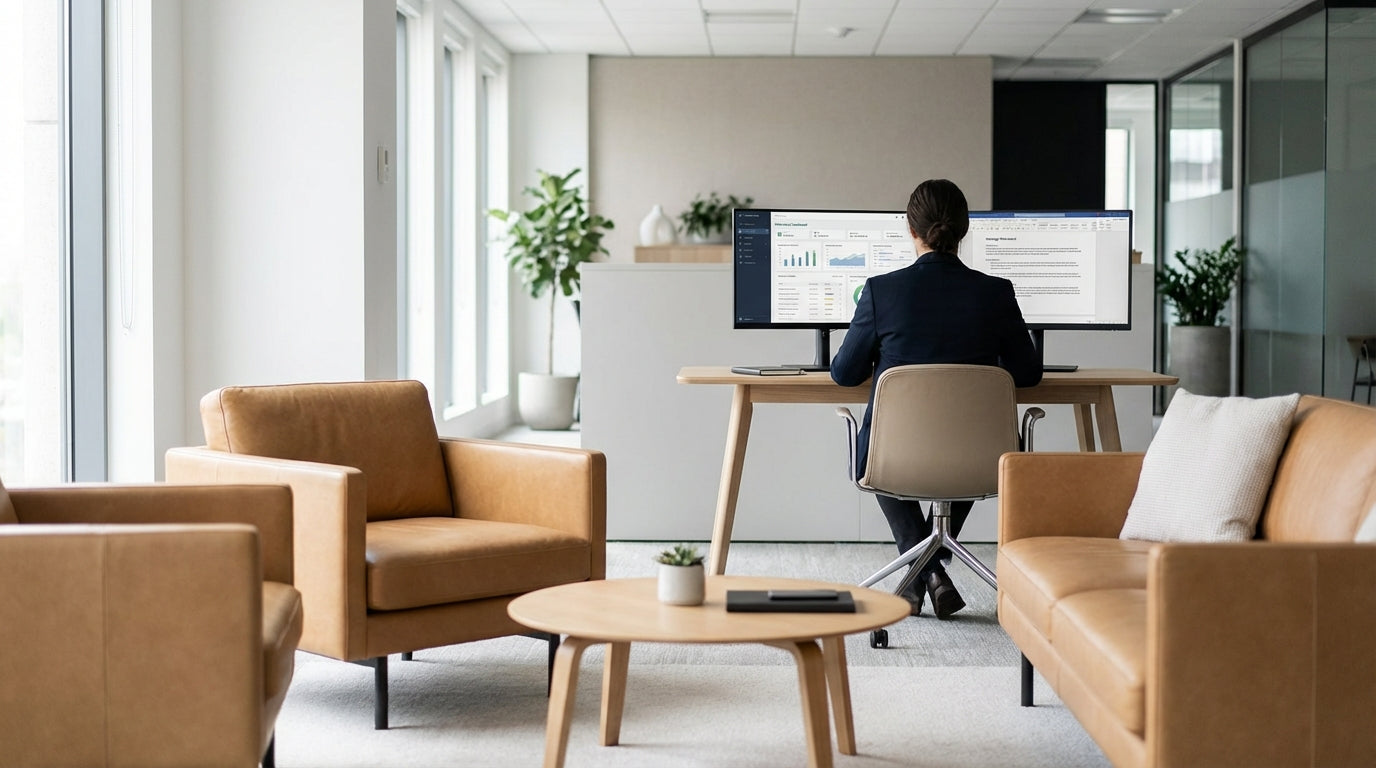
Planning Your Leather Lounge Layout
Before moving any furniture, think about how the space needs to work day to day. A clear plan will help you avoid awkward gaps, cramped walkways, and sofas that overwhelm the room.
Start by measuring the room, including doorways, windows, power points and any built-in features. Sketch a simple floor plan and mark where people naturally enter and exit, as well as the main view (TV, city skyline, garden, reception desk). This makes it easier to decide where your main leather sofa or leather lounges should sit without blocking traffic.
Consider who uses the space and when. A busy family room or office waiting area needs more seating and wider walkways than a private lounge or home office. As a guide, leave at least 80–100 cm for main walkways and 45–60 cm between seating and a coffee table so people can move comfortably.
Think about light and heat as well. Leather can fade or dry out if it lives in harsh Australian sun all day, so avoid placing your main seating directly in front of big north-facing windows without protection. Use blinds, sheers, or position pieces slightly off the window line to extend the life of your lounge.
Choosing the Right Mix of Leather Seating Pieces
The right mix of sofas, chairs and accent pieces makes a room feel balanced. Combining different seating styles also helps you get more from the space you have.
For compact rooms, consider pairing a two-seater with a couple of single lounges instead of one oversized couch. A streamlined 2 seater lounge keeps the room open, while single seats can be angled for conversation or pushed back when not in use. This approach is ideal for smaller apartments or office nooks where every centimetre counts.
Larger living rooms and reception zones can comfortably take a 3 seater lounge as the anchor piece. Add flexible seating such as armchairs or compact reception seating to accommodate extra guests without crowding the main sofa. This layered approach lets you adapt the space for casual evenings, client meetings or bigger gatherings.
If your space is awkwardly shaped or open plan, look at modular lounges. These systems are made up of separate sections you can rearrange, so you can create an L‑shape, U‑shape or separate seats as your needs change. They’re especially practical for growing families, shared offices and multi-use living areas.
Don’t forget accent seating. Low, upholstered ottomans work as extra seats, footrests or casual tables with a tray on top. Mixing in one or two ottomans with more structured leather sofas softens the look and adds everyday flexibility.
Creating Conversation Zones and Focal Points
A successful lounge layout encourages people to talk, relax and enjoy the room’s best features. Good conversation zones feel inviting without forcing everyone to sit in a straight line.
Start by deciding on a focal point. This could be a TV unit, fireplace, statement artwork, large window or even a feature coffee table. Arrange your main leather sofa or 3 seater lounges to face or frame this feature, then angle secondary pieces like single lounges or armchairs slightly towards both the focal point and each other. This creates a natural triangle that makes conversation easy.
In open-plan homes and larger offices, use furniture placement to divide the room into zones. A low-backed modular lounge can act as a soft divider between a dining area and TV space, while keeping sight-lines open. In reception areas, back-to-back 2 seater lounges or grouped reception seating can separate waiting and informal meeting zones without building walls.
For larger rooms, consider creating more than one conversation cluster. For example, you might place a main lounge setting around the TV and a secondary zone with a couple of single lounges and an ottoman near a window for reading. Multiple zones make the space more versatile and stop furniture from hugging the walls, which can leave the centre of the room feeling empty and cold.
Balancing Comfort, Traffic Flow and Proportions
The best leather lounge layouts look good and work smoothly. Getting the proportions right keeps the room feeling comfortable rather than cramped or echoey.
A simple rule is to keep seating within easy talking distance. Aim for 2–3 metres between facing sofas or chairs, so people don’t have to raise their voices. Keep side surfaces handy by placing side tables beside armchairs and the ends of sofas, and use a central coffee table that roughly matches the length of your main lounge. This gives everyone somewhere to put a drink, book or laptop.
Check traffic flow by walking through the room the way you normally would. If you have to squeeze past the corner of a 3 seater lounge or detour around an oversized ottoman, try shifting pieces a few centimetres at a time. In busy spaces like offices and waiting rooms, opt for slimmer profiles such as neat 2 seater lounges and compact reception seating to keep aisles clear.
Scale is important. A massive corner modular lounge will overwhelm a small room, while a single delicate sofa can look lost in a large open-plan area. Match the visual weight of your leather lounges to the size of the space: chunkier arms and deeper seats suit larger rooms; slimmer frames suit smaller living areas and offices. If you’re unsure, use tape on the floor to map out footprint sizes before committing.
Think vertically as well. Balance the low, horizontal lines of lounges with taller elements such as floor lamps, plants, bookshelves or gallery walls. This draws the eye up and prevents a heavy, bottom‑heavy look, especially where darker leather is involved.
Finishing Touches: Tables, Ottomans and Accents
Once the main seating is in place, smaller pieces complete the layout. These finishing touches add practicality, comfort and a polished look.
Start with a central table that suits your layout. Rectangular coffee tables work well with longer 3 seater lounges, while round or square designs soften the lines of L‑shaped modular lounges. Ensure there’s enough space to walk around the table without bumping knees, and that everyone seated can reach it comfortably.
Add side tables beside end seats and armchairs so no one has to stretch for a surface. In tighter rooms, slimline side tables or nesting designs save space while still offering function. A well-placed side table can also visually separate a pair of single lounges, giving each seat its own zone.
Multi-purpose pieces like ottomans are ideal for Australian homes and offices where spaces often need to work hard. Use an ottoman as a casual coffee table with a tray for drinks, as a footrest in front of 2 seater lounges, or as overflow seating when guests arrive. In reception and waiting areas, pairing ottomans with structured reception seating adds comfort without sacrificing a professional look.
Finally, consider how colour and texture play against your leather pieces. Rugs help define each seating zone and soften sound, especially in open-plan homes and commercial spaces. Cushions and throws in breathable fabrics balance the feel of leather in hot Australian summers, making your lounge area comfortable all year round.


