

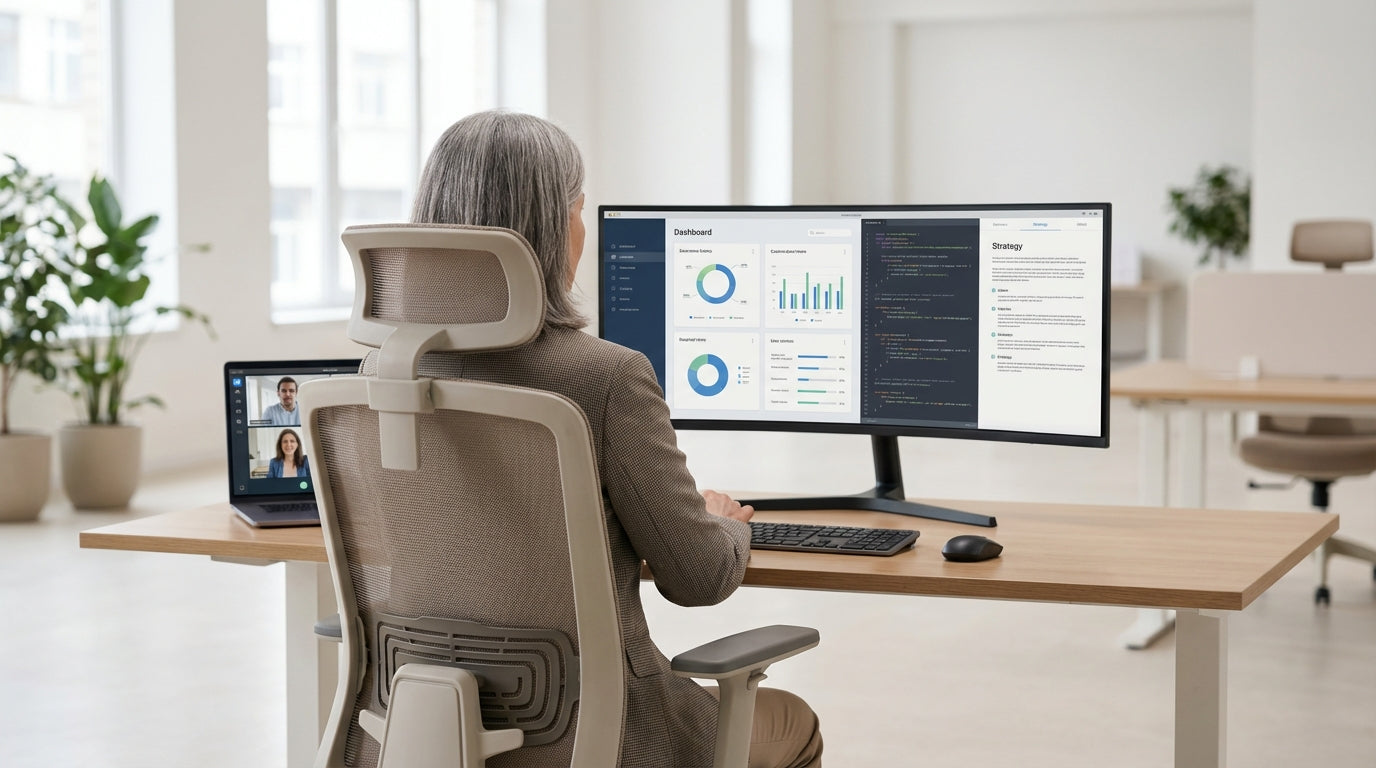
Why the Right Office Chair Matters for Older Australians
As we age, sitting comfort becomes less of a luxury and more of a health essential. The right chair can reduce pain, support mobility, and make working or managing paperwork safer and easier.
For seniors and people with mobility issues, a poor-quality chair can quickly lead to back pain, stiff joints, pressure sores, or even dangerous falls. Hip replacements, arthritis, and reduced muscle strength all change the way the body handles long periods of sitting. That’s why it’s worth looking beyond standard office furniture and choosing designs with tailored support, simple adjustability, and extra stability.
In many Australian homes, study nooks and home offices are now used daily rather than occasionally. If you’re spending more time on the computer, paying bills, or video calling family, an ergonomic setup becomes critical. Thoughtful features such as a stable base, supportive armrests, and easy-to-use controls can turn a routine task from exhausting to achievable.
Chairs also need to suit how the space is used. Some older adults prefer a classic desk chair that can roll under the workstation, while others benefit from a supportive armchair that still offers upright posture. Matching the chair to everyday activities, mobility level, and room layout is the foundation of a comfortable, age-friendly workspace.
Essential Features to Look For in Senior-Friendly Seating
When comparing chairs, focus on support, stability, and ease of use. Small details in design make a big difference over months and years of daily sitting.
Adjustable lumbar support is particularly helpful for older spines. A gentle curve in the lower back region encourages a neutral posture and eases pressure on discs and muscles. Many task chairs provide this kind of support while remaining compact enough for smaller home offices. Seat height adjustment is just as important; feet should rest flat on the floor with knees roughly at hip level to avoid strain.
Armrests offer crucial assistance during sit-to-stand transfers. Look for chairs with sturdy, well-padded arms that are positioned so the user can push off safely without twisting. Stable bases with quality castors or glides help prevent tipping. Heavier users or those who prefer an extra-solid feel may benefit from specialised heavy duty chairs designed to support higher weight limits and frequent use.
Breathable materials such as mesh can improve comfort, particularly in warmer Australian climates or for those who overheat easily. A well-designed mesh office chair promotes airflow while still offering firm support. For others, softer finishes like leather or fabric may feel more familiar and homely; in that case, consider high-quality leather chairs or upholstered armchairs that still keep the body upright and supported.
Best Chair Types for Seniors Working at a Desk
Comfortable desk work is possible at any age with the right chair style. The key is balancing ergonomic support with simple, fuss-free adjustments.
Traditional task chairs are a practical option for many older Australians who still enjoy computer work, hobbies, or managing finances at a desk. They usually feature height adjustment, swivelling bases for easy reaching, and backrests shaped to support the spine. Look for models with clearly labelled levers and smooth movement so adjustments don’t require strength or awkward twisting.
For those who find standard office chairs too hot or confining, breathable mesh office chairs can relieve pressure and keep the back cool. Many mesh designs now include padded seats and integrated lumbar support, offering an excellent blend of comfort and airflow. Ensure the seat is deep enough to support the thighs without cutting into the back of the knees.
If you spend part of the day away from the main desk area, having supportive seating elsewhere can be just as important. In multi-use spaces or home clinics, comfortable visitor chairs and compact tub chairs can provide proper back support while still looking stylish. These are ideal for reading corners, consultation rooms, or areas where family and carers also need a place to sit.
Supportive Seating Beyond the Standard Office Chair
Not everyone sits at a desk all day. Some seniors need help standing up, while others require comfortable seating for short visits and waiting areas.
For people with limited leg strength or balance issues, power lift chairs can be life-changing. These motorised recliners gently raise the user to a near-standing position, reducing strain on knees and hips. They are particularly useful in home offices that double as living spaces, allowing older adults to rest comfortably between tasks and then return to an upright posture with the press of a button.
In shared spaces such as clinics, allied health rooms, or home-based businesses, seating needs to accommodate a range of ages and mobility levels. Flexible reception seating can provide stable, supportive options for visitors and clients, while still maintaining a professional look. Consider adding a few higher-seat armchairs that make it easier for older guests to stand up without assistance.
Some Australians prefer to support local manufacturing when choosing specialised furniture. In that case, exploring Australian made chairs can be a smart move. Locally made seating often offers better access to spare parts and after-sales support, which is valuable if the chair needs adjustments or repairs over time.
How to Match a Chair to Individual Needs
The ideal chair depends on body shape, health conditions, and how the space is used day to day. A quick checklist can help narrow down the options.
Start by considering mobility: does the user stand independently, or do they rely on support from furniture when moving? Those who struggle to get up may benefit from higher seats, firm cushions, and strong armrests, whether in desk chairs or more lounge-style tub chairs. For heavier users, selecting purpose-built heavy duty chairs helps ensure long-term durability and safety.
Next, think about posture and comfort preferences. Some people like a firm, upright feel; others prefer softer padding with a little recline. Mixing seating types within a home or office can cover different tasks: a supportive task chair for computer work, a cushioned leather chair for reading, and practical visitor chairs for short-term seating. In professional settings, coordinated reception seating can make waiting areas more comfortable for older clients.
Finally, don’t overlook personal style and room aesthetics. Many ergonomic designs now come in contemporary finishes and fabrics that blend into the home. By combining functional pieces like mesh office chairs with matching armchairs or Australian made chairs, you can create a cohesive, age-friendly workspace that feels welcoming, safe, and truly suited to later-life living.


