

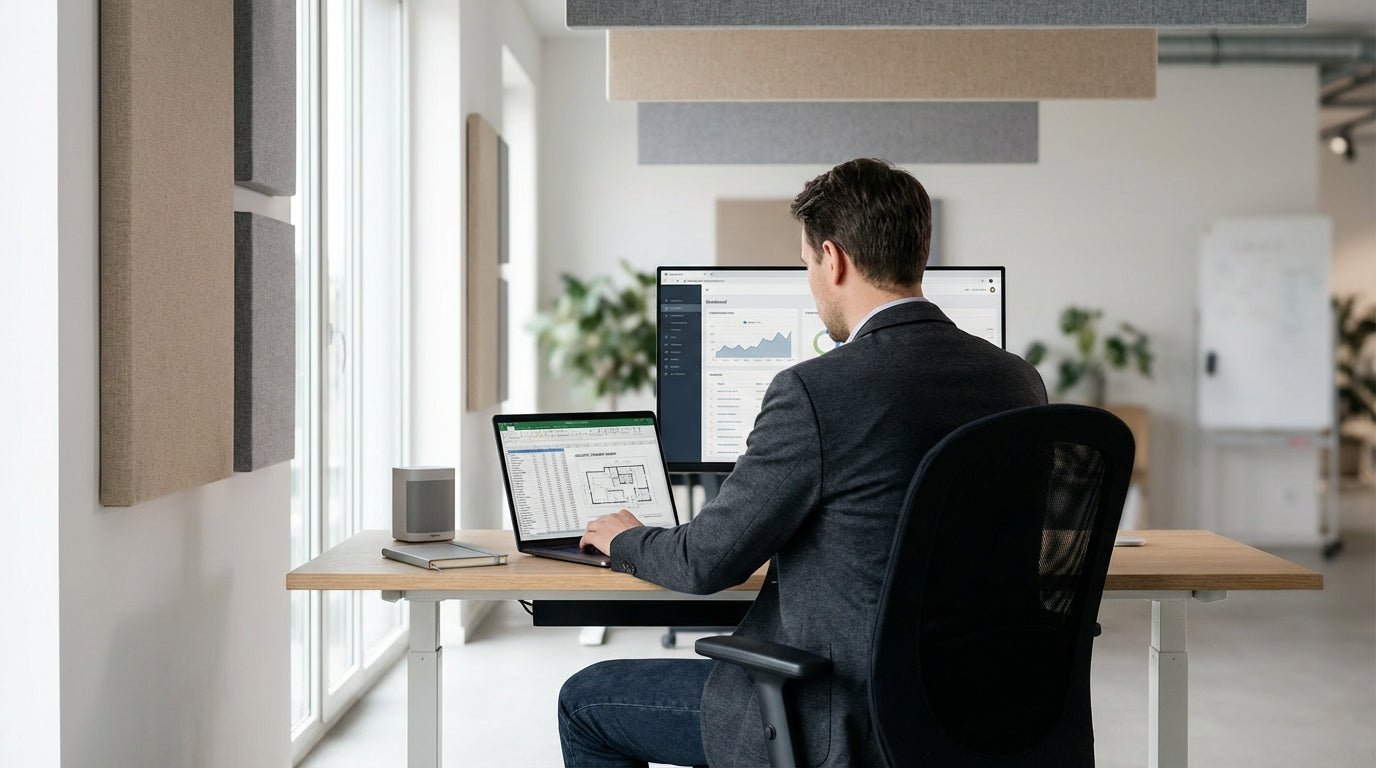
Understanding Ceiling Acoustic Traps and Why They Matter
Ceiling sound traps are one of the most effective ways to tame echo and noise in modern Aussie offices, studios, classrooms, and home theatres. They work quietly in the background, improving clarity and comfort without taking up floor space.
Put simply, these panels absorb sound that would otherwise bounce off hard ceilings and create a “boomy” or “tinny” room. They’re especially useful in spaces with concrete, glass and plasterboard, where noise can quickly spiral out of control. When used alongside wall solutions like acoustic wall art and acoustic wall tiles, they help create a more balanced acoustic environment that supports meetings, focus work and presentations.
In workplaces, ceiling absorption can reduce fatigue and stress, helping staff concentrate and communicate clearly. In hospitality and education, it can stop conversations from turning into a roar, making it easier for people to hear each other without shouting. Getting the right mix of ceiling panels, wall panels and space dividers like floor partitions and mobile partitions can transform an echoey box into a calm, productive space.
Assessing Your Room’s Acoustic Problems
Before buying anything, it pays to understand what’s actually going wrong with the sound in your room. A quick acoustic check can save you money and ensure the right solution.
Start with a simple clap test: stand in the middle of the room and clap once, listening for a long “ring” or flutter echo. If the sound lingers, you likely have excessive reverberation, which ceiling absorbers can reduce. If you can clearly hear conversations from across the office or through lightweight partitions, you may also have sound transmission issues that require a broader approach, including desk mounted partitions or acoustic pods.
Think about how the room is used. A boardroom needs speech clarity for video calls and presentations, while an open-plan office needs general noise reduction so people can focus. Collaborative zones and breakout areas might benefit from a mix of ceiling panels and freestanding solutions such as office pods to create semi-enclosed spaces. In each case, ceiling treatments should complement, not replace, other acoustic measures around the room.
Also consider existing surfaces and furnishings. A room already filled with soft seating and carpets might only need a modest amount of ceiling absorption. A minimalist space with polished concrete, glass walls and hard furniture will typically require more panels and may benefit from decorative options like acoustic wall art to boost performance and style at the same time.
Key Features to Look For in Overhead Acoustic Panels
Not all ceiling acoustic products are created equal. Focusing on a few technical features will help you choose panels that actually work, not just look the part.
First, check the Noise Reduction Coefficient (NRC) or similar rating, which tells you how much sound a product absorbs. Higher numbers (e.g. 0.7–1.0) indicate strong absorption across a range of frequencies, ideal for offices and classrooms. Look for options in dedicated collections such as Acoustic Ceiling Traps, where materials and performance have been designed specifically for overhead use.
Next, pay attention to thickness and density. Thicker, high-density panels generally absorb lower frequencies better, reducing that “boomy” feel common in large rooms. Thinner, lighter panels can still be effective for mid and high frequencies and may be easier to install in suspended grid ceilings. Matching ceiling absorbers with vertical elements like floor partitions or mobile partitions can help capture sound energy from multiple directions.
Fire ratings and durability are essential in commercial settings across Australia, where compliance and safety standards are strict. Look for products with suitable fire performance and robust finishes that won’t sag or discolour over time. If your space doubles as a presentation or training room, consider pairing ceiling treatment with projection boards & presentation accessories so you’re improving both the visuals and the sound in one go.
Design, Layout and Installation Tips
Once you know what you need, placement and layout become the next big decisions. Strategic positioning can significantly improve results without covering every inch of ceiling.
In open-plan offices, focus on zones where people talk the most: meeting tables, collaboration benches and reception areas. Installing panels directly above these locations captures sound close to the source, stopping it from spilling across the floor. You can then use desk mounted partitions and nearby acoustic wall tiles to further dampen reflections and create quieter pockets of space.
For boardrooms and training rooms, position ceiling absorbers above the main seating area and in first-reflection points. These are spots where sound from a presenter, TV or video-conferencing system bounces straight off the ceiling back to listeners. Combining overhead panels with wall-based treatments like acoustic wall art can sharpen speech and reduce the “hollow” room effect often heard on calls.
Visually, you can use ceiling panels to add texture and colour, echoing tones from partitions and furniture. Freestanding options such as acoustic pods and office pods can be grouped under clusters of ceiling baffles to create distinct quiet zones. When planning installation, always check ceiling structure, services and lighting layouts; working with a professional installer familiar with Acoustic Ceiling Traps will help you avoid clashes with sprinklers, HVAC and cable trays.
Combining Ceiling Panels with Other Acoustic Solutions
The best sound control plans use a mix of horizontal and vertical treatments. Integrating ceiling panels with other acoustic tools gives you more comprehensive control over noise.
Start by pairing overhead absorption with wall treatments to tackle reflections from multiple angles. Decorative options like acoustic wall art and practical acoustic wall tiles can be placed at ear height around meeting tables, phone booths and focus rooms. This combination helps absorb both direct speech and secondary reflections that bounce between opposite surfaces.
In busy open-plan environments, vertical barriers are just as important. Use desk mounted partitions to reduce noise travelling between workstations, and supplement them with floor partitions or mobile partitions to break up larger spaces. For the highest level of privacy for calls and deep-focus work, consider enclosed acoustic pods or office pods, then refine their internal sound with well-placed ceiling and wall treatments.
For training rooms, classrooms and collaboration spaces, remember that good audio and good visuals go hand-in-hand. Combine ceiling panels with appropriate projection boards & presentation accessories so that everyone can see and hear clearly, even at the back of the room. Systematically layering these solutions around your workspace will deliver a calmer, more productive environment that feels comfortable all day long, without needing to over-treat any single surface.


