

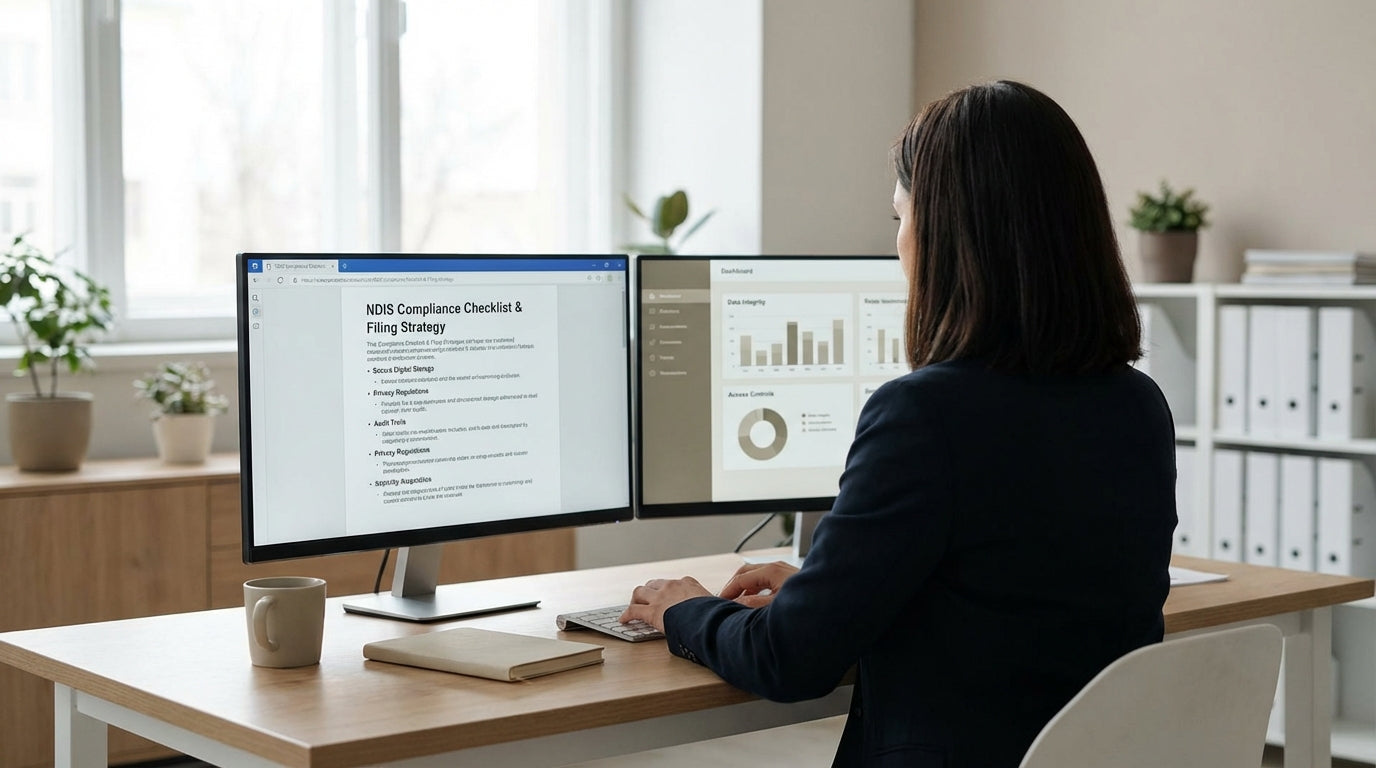
Understanding NDIS record-keeping obligations
NDIS providers are required to keep accurate, accessible records to show services were delivered safely, ethically, and as agreed with participants. Your storage setup should make it easy to find documents quickly while protecting sensitive information.
The NDIS Practice Standards expect providers to maintain clear audit trails for participant files, incident reports, risk assessments, staff qualifications, policies, and financial records. That means your filing system must support both day-to-day operations and formal audits. A mix of secure physical storage, such as lockable office cupboards, and well-structured digital folders usually works best. Think about who needs access to what, how often, and under what conditions, then design your storage categories around those workflows.
In practice, this often means separating participant records, human resources, finance, and clinical documentation into distinct zones or units. Clearly labelled filing cabinets or stationery cupboards can mirror your digital naming conventions, so staff always know where to look. By aligning your physical filing with NDIS documentation categories, you reduce the risk of missing paperwork and make compliance checks far less stressful.
Confidentiality is also central to NDIS compliance. Sensitive participant information must be stored securely, with access limited to authorised staff. Lockable pedestal drawer units beside workstations can keep active files close at hand without leaving them exposed on desks, supporting privacy requirements while maintaining productivity.
Choosing storage types to match your documents
Different NDIS documents have different risk levels, retention periods, and usage patterns. Matching these to the right type of storage is key to staying organised and compliant.
High-use, high-sensitivity documents—such as current participant plans, behaviour support plans, and incident records—usually need secure but convenient access. Lockable drawer-based filing cabinets are ideal for alphabetised or participant-based files that staff reference frequently. For shared resources like policies, forms, and assessment tools, tall office cupboards or stationery cupboards offer flexible shelving and space for lever-arch folders, clipboards, and training materials.
Archived or rarely accessed records still need to be retained for NDIS audit and legal purposes but don’t have to occupy prime office space. High-density systems such as Compactus units allow you to store large volumes of files in a compact footprint, which is especially useful for multi-site providers or organisations with a long history of paper records. Open office shelving can work for non-confidential items such as resource libraries, manuals, and bulk stationery, keeping enclosed storage free for sensitive files.
It also helps to consider how small items and loose paperwork are handled. Unlabeled boxes and piles of forms quickly undermine compliance because documents become hard to track. Using dedicated small storage & organisers for labels, dividers, forms, and participant-specific tabs supports consistent file setup across your entire service. Combining these with mobile pedestal drawer units gives coordinators and therapists structured personal storage that still fits within an overall filing strategy.
Balancing security, access, and privacy
NDIS records must be easy for authorised staff to access, but hard for anyone else to see. Getting this balance right depends heavily on your storage choices and layout.
Start by categorising documents according to sensitivity. Highly confidential files—such as behaviour support plans, restrictive practice documentation, and internal investigations—should be stored in lockable tambour cupboards or metal sliding door cabinets that can be fully closed and locked after hours. Because these units have doors that don’t swing out, they’re also safer and more space-efficient in busy corridors and shared offices. Less sensitive materials, like blank forms or general information sheets, can sit on open office shelving without risking privacy breaches.
Access control isn’t only about locks; it’s also about physical placement. Position secure office cupboards away from public reception areas so visitors can’t see or reach participant records. Staff who regularly handle confidential documents should have lockable pedestal drawer units under their desks, reducing the temptation to leave files on surfaces. Simple rules, such as “no files on unattended desks” and “lock cupboards before leaving the room”, support your hardware choices and make compliance routine.
For shared offices where multiple teams need to access the same physical files, consider zoned storage. Group records by team or program in separate tambour cupboards or sliding door cabinets, and keep an access register or sign-out system for higher-risk folders. Small items like USB drives, keys, and consent forms can be controlled via lockable inserts within larger small storage & organisers, reducing the risk of lost or misplaced sensitive information.
Designing a practical, audit-ready layout
A well-planned layout makes NDIS documentation faster to manage and easier to demonstrate during audits. Think in terms of workflow, not just where furniture will fit.
Map out the journey of a typical file—from creation to archiving. Participant intake paperwork, for example, may start at reception, move to a service coordinator, and then be referenced by frontline staff. Placing core filing cabinets or office cupboards in central team areas supports this movement and reduces the time staff spend searching for information. Use small storage & organisers inside drawers to separate active, pending, and completed documents, mirroring your case management stages.
Vertical space is often underused in disability support offices. Tall stationery cupboards, secure tambour cupboards, and high-density Compactus units allow you to store more without cluttering work areas. Place high-frequency files at standing or seated reach height, with long-term archives higher or lower on the shelves. Open office shelving near printers and shared desks can hold forms, labels, and stationery so compliance-critical cupboards are reserved for records only.
Clear labelling and consistency are crucial for being “audit ready” at any time. Use the same naming conventions on physical filing cabinets and digital folders—by participant name or number, program, and year. Allocate each team a defined area within shared sliding door cabinets or office cupboards, and document your filing system in an internal procedure. When auditors visit, you can show not only tidy storage but also a clear, repeatable system behind it.
Planning for growth, digitisation, and hybrid filing
NDIS providers rarely stay the same size or shape for long. Your filing solutions should be flexible enough to handle growth, service changes, and increased digital record-keeping.
As you transition more documentation into electronic systems, physical storage still plays an important role. You’ll need somewhere safe for historic files, signed originals, and backup media that must legally be retained. Modular office shelving, reconfigurable Compactus units, and versatile tambour cupboards make it easier to adjust your setup without replacing everything. As certain file types become fully digital, you can repurpose shelves for training materials, quality improvement projects, or additional participant resources.
Hybrid filing—where some documents are digital and others remain on paper—requires clear rules about what is stored where. For active caseloads, keep only essential paper items in desk-side pedestal drawer units and central filing cabinets, with everything else scanned and uploaded promptly. Use small storage & organisers for barcodes, scanning checklists, and “to be scanned” trays, so nothing falls through the cracks. Lockable sliding door cabinets or office cupboards near scanning stations can temporarily hold documents during bulk digitisation projects.
Finally, plan capacity for at least three to five years of growth. Estimate how many participants, programs, and sites you expect to add, then scale your office cupboards, filing cabinets, and Compactus storage accordingly. Choosing robust, commercial-grade storage solutions upfront reduces long-term costs and disruptions, helping you maintain NDIS compliance as your organisation evolves.


