

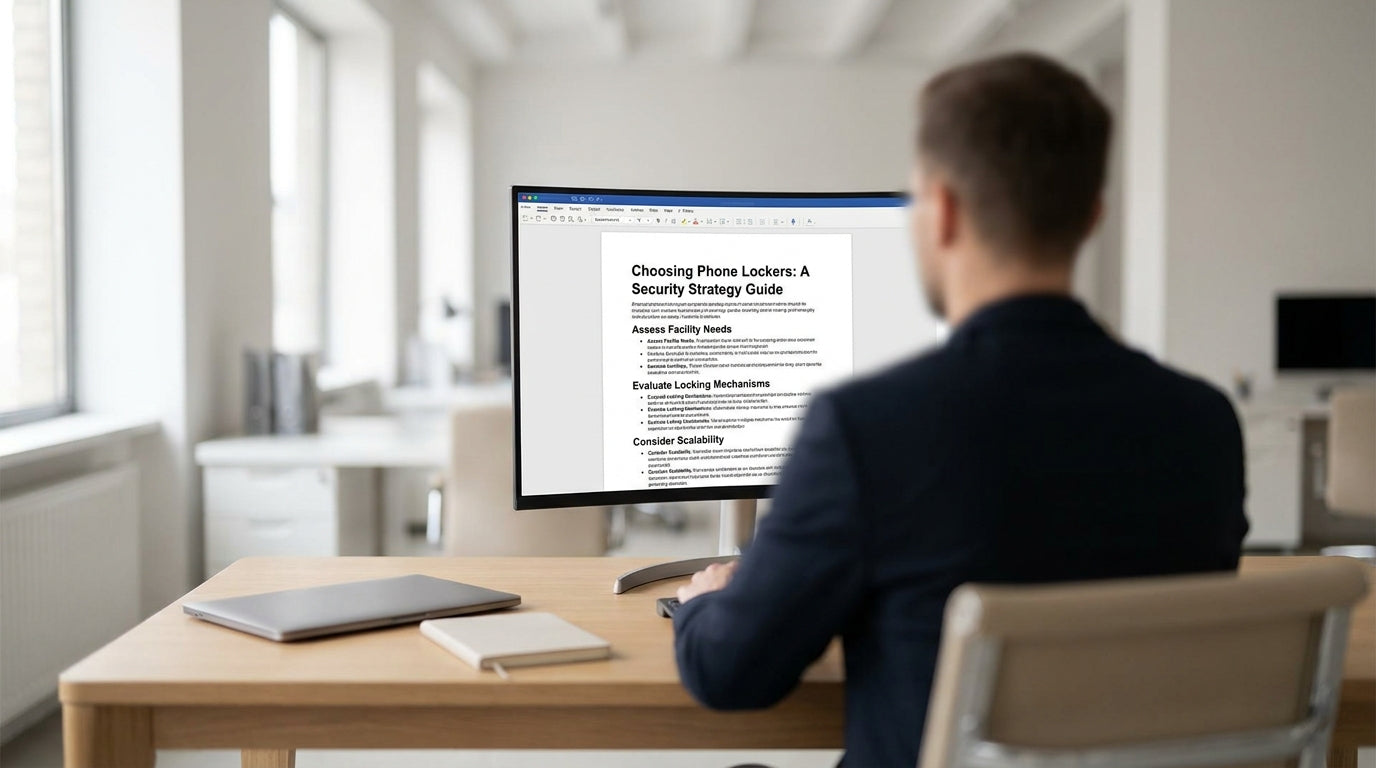
Understanding Security Requirements in Restricted Environments
Before choosing phone storage, you need a clear picture of your security risks and compliance obligations. Different facilities have very different standards, from basic visitor control to strict defence-level protocols.
Start by mapping where mobile devices currently move through your site and where they must be strictly excluded. Consider zones like control rooms, data centres, exam halls and confidential meeting spaces. In many facilities, phone lockers work alongside existing secure storage such as steel lockers and heavy duty lockers for uniforms, tools and personal effects, forming part of a layered security strategy.
Risk assessments should look beyond theft to include camera misuse, audio recording, data leakage and distractions in safety‑critical work. Facilities dealing with intellectual property, patient records or student examinations may require more controlled access than standard workplaces. In schools, for instance, using dedicated phone lockers alongside existing school lockers helps enforce phone-free classrooms while still allowing supervised access during breaks.
It’s also important to match locker security with your organisation’s policies and audit needs. Some sites need simple visual checks that devices are stored; others require traceable access history and the ability to lock down specific bays. Where phone storage sits in high‑traffic corridors, you may also want to coordinate with other storage such as office cupboards and stationery cupboards so that security flow and supervision are straightforward for staff.
Key Features to Look For in Phone Storage Systems
Not all phone lockers are built to the same standard, and small design details make a big difference to daily use. Focus on construction, locking options and layout before anything else.
For high‑security or industrial sites, strong welded steel bodies with reinforced doors are essential. These units typically align well with existing steel lockers and heavy duty lockers, creating a consistent, tamper‑resistant storage solution. In office or educational environments, lighter options such as melamine & laminate lockers can work where impact resistance is less critical but you still want a tidy, professional look.
Locking mechanisms are another core decision. Mechanical key locks are simple and cost‑effective, but you’ll need a process for key control and replacements. Combination locks remove key management but require clear user instructions. Electronic locks with PINs or cards offer fast access and can be integrated with staff ID systems, but they rely on power and may need more maintenance. When you specify locks, consider future‑proofing with compatible locker accessories such as number plates, card holders and master key systems.
Internal dimensions must accommodate modern smartphones, often with cases, without forcing users to squeeze devices into tight spaces. If staff or students also store wallets, access cards or earbuds, slightly larger compartments help avoid damage and reduce complaints. In shared areas, you may want a configuration that stacks phone bays above bag or document storage, using products like Steelco modular cabinets and general office cupboards to create a consolidated, space‑efficient storage wall.
Choosing Materials and Finishes for Australian Conditions
Materials affect durability, hygiene, and how well your phone lockers cope with Australian workplaces. Think about humidity, cleaning routines and visual appearance.
Powder‑coated metal is a proven option for high‑traffic and high‑security environments. Quality steel lockers and phone lockers with welded bodies resist dents, are easy to wipe down and handle daily use in warehouses, hospitals and workshops. For particularly tough environments like mining or heavy manufacturing, pairing phone units with heavy duty lockers ensures consistent strength across all storage.
In offices, libraries and modern school settings, appearance can be just as important as robustness. Here, melamine & laminate lockers offer a softer, furniture‑style finish that blends with desks and office cupboards. Laminate is also straightforward to clean and available in colours that match your branding or zoning scheme, helping students and staff quickly identify where devices must be stored.
Moisture and cleaning chemicals are often overlooked. In change rooms or near amenities, metal units paired with corrosion‑resistant components and compatible locker accessories will usually outlast cheaper alternatives. In schools, where phone storage often sits near existing school lockers and stationery cupboards, choosing matching finishes creates a unified look and makes maintenance simpler for facilities teams.
Integrating Phone Storage with Workflow and Policy
Secure storage only works if it fits smoothly into daily routines. Your locker selection should support, not fight, your policies on mobile use.
Begin by clarifying when and where devices must be surrendered, then position phone lockers to match that flow. For example, staff may need to store phones as they badge into a restricted area, or students may deposit devices at home room before moving between classes. Combining phone compartments with existing school lockers or nearby steel lockers reduces congestion and makes supervision easier for teachers and managers.
Signage and numbering systems matter more than most people expect. Clear labels, door numbers and name holders – all standard locker accessories – reduce confusion and speed up issue resolution. Where you already use Steelco modular cabinets, office cupboards or stationery cupboards, try to maintain a consistent numbering and labelling scheme so staff can instantly understand storage layouts.
Think through handover processes and exceptions. How will visitors or contractors use phone lockers, and who has authority to access a compartment if someone forgets their code? Using compatible locks across phone lockers, heavy duty lockers and other storage lets supervisors hold a single master key or control system, reducing admin overhead and ensuring you can respond quickly to security incidents.
Implementation, Maintenance and Future Expansion
Once you’ve chosen a model, careful rollout will determine how effective your phone control measures are. Planning for maintenance and growth from day one avoids costly changes later.
Installation should take into account wall strength, fixing methods and access for cleaning. High‑density banks of phone lockers often sit above bag storage, document cupboards or Steelco modular cabinets, so ensure everything is anchored safely and maintains safe egress routes. Coordinating placement with existing office cupboards, stationery cupboards and steel lockers can also streamline cleaning and inspection routines.
Set a simple maintenance schedule for checking locks, hinges and numbering. Keeping a small stock of spare locks, keys and other locker accessories helps you address issues immediately rather than taking compartments out of service. In tougher environments, align inspection of phone storage with that of heavy duty lockers so you can spot patterns of wear and misuse early.
Finally, think about how your organisation might change. Growing student numbers, new secure work zones or more flexible work patterns can all increase demand for controlled device storage. A modular approach that combines phone lockers, school lockers and melamine & laminate lockers gives you options to add capacity without redesigning entire corridors. By planning for expansion, you protect both your security posture and your investment in quality storage solutions.


