

Planning Your Sewing Studio Layout with Office Furniture
Designing a sewing room is much easier when you borrow ideas from modern office setups. Office furniture is built for productivity, ergonomics and storage – exactly what a busy sewing space needs.
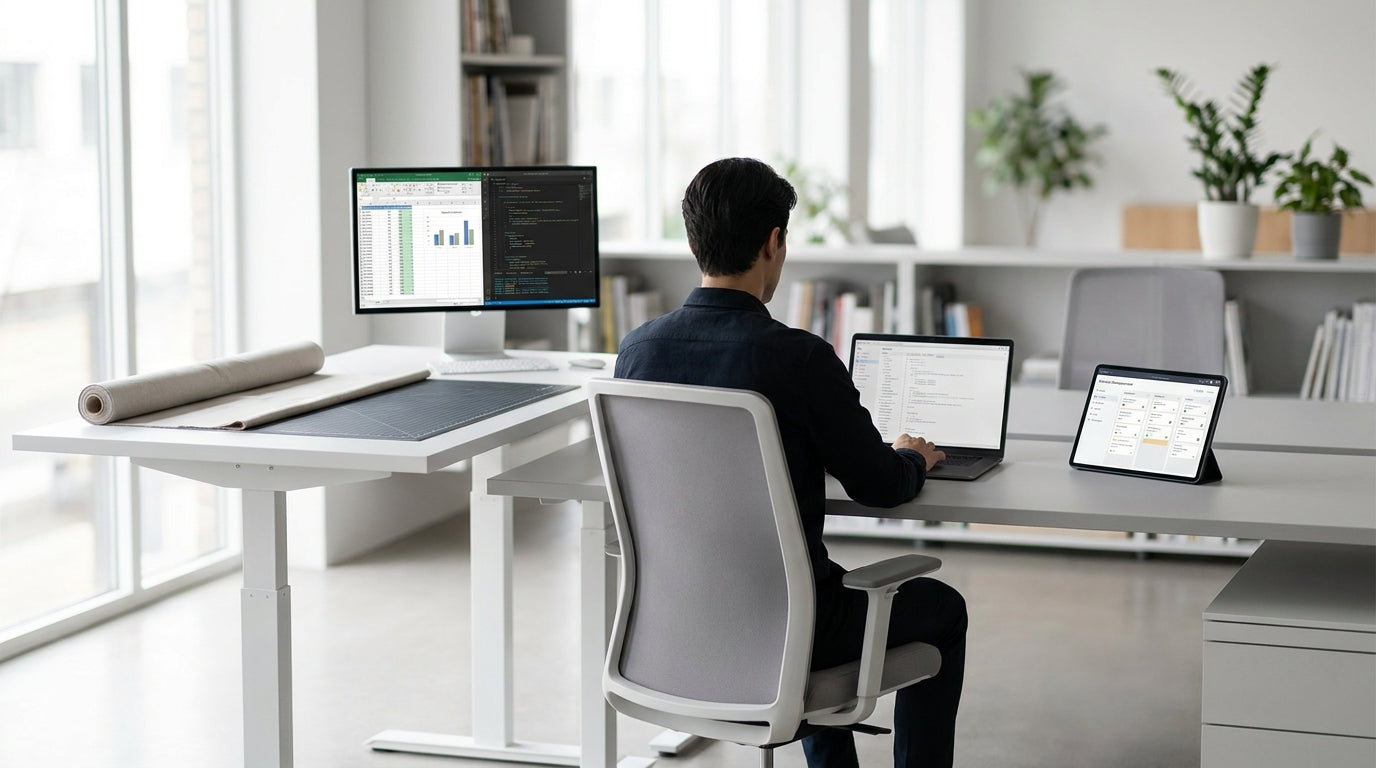
Start by mapping out your main “zones”: cutting, sewing, pressing and storage. Borrowing from office space planning, think about how you move between these zones and keep walkways clear so fabric, trolleys and chairs don’t clash. A sturdy straight desk or modular workstation can double as a cutting area, computer station for patterns and admin hub for your small sewing business.
Traditional office layouts focus on workflow, which translates perfectly to sewing. Place your cutting surface near fabric storage, your sewing machines near power points and your pressing station within easy reach. Products like Straight Desks and configurable Workstation Components let you build a custom sewing setup that fits tight corners, long walls or shared craft rooms.
If you teach classes or run workshops, flexible furniture becomes even more important. Tables designed for offices and training rooms are built to be reconfigured quickly, making it simple to switch between individual sewing bays, group demonstrations and layout areas for pattern work.
Choosing the Best Table Height for Cutting and Layout
Cutting fabric on a too-low surface is a fast track to a sore back and shoulders. Getting the right table height makes long cutting sessions more comfortable and accurate.
For most adults, cutting benches work best at or slightly above kitchen bench height, so you’re not hunched over your project. Adjustable office furniture solves this neatly. With Height Adjustable Workstations, you can raise the surface for cutting and lower it for pinning, tracing or computer work, all with one piece of furniture.
If you prefer a fixed-height solution, look for drafting-style options. Many sewing enthusiasts repurpose Drafting Tables, which are designed for designers and architects who stand while working. Their extra height and generous depth suit wide quilting rulers, long dress patterns and large cutting mats.
When space is limited, consider combining a sit-down sewing area with a standing cutting station. A compact sewing corner on a standard desk and a separate tall table or adjustable workstation gives you two dedicated surfaces, reducing the need to pack away machines every time you need to cut out a new project.
Flexible Table Options for Shared and Small Sewing Spaces
Many Australian sewists work from spare rooms, living areas or multi-use studios. In these spaces, furniture has to pack up, roll away or change function quickly.
Office-style mobile and folding products are ideal when your sewing room is also a guest room or home office. Mobile Tables let you roll your cutting station out of the way when not in use, while Folding Tables and Flip Top Tables can be packed flat and stored against a wall or in a cupboard between projects. This flexibility keeps your home feeling tidy without sacrificing a generous work surface.
If you’re teaching classes at community centres or pop-up venues, portability is even more critical. Lightweight Trestle Tables and robust Training Tables offer enough strength for machines and overlockers, yet can be set up and packed down in minutes. You can line them up for group cutting sessions, then rearrange them for machine work or fitting consultations.
For sewists running a small business from home, multipurpose designs used in offices bring extra value. Large Office & Meeting Tables can host pattern drafting one day and client meetings the next. By investing in furniture that shifts between sewing, admin and teaching roles, you get a professional look without needing separate rooms for each task.
Ergonomics and Comfort for Long Sewing Sessions
Sewing often means hours at the machine, cutting board and ironing station. Office-grade furniture and layouts help protect your posture and reduce fatigue.
Ergonomics simply means designing your space so your body is in a healthy, neutral position. For sewing, this means your wrists are straight at the machine, your shoulders are relaxed and you’re not constantly bending or twisting to reach tools. Using Straight Desks with adjustable chairs gives you better control over seat height and legroom than most hobby tables, especially when you’re using heavier domestic or semi-industrial machines.
Standing options have grown common in offices and they suit sewing too. Alternating between sitting at your machine and standing at a Height Adjustable Workstation for cutting reduces strain on your lower back and hips. If you prefer a perch, pairing your cutting surface with a drafting chair originally designed for Drafting Tables can give you a semi-standing position that still takes some weight off your feet.
Don’t overlook leg clearance, power access and lighting. Office-style workstations and Workstation Components are designed with cable management and under-desk space in mind, so it’s easier to route cords safely and avoid tripping over leads while moving fabric around the room.
Storage, Organisation and Multi-Purpose Work Surfaces
Keeping fabric, patterns and notions under control is one of the hardest parts of running a sewing room. Office furniture ranges provide clever storage that keeps everything within reach but out of the way.
Consider pairing your main table with under-desk drawer units or mobile pedestals to hold scissors, rotary cutters and small tools. Many Office & Meeting Tables have enough space underneath for tubs of fabric or pattern boxes, letting you store bulk items without crowding the worktop. Modular Workstation Components like shelves and modesty panels can help define different zones and hide visual clutter from view.
If your sewing space also hosts family activities or business meetings, multi-purpose surfaces are invaluable. A large Flip Top Table or Folding Table can function as a cutting bench during the day, then pack away so the room can be used for study or visitors at night. Similarly, sturdy Trestle Tables can be brought out only when you’re quilting or working on formal wear that needs extra space.
For studios that host classes, combining fixed stations with movable options works well. Permanent sewing desks backed up by a fleet of Training Tables or Mobile Tables makes it simple to scale up for workshops. When you’re not teaching, these extra tables can serve as overflow cutting surfaces, packaging benches or photography areas for finished garments and handmade products.


