

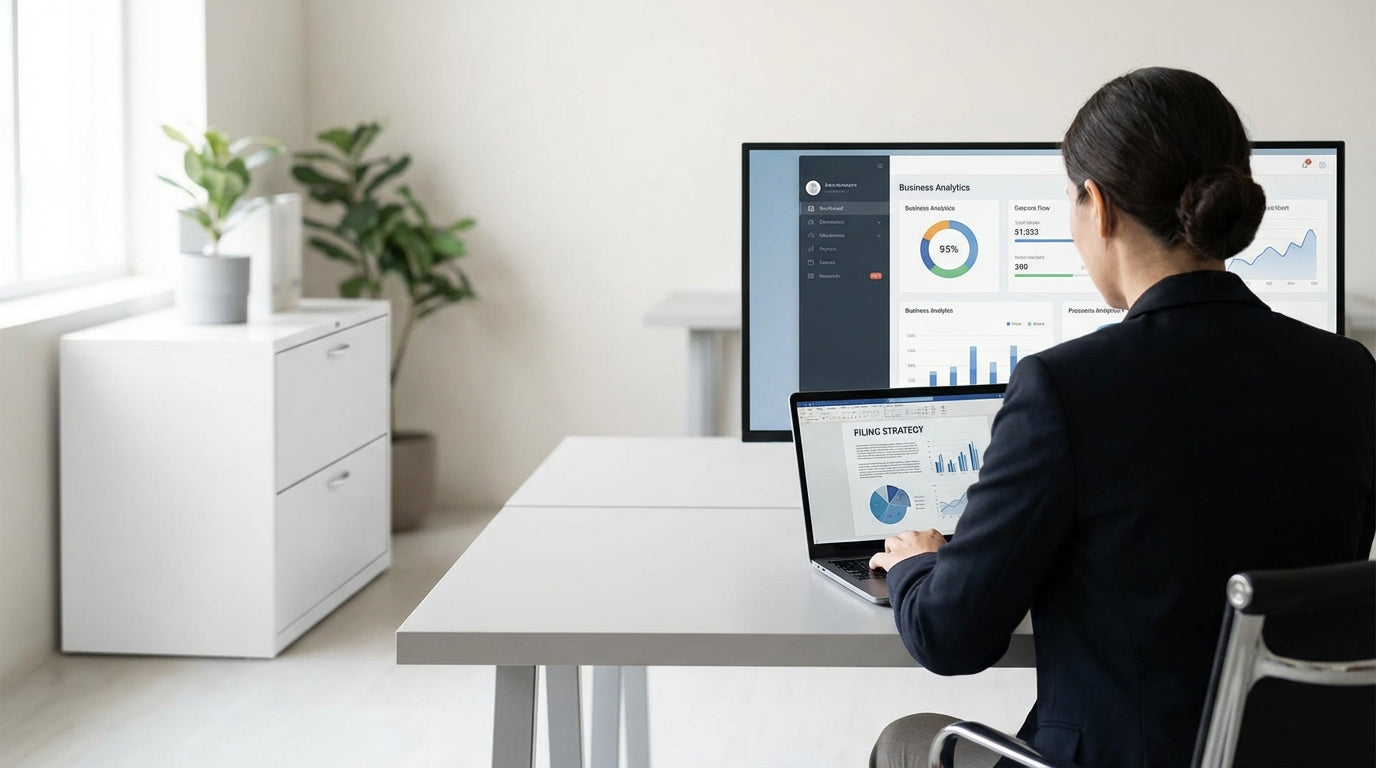
Understanding your storage needs and office layout
Before you start comparing cabinets, get clear on what you actually need to store and how your team works. This will guide the size, style, and configuration that makes sense for your space.
Begin by listing the types of documents and items you need to file: active client files, archived records, HR paperwork, or bulky folders and lever-arch binders. High-volume paper environments often benefit from a mix of traditional Filing Cabinets for daily use and larger Office Cupboards for bulk storage. If you’re storing stationery, tech accessories, or cleaning supplies as well as files, dedicated Stationery Cupboards can separate consumables from confidential documents and keep clutter off desks.
Your floor plan also matters. In tight corridors or shared spaces, swinging doors can be a hazard and take up valuable room, so consider Sliding Door Cabinets or space-efficient Tambour Cupboards that roll open without blocking walkways. Open-plan offices might pair wall-hugging Office Shelving with more secure closed cabinets where privacy and security are required.
Also think vertically as well as horizontally. Tall storage options such as Premier Storage units can free up floor space while maximising capacity, particularly in smaller offices. In busier areas, low-height cabinets and Pedestal Drawer Units can double as informal meeting surfaces or printer stands, supporting both storage and day-to-day workflows.
Choosing between cabinet types and configurations
Different storage systems suit different documents, industries, and work styles. Matching the right configuration to your filing habits is key to staying organised.
Vertical filing cabinets with deep drawers suit standard A4 suspension files and are ideal for businesses that access client and project records daily. Lateral cabinets, which are wider and shallower, make it easier to see a full run of files at a glance and can be more ergonomic in busy admin areas. Many ranges, such as GO Steel Storage and Premier Storage, offer multiple drawer heights, allowing you to mix shallow drawers for stationery with deeper ones for ring binders.
For personal storage at each workstation, mobile Pedestal Drawer Units slide under desks and keep sensitive paperwork close at hand. These are especially useful in hot-desking or hybrid offices, where staff need a secure, movable base for everyday files and personal belongings. Combining individual pedestals with shared Filing Cabinets ensures the right documents are accessible but not piled up on desks.
If your business handles large volumes of archived material, high-density systems such as Compactus units can dramatically increase capacity within the same footprint. These mobile shelving systems slide together to eliminate wasted aisle space, making them ideal for legal, medical, and accounting practices that must retain records for many years. You can combine Office Shelving inside these units with lockable fronts to achieve both bulk storage and controlled access.
Security, compliance, and access control
Not every document should be available to everyone in the office. Security and compliance requirements should shape which storage products you choose and where you place them.
Locked drawers and doors are essential for HR files, financial records, and any documents containing personal information. Most quality Filing Cabinets, Office Cupboards, and Stationery Cupboards come with central locking systems, often with master key options for managers. When comparing units, check whether drawers have anti-tilt mechanisms (so only one opens at a time) and whether locks are suited to your organisation’s security policy.
For mixed-use spaces, consider combining open and closed storage. A configuration using open Office Shelving for non-sensitive manuals and marketing material, paired with lockable Tambour Cupboards or Sliding Door Cabinets for restricted documents, keeps common resources easy to grab while still protecting confidential information. Position secure units in lower-traffic zones or behind reception where access can be informally monitored.
Industry regulations may also dictate how long and how securely you keep records. Robust steel systems such as GO Steel Storage and high-capacity Compactus installations support long-term archiving with consistent labelling and clear separation between active and inactive files. Use labelled drawers, colour-coded suspension files, and clearly marked shelves inside Premier Storage units to make audits and retrievals simpler and faster.
Materials, durability, and style considerations
The right cabinet should stand up to daily use and fit the look of your workplace. Balancing durability, finish, and budget will help you invest wisely.
Steel cabinets remain a popular choice in Australian offices because they’re sturdy, fire-resistant, and generally low-maintenance. Ranges like GO Steel Storage and Premier Storage are designed for frequent opening and closing, making them suitable for high-traffic admin or records rooms. Powder-coated finishes resist chips and scratches, and neutral colours such as white, grey, or black blend easily with most fit-outs.
If you prefer a softer, more contemporary look, consider pairing steel bodies with decorative surrounds or locating your metal Filing Cabinets behind feature screens. Low Pedestal Drawer Units in matching finishes can create a cohesive run of storage along workstation clusters. You can complement these with matching Office Cupboards or Tambour Cupboards for a consistent, professional appearance that doesn’t overwhelm the space.
Ergonomics also comes into play. Deep lower drawers should open smoothly and fully so staff aren’t stretching or twisting to reach files at the back. Sliding mechanisms on Sliding Door Cabinets and rolling shutters on Tambour Cupboards should feel solid and balanced. Investing in quality hardware up-front reduces jams, safety issues, and downtime later on.
Maximising space and planning for growth
Well-chosen storage helps you use your office footprint efficiently today and adapt as your business grows. Think in terms of zones and future capacity, not just filling gaps on the floor.
Start by mapping how often you access different categories of files. Daily-use documents belong closer to workstations in Pedestal Drawer Units or compact Filing Cabinets, while archives can move to denser systems like Compactus at the back of the office or in a dedicated storeroom. You can use adjustable Office Shelving within these units to accommodate boxes, lever-arch files, and odd-sized items without wasting vertical space.
Corridors, corners, and underutilised wall sections are ideal places for tall Office Cupboards, Stationery Cupboards, or slim Sliding Door Cabinets that don’t block movement. In open-plan areas, low GO Steel Storage units can act as subtle partitions between teams while providing extra filing capacity. For growing businesses, modular systems like Premier Storage make it easier to add extra bays or cabinets as your records expand, without needing to redesign the entire office.
By combining the right mix of cabinets, shelving, and compact storage, you can maintain a clutter-free environment that supports productivity and keeps important documents organised and secure. Thoughtful planning now will save your team time and frustration as your filing needs evolve.


